Skip to content
AkerminMeasure. Monitor. Improve. Compare Products

Best Weather Stations for Construction Sites: 6 Picks

A construction site needs wind data that stands up in a site diary, not a garden gadget. The hard part is deciding whether you need a full weather station, a dedicated crane anemometer, or a handheld meter, and how each one records a gust that exceeds the lifting limit.

  • Independent Research
  • Verified Specifications
  • Honest Recommendations

Measure It
Compare It
Buy Once

As an Amazon Associate, Akermin earns from qualifying purchases. Product links on this page are affiliate links.

Our Top Picks

This comparison was made from the manufacturer listings supplied for each product. Only products that genuinely belong to the topic of weather monitoring for construction sites were included. Products for home weather watching, indoor climate monitoring and general aviation were excluded. Specifications are quoted only where the listing publishes them; where a figure is absent, the table and review say so.

Best for crane alarm circuits
HEEPDD Wind Speed Alarm

HEEPDD Wind Speed Alarm

A wind speed alarm with a relay output and a preset threshold trip.

  • 0 to 70 m/s measuring range as stated in the listing
  • Relay output for switching an external alarm or control circuit
  • LED warning light activates when wind exceeds a preset threshold
  • Listing describes it for tower crane operations and construction safety
View on Amazon Read Full Review→
Replacement sensor
SOESFOUFU Tower Crane Wind Cup

SOESFOUFU Tower Crane Wind Cup

A three cup anemometer head for an existing crane wind system.

  • Three cup plastic anemometer replacement sensor
  • Listing states it supports wind speed monitoring for construction sites
  • Weatherproof plastic construction for outdoor operation
  • Described as connecting to crane wind monitoring devices for alerts
View on Amazon Read Full Review→
Replacement sensor
TOMETURE Wind Speed Meter 3 Cup

TOMETURE Wind Speed Meter 3 Cup

A functionally similar three cup replacement head for crane gauges.

  • Three cup plastic anemometer replacement part
  • Listing states it is designed for tower crane wind speed gauges
  • Described as issuing warnings through a connected monitoring network
  • Plastic wind cup technology for outdoor continuous operation
View on Amazon Read Full Review→
Best permanent site record
Ambient Weather WS-2902

Ambient Weather WS-2902

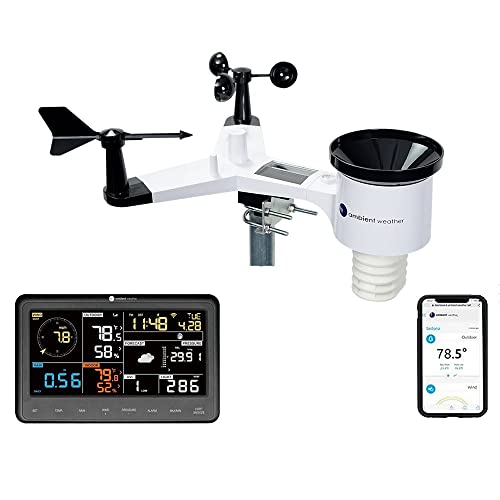
A full weather station with a sensor array and a colour display.

  • Osprey sensor array measures wind speed and direction, temperature, humidity, rainfall, UV and solar radiation
  • Wi-Fi enabled with remote access and alerts
  • Colour LCD display included
  • Smart home integration via IFTTT, Google Home and Alexa
View on Amazon Read Full Review→
Best wireless all-in-one
WeatherFlow Tempest

WeatherFlow Tempest

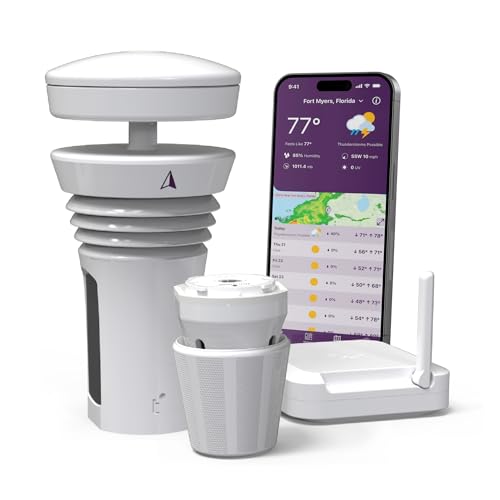
A single solar powered unit with a three second update rate.

  • Monitors temperature, humidity, barometric pressure, wind speed and direction, dew point, solar radiation, UV, lightning and rainfall
  • Solar powered outdoor sensor transmits wirelessly up to 1,000+ feet
  • Real-time updates every 3 seconds as stated
  • App and Alexa enabled
View on Amazon Read Full Review→
Best handheld for the pour
Kestrel 5200 Concrete Pro

Kestrel 5200 Concrete Pro

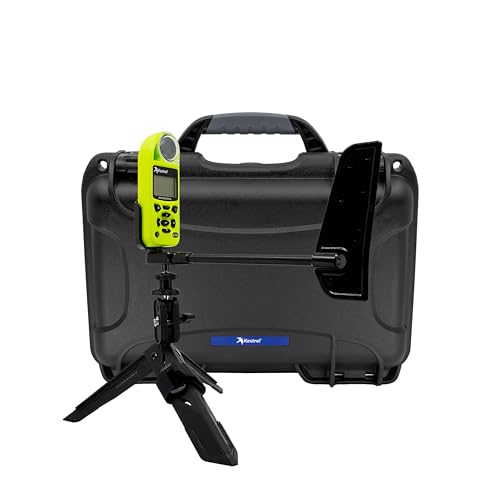
A handheld jobsite meter that logs conditions and calculates evaporation.

  • Portable with simple set-up for readings anywhere on the jobsite
  • Automatic evaporation rate calculation based on the ACI nomograph
  • Data logging and storage to document job conditions
  • Listing states it helps demonstrate compliance and protect against litigation
View on Amazon Read Full Review→

Comparison Table

View Full Comparison→
PickTypeWind speed rangeAlarm or relayData loggingMounting
HEEPDD Wind Speed AlarmFixed alarm unit0 to 70 m/s statedRelay output and LED warning light statedNot stated in the listingFixed installationView
SOESFOUFU Tower Crane Wind CupReplacement sensorNot stated in the listingNone on its ownNone on its ownFits existing crane gaugeView
TOMETURE Wind Speed Meter 3 CupReplacement sensorNot stated in the listingNone on its ownNone on its ownFits existing crane gaugeView
Ambient Weather WS-2902Full weather stationNot stated in the listingAlerts stated, no relay output publishedRemote access stated, logging not detailedPermanent sensor arrayView
WeatherFlow TempestAll-in-one stationNot stated in the listingNo relay outputApp data stated, storage not detailedSingle outdoor unitView
Kestrel 5200 Concrete ProHandheld meterNot stated in the listingNoneData logging and storage statedHandheldView

Cells marked Not stated are absent from the manufacturer listing. No figures have been estimated or converted.

How to choose

Match the instrument to the job it has to do. A crane alarm, a site record and a handheld reading are three different requirements.

Decide if it is a safety device

A crane wind alarm needs a relay output that trips a circuit. A weather station that displays wind speed is not a safety device and will not stop a lift.

Check the threshold setting

Your lifting plan sets a wind limit. Confirm the instrument can be set to that figure and that the alarm trips at it, not just displays it.

Gust versus average

Ask whether the displayed number is an instantaneous reading or an average. A one minute average can hide a gust that exceeds the limit for ten seconds.

Plan the temporary mount

A site mast is not a garden pole. Check the mounting thread, the mast diameter and whether the sensor can be removed and refitted as the site moves.

Decide what the diary needs

If you need a time stamped record for a lifting plan or a pour, choose an instrument that logs. A display alone gives you nothing to file.

Check the power and cable run

A mains powered alarm needs a supply at the mast. A solar unit needs daylight and a wireless path to the receiver. Confirm both before you buy.

Frequently Asked Questions

View All FAQs→
Can I use a home weather station as a crane wind alarm?

No. A home weather station displays and may log wind speed, but it does not have a relay output to trip a crane circuit. A crane alarm needs a switched contact that activates at a preset threshold. The two jobs are different.

What is the difference between gust and average wind speed?

Average wind speed is the mean over a period, commonly ten minutes. A gust is a short peak, often measured over three seconds. A lifting limit is usually set on gust, because a brief peak can still overload a load. If your instrument only shows a ten minute average, it can under report the gust that matters.

Do I need a full weather station or just an anemometer?

If the only question is whether the wind is above the lifting limit, an anemometer and alarm is enough. If you need a site diary record of wind, rain and temperature, a full station gives you the broader data set. The choice follows the record you have to produce.

How do I mount a weather station on a temporary site?

Most stations are designed for a permanent pole. For a temporary site, check the mounting bracket and thread, and plan a mast that can be moved with the site. The listings here do not describe temporary mounting systems, so you are adapting a permanent mount.

Reviews

HEEPDD Wind Speed Alarm

HEEPDD Wind Speed Alarm Best for crane alarm circuits

The reason this unit belongs at the top of a construction list is the relay output. A crane wind alarm is not really about the display; it is about a contact closing when the wind crosses a threshold so a beacon sounds or a control circuit inhibits the hoist. The listing states a 0 to 70 m/s range and an integrated warning light and alarm that activates above preset safety thresholds. That is the mechanism a site needs: measure, compare to a set point, switch an output.

The 0 to 70 m/s range is wide. For context, 70 m/s is far above any lifting limit you would set, so the range is not the constraint. The constraint is the threshold setting and whether the relay is wired to something that actually stops work. The listing does not publish the relay contact rating, the supply voltage, or the threshold adjustment method, so those need checking against your crane control panel before purchase.

This is a fixed instrument, not a handheld. It is not a substitute for a logged record unless you add a logger to the relay or read the display. If your site diary needs a time stamped gust record, this unit alone does not provide it. Pair it with a logging station or a handheld that stores data.

Strengths

  • Relay output suits a crane alarm or interlock circuit
  • Wide stated range of 0 to 70 m/s
  • LED warning light gives a local visual alert
  • Listing positions it specifically for tower crane safety

Limitations

  • Relay contact rating and supply voltage not stated in the listing
  • No data logging described, so no time stamped record
  • Threshold adjustment method not published
  • Fixed installation, not portable between lifts
View on Amazon
SOESFOUFU Tower Crane Wind Cup

SOESFOUFU Tower Crane Wind Cup Replacement sensor

This is a sensor, not a station. The listing describes a three cup plastic anemometer intended as a replacement part for a tower crane wind speed gauge. If your crane already has a monitoring head unit and the cups have been damaged or the bearing has worn, this is the kind of part you fit. It does not display anything on its own and it does not log.

The mechanism of a cup anemometer is simple: the cups rotate at a rate proportional to wind speed, and a tachometer or pulse counter in the head unit converts that to a number. Plastic cups are lighter and start turning at lower wind speeds than metal, which is an advantage for detecting light breezes, but they are also more vulnerable to UV degradation and impact. The listing does not state the cup material grade, the bearing type, or the output signal, so you cannot confirm compatibility from the bullets alone.

The listing claims timely extreme weather alerts when connected to crane wind monitoring devices. That is a claim about the system, not this part. The sensor does not alarm. It feeds a system that alarms. If you do not already have that system, this part is not the place to start.

Strengths

  • Direct replacement part for an existing crane wind gauge
  • Plastic cups are light and responsive at low wind speeds
  • Weatherproof construction stated for outdoor use
  • Simple mechanical principle with few failure modes

Limitations

  • No display, no alarm, no logging on its own
  • Output signal type not stated in the listing
  • Bearing specification not published
  • Plastic cups can degrade under sustained UV exposure
View on Amazon
TOMETURE Wind Speed Meter 3 Cup

TOMETURE Wind Speed Meter 3 Cup Replacement sensor

This pick is functionally identical to the SOESFOUFU Tower Crane Wind Cup in every way the listings describe. Both are three cup plastic anemometer replacement heads for tower crane wind speed gauges. Both rely on an existing head unit to convert rotation into a reading. Both claim to support alarms through a connected system rather than providing an alarm themselves. There is no stated difference in range, output, bearing type or accuracy.

When two products are this close, the honest advice is to choose on availability and on whether the connector and mounting thread match your existing crane gauge. Neither listing publishes the output signal, the thread size, or the cable length, so the only way to confirm fit is against the crane system documentation or the old part.

The same limitation applies as with the SOESFOUFU Tower Crane Wind Cup: this is not a weather station and not a logger. It cannot produce a site diary record by itself. If your requirement is a time stamped gust record for a lifting plan, you need a head unit or a separate logger, and this part is only the sensing element.

Strengths

  • Interchangeable with the other three cup replacement head in this list
  • Plastic cups respond to light winds
  • Stated for continuous outdoor operation
  • Simple part with no electronics to fail in the head

Limitations

  • No published output signal or connector type
  • No display, alarm or logging
  • No stated accuracy figure
  • Compatibility must be confirmed against the existing gauge
View on Amazon
Ambient Weather WS-2902

Ambient Weather WS-2902 Best permanent site record

If the site needs a permanent record of wind, rain and temperature rather than a single crane trip point, this is the pick in this group that covers the most variables. The listing states the sensor array measures wind speed and direction, temperature, humidity, rainfall, UV intensity and solar radiation. That breadth is what makes it useful for a site diary: you can show not just that the wind gusted, but the rainfall total and the temperature at the time of the pour.

The Wi-Fi and remote access matter for a site office. The listing states you can set alerts and access data remotely. For a construction office that is not on site, that means the wind reading is visible without sending someone to the mast. The three second update rate is not stated for this model, so do not assume it; the listing does not publish the sampling interval.

The limitation is that this is a consumer weather station. It is not a crane alarm with a relay output, and it is not a safety device. It will not trip a lifting circuit. It is a monitoring and recording instrument. Mounting it on a temporary site mast is possible but the listing does not describe a temporary mount, so you are adapting a permanent installation. Treat it as the record keeper, not the interlock.

Strengths

  • Measures wind, rain, temperature, humidity, UV and solar radiation
  • Wi-Fi remote access and alerting stated
  • Colour display included for a site office
  • Broad data set supports a detailed site diary

Limitations

  • Not a crane alarm and has no relay output
  • Sampling interval not stated in the listing
  • No temporary mounting system described
  • Consumer grade, not a certified safety device
View on Amazon
WeatherFlow Tempest

WeatherFlow Tempest Best wireless all-in-one

The three second update rate is the number that matters here. A gust is a short event, and a station that samples every minute can miss the peak that a crane operator felt. The listing states real-time updates every three seconds, which is fast enough to catch most gust cycles. That makes it more useful for wind monitoring than a station with a slower sampling interval, though the listing does not state the averaging period used for the wind speed figure, so you cannot tell whether the displayed number is an instantaneous reading or a short average.

The single unit design and solar power suit a temporary site. There is no separate rain gauge and anemometer to mount and level, and no mains cable to run. The listing states wireless transmission up to 1,000 feet, which covers most site office to mast distances. Lightning detection is included, which is a genuine site safety consideration for exposed work.

The listing contains a publication claim and a user count. Those are marketing statements, not specifications, and they do not tell you anything about how the instrument performs on a construction site. The unit is not a crane alarm and has no relay output. It is a monitoring and recording device.

Strengths

  • Three second update rate stated, fast enough for gust watching
  • Solar powered with no mains wiring needed
  • Wireless range stated at up to 1,000 feet
  • Includes lightning detection alongside wind and rain

Limitations

  • No relay output for a crane alarm circuit
  • Wind averaging period not stated in the listing
  • Not a certified safety device
  • Single unit means a sensor fault takes out all readings
View on Amazon
Kestrel 5200 Concrete Pro

Kestrel 5200 Concrete Pro Best handheld for the pour

A handheld meter answers a different question from a fixed station. It tells you what the conditions are where you are standing, right now, and it stores that reading. The listing states this unit is lightweight, portable and simple to set up, and that it logs conditions to demonstrate compliance and protect against litigation. For a concrete pour, that is the record that matters: the evaporation rate at the time of placement, calculated automatically from the ACI nomograph rather than read off a chart.

The evaporation rate calculation is the specific feature that separates this from a general anemometer. Concrete curing is affected by wind, temperature, humidity and solar radiation together, and the nomograph combines them. Doing that by hand is slow and error prone. The listing states the unit does it automatically.

This is not a crane alarm and it does not monitor continuously. It is a spot measurement tool. It will not tell you that the wind has risen while you are in the site office. Use it alongside a fixed station or a crane alarm, not instead of one. The listing does not publish the wind speed range or accuracy, so those figures are not available from the bullets.

Strengths

  • Automatic evaporation rate calculation stated for concrete work
  • Data logging and storage for compliance records
  • Portable and usable anywhere on the jobsite
  • Listing states it is designed for jobsite conditions

Limitations

  • Spot measurements only, not continuous monitoring
  • Wind speed range and accuracy not stated in the listing
  • No alarm or relay output
  • Requires the operator to be present to take a reading
View on Amazon

Buying Guide

Short answer: For a tower crane lifting limit, the HEEPDD Wind Speed Alarm is the most directly relevant pick because the listing describes a relay output and an alarm that trips at a preset threshold, which is what a crane wind alarm circuit needs. The SOESFOUFU Tower Crane Wind Cup and the TOMETURE Wind Speed Meter 3 Cup are replacement wind cup sensors for an existing crane monitoring system, so they only make sense if you already have the head unit. For a handheld record of conditions at the pour or the lift, P11 is the jobsite meter in this group and the listing states it logs conditions. The Ambient Weather WS-2902 is the full weather station option if you want a permanent site record of wind, rain and temperature. The WeatherFlow Tempest is a wireless all-in-one station with a three second update rate, useful for a site office dashboard rather than a crane trip circuit.

What the wind specification actually means

Wind speed on a construction site is not one number. It is a distribution. The figure that matters for a lifting plan is usually the gust, the short peak that lasts a few seconds, because that is what applies the load. The figure that matters for a general site record is often the average over ten minutes, because that is what describes the conditions of the day. An instrument that reports only one of these can mislead you about the other.

When a listing states a wind speed range, that is the span the sensor can measure, not its accuracy. A range of 0 to 70 m/s tells you the sensor will not saturate in a storm. It tells you nothing about whether the reading is correct at 12 m/s. Accuracy figures are often absent from these listings, and where they are absent you should not assume a value. If you need a calibrated instrument for a legal record, ask the supplier for the calibration certificate.

The sampling interval is the other hidden specification. A station that updates every three seconds will catch a gust that a station updating every minute will miss. The listing for the WeatherFlow Tempest states a three second update, which is fast for this class. Most of the other listings here do not publish a sampling interval at all.

The common mistake: buying a display when you need a switch

The most frequent error on a construction site is buying a weather station that shows wind speed and expecting it to protect a crane. It will not. A display is an output for a human. A crane alarm needs an output for a circuit, usually a relay contact that closes when the wind exceeds a threshold. Without that contact, the alarm is only as reliable as the person watching the screen.

The HEEPDD Wind Speed Alarm is the pick in this list that addresses that directly, because the listing states a relay output and a preset threshold trip. The SOESFOUFU Tower Crane Wind Cup and the TOMETURE Wind Speed Meter 3 Cup are sensing elements that feed an existing system; they do not switch anything themselves. The Ambient Weather WS-2902 and the WeatherFlow Tempest are monitoring stations with no relay output published. If your requirement is a lifting interlock, only one of these is in the right category.

The second mistake is treating a handheld meter as a continuous monitor. A handheld tells you what the wind is doing where you are standing, at the moment you take the reading. It cannot tell you that the wind rose after you walked away. Use it for spot checks and pour records, not for site wide protection. For a broader look at handheld options, see best anemometers.

Temporary mounting and the site that moves

A construction site is not a permanent installation. The mast you erect this month will be gone when the next phase starts. That changes what you should buy. A sensor array designed for a garden pole may be awkward to move, and a mains powered alarm needs a supply that follows the mast. Solar power and wireless transmission reduce that problem, which is why the WeatherFlow Tempest is worth considering for a site that relocates.

Check the mounting thread and the mast diameter before you buy. Most listings do not publish these, and a mismatch means a return. Check the cable run if the unit is wired. Check the wireless range if it is not; the WeatherFlow Tempest states up to 1,000 feet, which covers most site layouts, but steel structures and containers can reduce that in practice. For a fixed installation on a building that will not move, a permanent station such as the Ambient Weather WS-2902 is easier to justify.

If the instrument is a safety device, the mounting is part of the safety case. A wind sensor mounted in the lee of a container will under read. A sensor mounted too low will be sheltered by the structure. The listing will not tell you where to put it; that is a site decision, and it should be recorded.

Records for the site diary

A site diary entry for a lift or a pour needs three things: the reading, the time, and the instrument that produced it. Without the time, the reading is useless. Without the instrument, the reading is not traceable. If the instrument logs, you can export the data and attach it. If it does not, you write the reading down at the moment you take it.

P11 is the pick here that addresses the record directly. The listing states it logs conditions and that this helps demonstrate compliance and protect against litigation. It also calculates evaporation rate automatically, which is the figure that matters for a concrete pour. The Ambient Weather WS-2902 and the WeatherFlow Tempest both offer remote access to data, which supports a record, but the listings do not detail the storage or export format. Check that before you rely on them for a diary.

The awkward question is what happens when the record shows a gust above the limit at the time of the lift. That is a management question, not an instrument question, but it is the reason the record matters. An instrument that logs is not just a convenience; it is evidence. For related measurement on site, see heat stress meters for outdoor work and environmental data loggers for building monitoring.

Where this category stops being the right answer

These instruments measure wind. They do not measure everything that affects a construction site. A weather station will not tell you whether the air in a sealed basement is safe to enter, and it will not detect a gas leak. If your site has confined spaces, you need a gas detector, not a weather station. See gas detectors for confined spaces for that requirement.

Wind is also not the only environmental limit on a lift. Temperature, visibility and lightning all matter. The WeatherFlow Tempest includes lightning detection, which is a genuine site safety feature, but it is not a substitute for a formal lightning risk assessment. A weather station informs a decision; it does not make it.

Finally, no consumer grade instrument in this list is a certified safety device. If your lifting plan or your insurer requires a certified anemometer with a calibration certificate, none of these listings state that certification. In that case the correct answer is not on this page, and you should specify a certified instrument through your crane supplier or a safety equipment specialist.

How We Research

This comparison was made from the manufacturer listings supplied for each product. Only products that genuinely belong to the topic of weather monitoring for construction sites were included. Products for home weather watching, indoor climate monitoring and general aviation were excluded. Specifications are quoted only where the listing publishes them; where a figure is absent, the table and review say so. No laboratory testing was performed and no measurements of our own are published.

Read our full review methodology→