
Six Handheld Particle Counters for HVAC Filter Testing
A comparison of six handheld particle counters suitable for HVAC filter testing, covering channel count, sampling flow, data logging, and calibration claims.
Read Guide→CO₂ monitors, PM2.5, VOCs, indoor air quality and more.
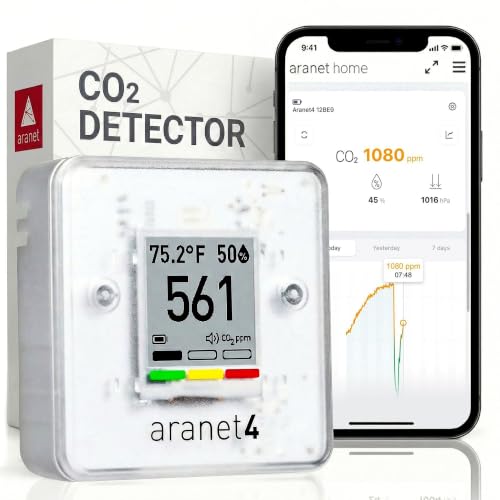
A comparison of six handheld particle counters suitable for HVAC filter testing, covering channel count, sampling flow, data logging, and calibration claims.
Read Guide→
Two mail-in lab kits listed under EPA measurement programmes, and four digital monitors that charge no lab fee, compared on what each one is actually for.
Read Guide→
Six monitors for the three problems a basement actually has: radon seeping from the ground, humidity that never leaves, and combustion appliances in an enclosed space.
Read Guide→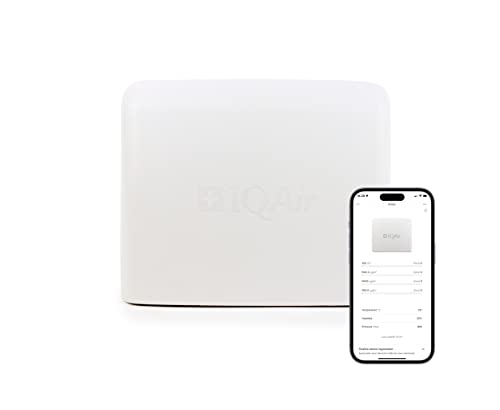
Six monitors that measure outdoor particulates, from weatherproof mounted stations with professional laser sensors to handheld analysers you carry outside.
Read Guide→
Seven carbon dioxide instruments sorted by what each listing states: NDIR monitors for watching a grow space, and a controller that switches enrichment and exhaust equipment for you.
Read Guide→
The Lite states PM2.5, PM10, CO2, temperature and humidity with HomeKit support. The CO2 Monitor states a Swiss Sensirion NDIR sensor, wider stated ranges and remote monitoring through Qingping IoT.
Read Guide→
The H5106 reports indoor PM2.5 with a stated accuracy of 15 micrograms per cubic metre. The IQAir bundle adds a weatherproof outdoor monitor with two laser sensors and up to eight parameters.
Read Guide→The View Plus states radon, PM2.5, CO2, VOC, humidity, temperature and pressure on WiFi. The H5106 states PM2.5, temperature and humidity with a published accuracy figure for each.
Read Guide→Both measure PM2.5 with temperature and humidity. The H5106 states PM2.5 accuracy of 15 micrograms per cubic metre and a two second refresh; the S1 states a laser particle sensor and an AQI display.
Read Guide→
Both state CO2, VOC, humidity, temperature and pressure over Bluetooth. The Wave Plus adds radon; the Wave Enhance drops radon and adds noise and light sensors.
Read Guide→The View Plus adds PM2.5, CO2, VOC and pressure to radon on WiFi. The Corentium Home 2 is a Bluetooth radon monitor with temperature and humidity and nothing else.
Read Guide→
The SwitchBot states a Swiss NDIR sensor with 50 ppm accuracy across 400 to 9,000 ppm updating every second. The GoveeLife states an SCD4x photoacoustic NDIR sensor at 40 ppm plus 5 percent with pressure compensation.
Read Guide→
A listing-led review of the Airthings Corentium Pro that leads with the maintenance and consumable question the specification bullets do not answer.
Read Review→
A buying review of the Extech VFM200 covering its sensor technologies, datalogging, display, and the practical limits of a multi-parameter handset.
Read Review→
A mechanism-first review of the TEKCOPLUS portable CO2 meter, its NDIR sensor, alarm threshold and stated accuracy limits.
Read Review→
A sensor-by-sensor explanation of the IQAir AirVisual Pro, with the listing's claims separated from what it leaves unstated.
Read Review→
A five-sensor Alexa air quality monitor that trades published measurement detail for broad coverage and smart-home automation.
Read Review→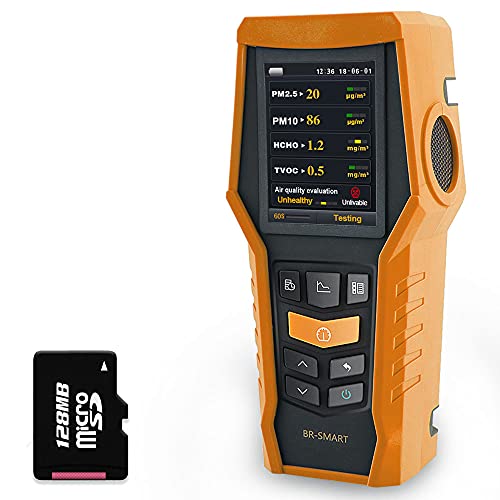
A mechanism-first review of the BLATN 126s, covering its particle channels, electrochemical HCHO sensor, semiconductor TVOC sensor, data logging and the gaps in its published specification.
Read Review→
A focused review of the Forensics Detectors 0-100 ppm VOC detector, explaining the one design trade-off that matters most.
Read Review→
A review of the INKBIRDPLUS 6-in-1 indoor air quality monitor covering its stated CO2, PM2.5, PM10, AQI, temperature and humidity readings, its three-stage AQI alarm and its manual calibration routine.
Read Review→
A mechanism first review of the Forensics Detectors fixed VOC detector, covering its 0-100 ppm range, relay outputs, explosion proof housing and the specification gaps a buyer must resolve before installing.
Read Review→
A close read of the Forensics Detectors FD 0-100 ppm VOC detector, focused on the specifications the listing does not publish and what those silences mean in real work.
Read Review→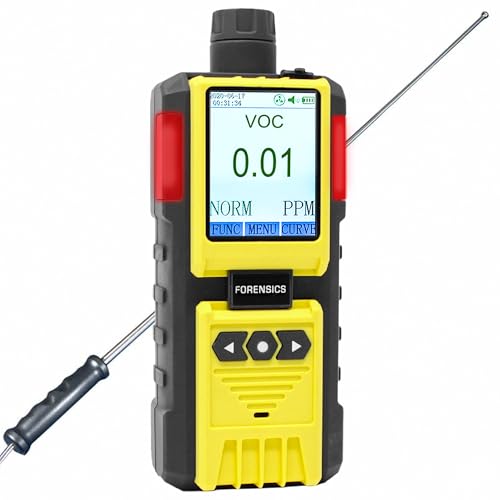
A single-product review of the Forensics Detectors FD VOC Analyzer, explaining its 0.01 ppm resolution, 0 to 10 ppm range, pump, alarms and calibration certificate, and where it sits against the site's existing air quality monitors.
Read Review→
A focused review of the Kidde plug-in CO and indoor air quality monitor, explaining the one trade-off the combination design creates.
Read Review→A practical explanation of CO2 sensor types, accuracy claims, alarm behaviour and the limits of a CO2 reading for indoor air quality decisions.
Read Article→Explains the CO2 concentrations a monitor should display in different settings and how to interpret them.
Read Article→How to tell a broken radon detector from a working one that simply has nothing to report, and what to do in each case.
Read Article→Explains the difference between a functional check, a bump test and a calibration, and how to run each on a consumer or prosumer CO2 monitor.
Read Article→A plain explanation of what calibration adjusts inside a formaldehyde meter, which units allow user zero and span, and when the instrument should go back to the maker instead.
Read Article→Calibration of a particle counter means matching its laser-scattering response to a reference aerosol, which is a laboratory procedure; owners can verify flow, zero response and repeatability, and should send the unit out for the rest.
Read Article→CO2 monitors typically last several years, but the NDIR sensor drifts, the battery degrades and the calibration expires, and each determines a different kind of end of life.
Read Article→A diagnostic guide to CO2 monitors that read wrong, freeze, or fail to alarm, covering sensor physics, calibration, placement and the limits of consumer NDIR instruments.
Read Article→Consumer VOC monitors use low-cost metal oxide sensors that respond to many gases at once, are not calibrated to any standard, and cannot report a true total VOC concentration. They are useful as trend indicators, not as measurement instruments.
Read Article→This guide explains what a radon detector measures, which specifications decide whether it is useful, and where consumer instruments stop being the right tool.
Read Article→A reset clears alarms, peaks and averaging history; it does not recalibrate the sensor or make a bad placement good.
Read Article→Consumer radon detectors are sealed against field calibration; verification means cross-checking with a known reference or sending the unit to a lab.
Read Article→