
Best Gas Detectors for Confined Spaces: 9 Trusted Picks for Serious Safety
Nine detectors judged against confined space entry, starting with oxygen, and honest about which listings publish an alarm threshold and which publish nothing.
Read Guide→Gas leak detectors, CO, methane, refrigerants and multi-gas meters.

Nine detectors judged against confined space entry, starting with oxygen, and honest about which listings publish an alarm threshold and which publish nothing.
Read Guide→
Nine workplace monitors compared on gases covered, pump sampling and stated calibration, including two single-gas units for gases a quad misses.
Read Guide→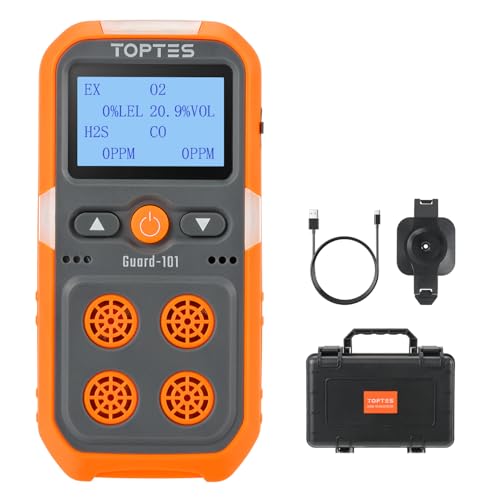
Personal protection first (multi-gas or CO monitor), then the locating tools (sniffers), then the consumables and records that keep them honest.
Read Guide→The four standard sensors, pumped or diffusion, certification for the hazard zone, docking-station support and sensor costs over the life.
Read Guide→
Single-gas oxygen monitors compared from manufacturer documentation: 19.5 percent low and 23.5 percent high set points, self test, certificates and battery.
Read Guide→
Clip-on H2S monitors compared from manufacturer documentation: the fleet-standard BW Clip, a half-second TopTes and a certified Forensics unit.
Read Guide→
Four-gas O2, LEL, CO and H2S monitors compared from manufacturer documentation: two-year fleet clips, rechargeable display units and certified budget meters.
Read Guide→A single-gas monitor watches one known hazard; a four-gas monitor watches O2, LEL, CO and H2S in unassessed spaces. Confined-space entry needs four-gas.
Read Article→Four sensors in one box: oxygen, combustibles, carbon monoxide, hydrogen sulfide. The confined-space standard.
Read Article→A gas detector is a fixed home alarm for one fuel. A multi-gas detector is a wearable confined-space monitor that reads LEL, oxygen, CO and H2S together.
Read Article→