
Six Borescopes for Chimney and Flue Inspection
A comparison of six borescopes suited to chimney and flue inspection, covering probe diameter, cable length, lighting and the limits of camera evidence.
Read Guide→Thermal cameras, infrared thermometers, borescopes and moisture meters.

A comparison of six borescopes suited to chimney and flue inspection, covering probe diameter, cable length, lighting and the limits of camera evidence.
Read Guide→
Five phone connected inspection cameras compared on probe diameter, cable stiffness, waterproof rating and whether the connector actually fits your device.
Read Guide→
Five non-contact thermometers built for furnaces, kilns and forging, compared on stated ceiling, distance-to-spot ratio and whether emissivity can be adjusted.
Read Guide→
Six thermal imagers built for electronics rather than buildings, compared on how close they focus, whether the lens detaches, and what they do with the image once they have it.
Read Guide→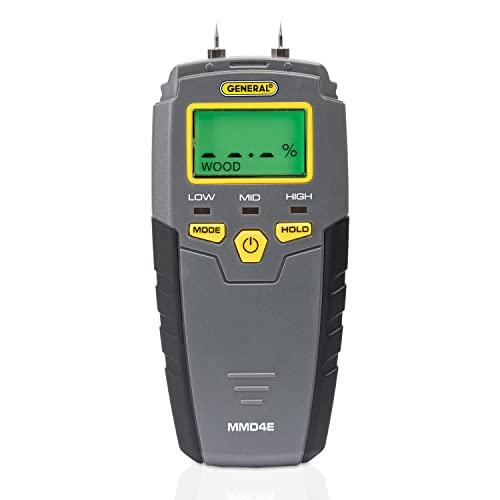
The MMD4E is a pin meter with tones, a hold button and a calibration cap. The MO265 does pinless scanning and contact measurement with a remote probe and a tri-colour bargraph.
Read Guide→The MMD4E is a pin meter with 8 mm stainless pins, audible tones and a calibration check built into the cap. The ET140 is pinless to three quarters of an inch and leaves no mark.
Read Guide→
The Klein ET140 is pinless only, stating detection up to three quarters of an inch using an electromagnetic field. The Extech MO265 adds a remote pin probe and a tri-colour bargraph.
Read Guide→
Both are pinless. The MO257 states depth under an inch; the MO57A states up to 4 inches with a spherical sensor that glides over delicate surfaces.
Read Guide→The MO50 is a compact pin meter stating 5 to 50 percent in wood and 1.5 to 33 percent in building materials. The MO265 adds pinless scanning and a remote pin probe.
Read Guide→The MO257 is pinless only. The MO265 adds a remote pin probe on an RJ45 lead, so one instrument does non-destructive scanning and contact measurement.
Read Guide→
The C8 states 320 by 240 true thermal with a 35 degree field of view. The TC004 Mini states 128 by 128 enhanced to 240 by 240, 25 Hz, a 450 C ceiling and onboard storage.
Read Guide→
The C5 states 160 by 120 true thermal to 400 C with Ignite cloud. The TC004 Mini states 128 by 128 enhanced to 240 by 240, a 40 by 30 degree field of view, 25 Hz and onboard storage for 8,000 photos.
Read Guide→
A specification-by-specification reading of the Fluke 62 Max that separates what the listing publishes from what it leaves out.
Read Review→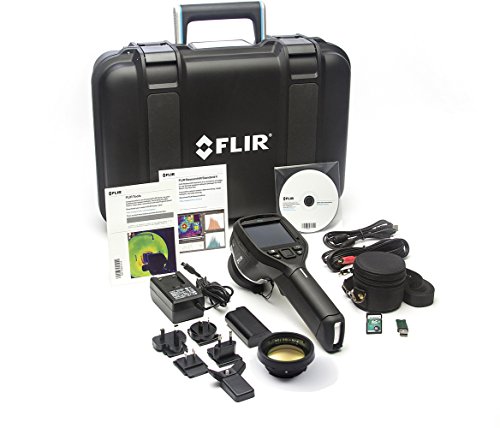
A close read of the FLIR E50 listing, focused on the laser class and the consumable and maintenance implications it carries.
Read Review→
A single-product review of the Seek Thermal CompactXR covering its 206 x 156 sensor, 20 degree field of view, focusable lens and the range-versus-detail trade-off the design forces.
Read Review→
A focused review of the FLIR MR160 imaging moisture meter, covering its thermal guidance, dual moisture sensors and reporting workflow, with a clear statement of the buyer it does not suit.
Read Review→
A detailed review of the FLIR One USB-C thermal camera for Android, explaining its Vivid IR upscaling, MSX image blending, stated accuracy and the practical limits of a phone-attachment design.
Read Review→
A review of the Wagner Meters Orion 950 pinless wood moisture meter, explaining its dual depth measurement, Bluetooth reporting, and where it stops being the right instrument next to a thermal camera.
Read Review→
A detailed look at the Tramex ME5 pinless moisture meter, centered on its dual-depth measurement and its practical limits.
Read Review→
A practical review of the Teslong 5.5mm dual-lens replacement cable, covering compatibility, the first inspection, image interpretation, and where the listing leaves you guessing.
Read Review→
A close look at the TempPro TempScan infrared thermometer gun, built around the 16:1 distance-to-spot ratio that determines which surfaces it can measure accurately.
Read Review→
A first-hour walkthrough of the Proster pinless moisture meter, from unboxing to a reading you can trust, with the limits stated plainly.
Read Review→
A focused review of the Teslong triple-lens replacement cable, its compatibility requirements, and its place beside thermal imaging tools.
Read Review→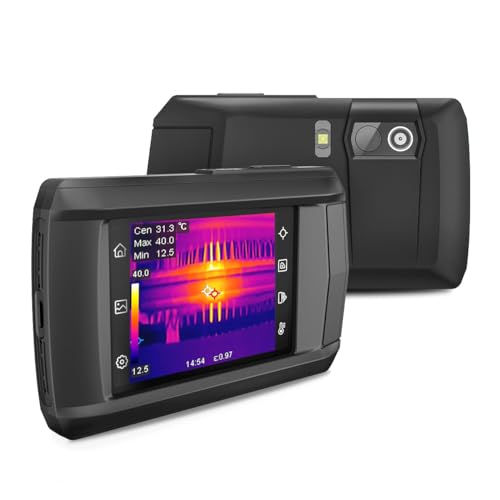
A first-hour review of the HSFTOOLS HP96 thermal imaging camera, covering setup, image modes, the IntellFault limitation and the missing specifications.
Read Review→How thermal camera accuracy is specified, where the error comes from, and what to check before trusting a reading.
Read Article→Yes, a pyrometer needs power, but the source depends on the type: batteries for handheld guns, mains or loop power for fixed sensors, and sometimes no local power for passive optical types.
Read Article→A plain explanation of what calibration does on a thermal imager, what the user can adjust, and when the camera is not the thing that needs fixing.
Read Article→How to read a thermal camera listing: detector resolution versus display resolution, NETD, accuracy, field of view, emissivity and the software that turns an image into a report.
Read Article→Probe diameter runs from about 3.9 mm to 8 mm on typical inspection cameras, and the lens and cable length change what you can reach and see.
Read Article→Endoscope cameras are flexible inspection cameras for looking into confined spaces; this guide explains how they work and what to check before buying.
Read Article→What a thermal camera actually measures, how to set emissivity and focus, and the common errors that produce convincing but wrong images.
Read Article→How a microbolometer array, a lens and a processor turn invisible infrared radiance into a calibrated thermal image, and why the display is not the measurement.
Read Article→A plain explanation of microbolometer sensing, emissivity, NETD, resolution and the situations where a thermal camera gives the wrong answer.
Read Article→A plain explanation of the optical and electronic chain inside a borescope, from illumination and lens to sensor and display, plus the limits small probes impose.
Read Article→Diagnose a thermal camera fault by separating display problems, focus problems and temperature-reading problems, then checking each against the limits of the technology.
Read Article→A plain explanation of the optical, electronic and illumination chain inside a borescope, and the physical limits that chain imposes.
Read Article→