As an Amazon Associate, Akermin earns from qualifying purchases. Product links on this page are affiliate links.
Short answer: the MMD4E is enough for most people, and its calibration cap and audible tones make it genuinely pleasant to use. The MO265 earns the difference only if you need to sweep surfaces you cannot mark, or need both measurement methods in one instrument for documentation.
What Each Listing States
| Item | General MMD4E | Extech MO265 |
|---|---|---|
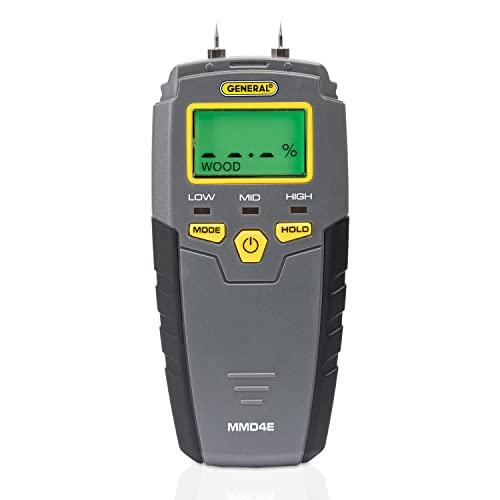
| Pin measurement | Yes, 8 mm stainless pins in the body | Yes, remote probe on an RJ45 lead |
| Pinless measurement | No | Yes |
| Display | 0.3 inch digits, backlit, hold button | Backlit LCD plus tri-colour LED bargraph |
| Audible feedback | Low, medium and high tones | Not stated in the bullets |
| Calibration check | Contact point in the cap | Not stated in the bullets |
| In the box | Spare pins, 9 V battery | Not detailed in the bullets |
What the Upgrade Actually Buys
Not accuracy. Neither listing states an accuracy figure, and a combination meter is not a more precise pin meter. What it buys is coverage: the ability to check a surface without marking it, and the ability to sweep rather than sample. If your work never requires either of those, the upgrade is spending money on capability you will not use.
The second thing it buys is the remote probe. Pins on a lead reach into places your eyes cannot follow, which is where moisture problems live. Anyone who has tried to read a display while holding a meter above their head in a loft understands the value immediately.
Do Not Underrate the Simple Features
The MMD4E listing states three things the MO265 bullets do not: tones that indicate low, medium and high moisture, a calibration check built into the cap, and spare pins in the box. These are the details that determine whether a meter is used properly. Tones let you work by ear while your eyes are on your hands. A calibration check turns “the meter says 14 percent” into “the meter is working and says 14 percent”. Spare pins mean a bent pin does not end the job.
Which to Buy First
If you are building a kit rather than buying one meter forever, start with whichever method your work demands most and add the other later. Most trades start with pins because their materials are unfinished and pins are cheap. Most inspectors start with pinless because their surfaces are finished and speed matters. Owners of both use them exactly as intended: pinless to find, pins to measure. See pin versus pinless moisture meters.
Who Buys Which
- Homeowner or occasional user: MMD4E.
- Carpenter, builder, roofer: MMD4E.
- Inspector, restoration, insurance work: MO265.
- Anyone working on finished surfaces: MO265 or a pinless-only meter.
How We Research
Figures come from the manufacturer listings. We did not run laboratory tests and publish no measurements of our own. Our ranking is in the how to choose a moisture meter.
Recommended Tools


Products shown because their documented specifications fit this guide. Price and availability are on Amazon and can change.
Frequently Asked Questions
Is the MO265 more accurate than the MMD4E?
Neither listing publishes an accuracy specification, so that comparison cannot be made from the listings. What the MO265 offers is a second measurement method, not a more accurate version of the first.
What is the remote pin probe for?
It puts the pins on a lead so they can reach into voids, behind fittings and above ceilings while you read the display comfortably. A meter with pins in its body has to be held where the pins go.
Does the MMD4E do anything the MO265 does not?
It states a calibration check in its cap, audible tones that scale with moisture level and spare pins in the box. Those are practical features the MO265 bullets do not mention.
Which for a homeowner?
The MMD4E. It answers the wet or dry question, checks its own calibration and costs far less. A homeowner rarely needs to map a wet area across a whole property.
Affiliate disclosure: Akermin earns a commission from qualifying Amazon purchases made through links on this page. Our editorial picks are based on documented specifications and owner feedback, not commissions.
Related Guides

Thermal Master P1 Review: 17 Grams, 0.32 Watts, and a 160 by 120 Detector Underneath
A 17 gram USB-C thermal attachment stating 320 by 240 after X3 processing from a 160 by 120 detector, with 0.04 C sensitivity, isotherm mode and adjustable emissivity.
Read More→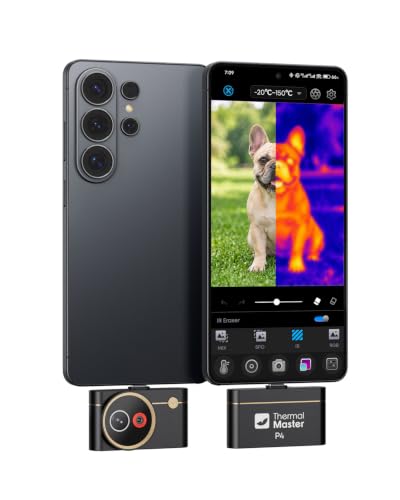
Thermal Master P4 Review: A 256 by 192 Detector Behind a 512 by 384 Headline
An Android phone attachment with a 256 by 192 detector upscaled to 512 by 384, NETD below 35 mK, a 56 by 42 degree field of view and no battery of its own.
Read More→
Soliluxelink Borescope Review: The Title Says Articulating, the Bullets Describe Something Else
A 1080P borescope with a 4.3 inch screen, a 16.4 foot semi rigid IP67 probe, eight LEDs and an accessory kit. Reviewed from a listing whose own bullets contradict its title.
Read More→