
Best Air Particle Monitors: 9 Sensitive Picks for Accurate Pollution Tracking
Nine particle instruments sorted by what each listing states: six-channel counters from 0.3 micron, PM2.5 and PM10 desk monitors, and multi-parameter testers.
Read Guide→CO₂ monitors, PM2.5, VOCs, indoor air quality and more.
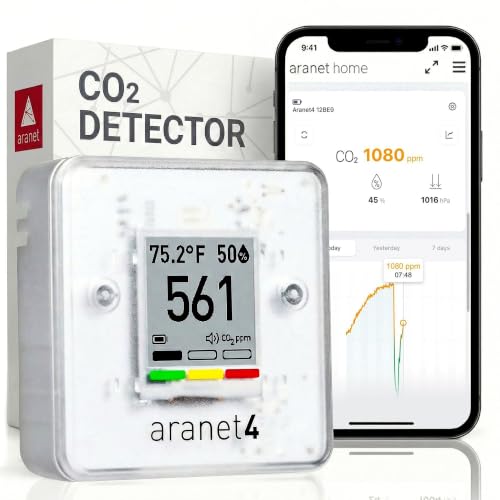
Nine particle instruments sorted by what each listing states: six-channel counters from 0.3 micron, PM2.5 and PM10 desk monitors, and multi-parameter testers.
Read Guide→
Eight particle counters compared on stated size channels, smallest particle, PM outputs and sampling, from pumped handhelds to six-channel meters.
Read Guide→
Ten particle instruments compared on stated size channels, range and accuracy, split between mass-reading air quality monitors and counting particle counters.
Read Guide→A comparison of four monitors for tracking wildfire smoke indoors, covering particle sensors, CO2-only instruments, and one purifier with a built-in PM2.5 display.
Read Guide→
Named module, fan-driven flow, size bins, humidity handling, lifetime. The five things a spec sheet should tell you.
Read Guide→Read the ratios, not just the numbers. The gaps between the three sizes tell you what the source is.
Read Guide→PM2.5 indoors and out, a sensor that handles smoke, and readings you can act on when the sky goes orange.
Read Guide→
A laser sensor with a fan, a stated sensor module, humidity handling and a history chart. The rest is preference.
Read Guide→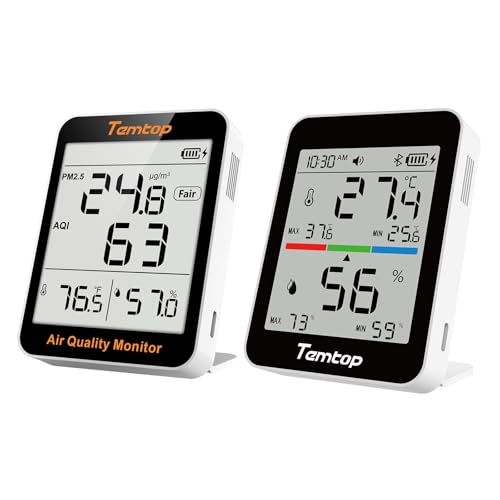
PurpleAir's smallest indoor particle sensor: a single laser counter, USB-C power, a colour light and Wi-Fi to the PurpleAir app; not listed on Amazon US.
Read Review→
PurpleAir's indoor particle sensor with a touch-controlled colour light, USB-C power and Wi-Fi reporting to the PurpleAir map; not listed on Amazon US.
Read Review→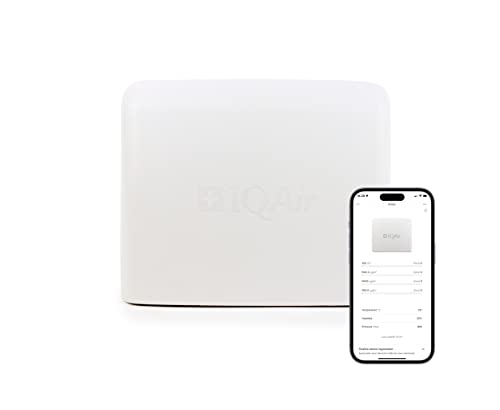
The PurpleAir Classic with on-board SD card logging: two laser particle counters, Wi-Fi and local storage for research use; not listed on Amazon US.
Read Review→PurpleAir's outdoor sensor with two user-replaceable laser particle modules, Wi-Fi and comfort readings; not currently listed on Amazon US.
Read Review→A dual-laser PurpleAir particle monitor with a colour light indicator, USB-C power and Wi-Fi, usable indoors or outdoors; not currently listed on Amazon US.
Read Review→
A portable monitor for CO₂, PM2.5, PM10, temperature, humidity and AQI with a Bluetooth app, alarms, a 2000 mAh battery and LoRa connectivity.
Read Review→
A portable particle monitor for PM2.5, PM10, temperature, humidity and AQI with a Bluetooth app, alarms, a 2000 mAh battery and LoRa connectivity.
Read Review→The connected S1: PM2.5, AQI, temperature and humidity with a Swiss-made comfort sensor; the Amazon listing is a combo with the T1 thermo-hygrometer.
Read Review→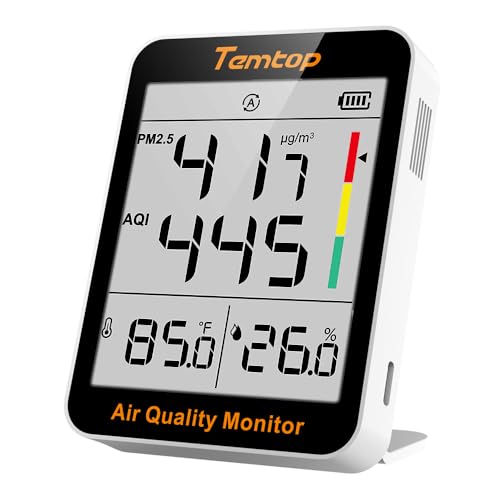
A small battery monitor for PM2.5, AQI, temperature and humidity with a laser particle sensor and up to 60 days per charge; listed on Amazon as the Temtop S1.
Read Review→
The M10 family monitor for particles, formaldehyde and TVOC; the Amazon listing is the LKC-1000S+ seven-in-one with a trend histogram and USB export.
Read Review→
A six-in-one monitor for CO₂, PM2.5, TVOC, temperature, humidity and AQI with an e-ink display, up to 60 days of battery and a Bluetooth app.
Read Review→
The M2000 2nd without the formaldehyde sensor: CO₂, PM2.5, PM10, temperature and humidity on a colour screen with CSV export over USB.
Read Review→They count light, not mass, and each converts with its own assumptions.
Read Article→Ultrasonic humidifiers turn dissolved minerals into fine dust. Evaporative ones do not.
Read Article→Hot oil, searing and toasting generate fine aerosol. Cooking is the biggest particle source in most homes.
Read Article→PM1 is the sub-micrometer fraction: combustion soot and the particles that reach the bloodstream.
Read Article→
CO₂ for how much fresh air a room gets; PM2.5 for what is in that air. Sometimes they conflict.
Read Article→Particle sizes, where each comes from and which one your monitor should track.
Read Article→