As an Amazon Associate, Akermin earns from qualifying purchases. Product links on this page are affiliate links.
Verdict
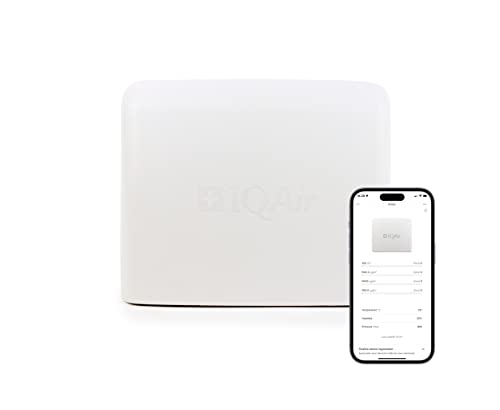
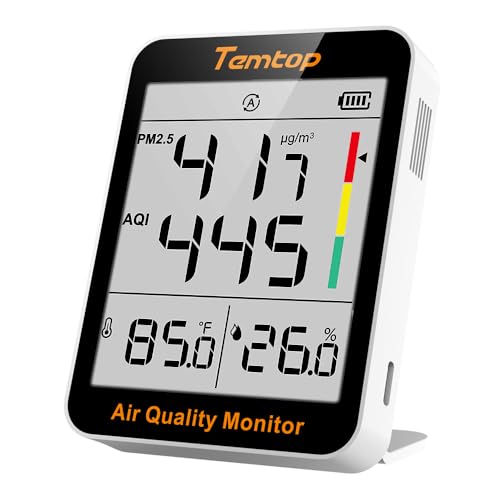
The PurpleAir Zen is the sensor to buy if you want to put a reading on the PurpleAir map, the crowd-sourced network that most people check during wildfire season, and you also want a device that looks acceptable on a shelf indoors. It uses two laser particle counters, reports PM1, PM2.5 and PM10 estimates with temperature, humidity and pressure, runs from USB-C, joins 2.4 GHz Wi-Fi, and shows air quality through a colour light. It is not currently listed on Amazon US; PurpleAir sells it directly. The closest listed alternatives are the IQAir AirVisual Outdoor for a permanent outdoor station and the Temtop S1 or an Airthings View Plus for an indoor reading. The Zen measures no gases at all, so it is a particle instrument first and a general air quality monitor second.
Who It Is For
- People in wildfire or high-traffic regions who want their own point on the PurpleAir map rather than a station miles away.
- Households that want the same sensor type indoors and outdoors so the two readings are directly comparable.
- Community groups and schools contributing data to a public network.
Our guide to choosing an air quality monitor for wildfire smoke explains why a local station matters during smoke events.
Documented Specifications
| Item | Documentation |
|---|---|
| Particle sensing | Two laser particle counters, reported as separate channels |
| Reported values | PM1, PM2.5, PM10 estimates and particle counts by size |
| Environment | Temperature, relative humidity, atmospheric pressure |
| Indicator | Colour light showing air quality band |
| Connectivity | 2.4 GHz Wi-Fi to the PurpleAir map and app |
| Power | USB-C |
| Placement | Indoor or sheltered outdoor use per PurpleAir |
| Availability | Direct from PurpleAir; not listed on Amazon US |
We have not quoted accuracy figures because PurpleAir publishes performance in terms of third-party evaluations rather than a single specification; see the section on data below.
The Dual-Sensor Design
Every PurpleAir sensor since the original has used two laser particle counters running in parallel. Each channel reports independently and the map shows both. When they agree, you can trust the reading; when they diverge, one counter is probably clogged with dust or an insect, and the map flags the device. This is the single most useful design decision in a low-cost particle monitor, and it is why researchers have adopted PurpleAir data so widely. The counters are optical: they estimate mass from scattered light, which means readings run high in humid air and vary with the type of smoke or dust. Public agencies publish correction factors for PurpleAir data, and the map offers a corrected view. See choosing a PM2.5 monitor for how optical sensors behave.
The Air Quality Light
The Zen’s distinguishing feature indoors is a light that changes colour with the air quality band, so a glance across the room tells you whether the purifier is keeping up. It can be dimmed or turned off for a bedroom. There is no numeric display on the device; the numbers live in the app and on the map. For someone who wants a screen, a Temtop or Qingping monitor is the better fit, but for a sensor that quietly reports to the network, the light is enough.
The Map and Data Access
Once online, the Zen appears on the PurpleAir map, either publicly or privately. Real-time readings are free. PurpleAir has moved historical downloads and API access to a points-based system, so anyone planning long-term logging should read the current terms. For most households the live map and the app’s recent history are what matter: is the smoke arriving, is it clearing, and how does inside compare with outside. Guidance on longer-term logging is in choosing an air quality data logger.
Strengths
- Dual laser counters with a self-check between channels.
- Contributes to the most widely used public particle map.
- Works indoors or outdoors, so two units give a direct comparison.
- USB-C power and a simple colour indicator.
Limitations
- Not listed on Amazon US.
- No CO₂, VOC or gas sensing and no numeric display.
- Optical readings need correction in humid conditions.
- Historical data access depends on PurpleAir’s current terms.
How It Compares
The PurpleAir Flex is the outdoor-first model with replaceable sensor modules. The PurpleAir Touch is the indoor-only sibling. The IQAir AirVisual Outdoor is the listed alternative with wired power and an optional CO₂ module. For an indoor monitor with a display and gases, the Airthings View Plus covers particles, CO₂, VOCs and radon.
How We Research
This review is based on PurpleAir’s published product documentation and map help pages, third-party evaluations of PurpleAir sensors, and owner reports. The Zen is not listed on Amazon US, so no Amazon listing was used. We did not run laboratory tests.
Recommended Tools

Products shown because their documented specifications fit this guide. Price and availability are on Amazon and can change.
Frequently Asked Questions
Is the PurpleAir Zen on Amazon US?
Not at the time of writing. PurpleAir sells the Zen directly and through selected distributors. This review links the closest listed alternatives.
Why two particle sensors?
PurpleAir runs two laser counters side by side and reports both channels. Agreement between them confirms the reading; disagreement flags a sensor that is drifting or blocked. The public map uses this to mark questionable data.
Does the Zen measure CO₂ or VOCs?
No. PurpleAir sensors measure particles plus temperature, humidity and pressure. For CO₂ you need a separate monitor.
Is historical data free?
Real-time readings on the map and in the app are free. PurpleAir has moved historical data and API access to a points-based system; check the current terms before relying on long-term downloads.
Affiliate disclosure: Akermin earns a commission from qualifying Amazon purchases made through links on this page. Our editorial picks are based on documented specifications and owner feedback, not commissions.