
Best CO2 Monitors: 12 Accurate Picks for Smarter Indoor Air Tracking
Twelve carbon dioxide monitors compared on stated sensor type, range, resolution and calibration, from certified instruments to plug-in household displays.
Read Guide→CO₂ monitors, PM2.5, VOCs, indoor air quality and more.
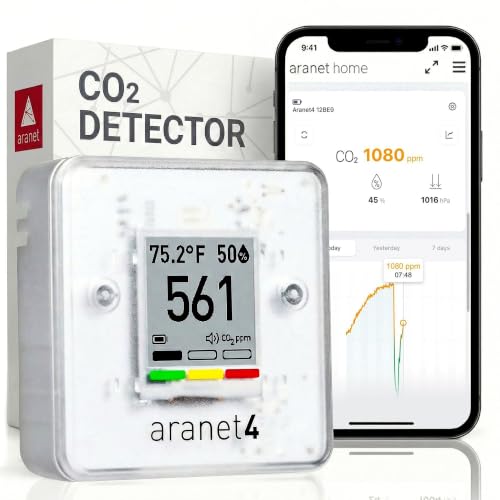
Twelve carbon dioxide monitors compared on stated sensor type, range, resolution and calibration, from certified instruments to plug-in household displays.
Read Guide→A comparison of four indoor air quality monitors judged on whether and how they let you export CO2 readings for your own analysis.
Read Guide→A comparison of four indoor CO2 monitors judged on local data review: logging window, export method, sensor type and display.
Read Guide→Five CO2 monitors that publish app history or data access, compared on retention, connectivity, account requirements and what each listing leaves out.
Read Guide→A comparison of five CO2 monitors judged on how they record, store, graph and export historical readings, using only what the listings publish.
Read Guide→A comparison of the e-ink CO2 monitors in this batch, with a note on the grow-room controllers that are not e-ink meters.
Read Guide→Five battery-powered CO2 monitors compared on stated runtime, sensor set, alert behaviour and offline usability.
Read Guide→A comparison of four CO2 monitors suited to music studios, judged on logging, alarms, control outputs, and placement.
Read Guide→Five CO2 monitors compared for short-stay rental hosts, with battery life, remote access, logging, and honest limits from the listings.
Read Guide→Three CO2 monitors that make sense for a home gym, compared on sensor speed, placement and how they behave in hot, humid, high-CO2 air.
Read Guide→Three CO2 monitors for meeting rooms, compared on sensor range, response time, logging and alarm behaviour, with the two greenhouse and wall-display units excluded.
Read Guide→A comparison of five CO2 monitors for open-plan offices, covering placement, logging, alarms and the limits of what a desk sensor can tell you.
Read Guide→
A large-screen CO₂, temperature and humidity monitor with a Swiss-made NDIR sensor, ±50 ppm stated accuracy, one-second readings and up to 12 months of battery.
Read Review→
A Wi-Fi CO₂, temperature and humidity monitor with a Sensirion NDIR sensor, buzzer, app, email and SMS alerts, Excel export and a local reading buffer.
Read Review→
A compact battery CO₂ monitor with temperature and humidity, colour-coded alerts, a no-disturb mode and up to 70 days of standby; sold on Amazon as a dual pack.
Read Review→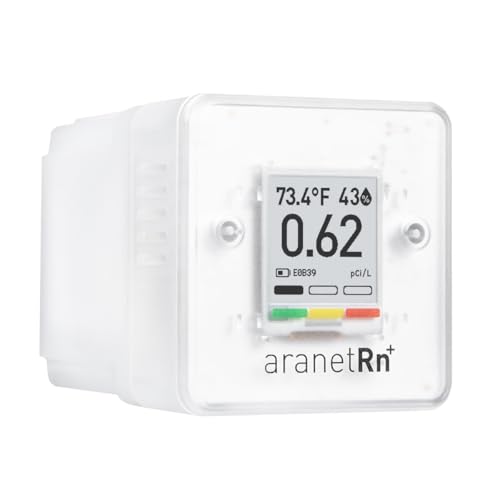
A battery-powered radon monitor with a 10-minute reading cycle, e-ink display, and temperature, humidity and pressure sensors.
Read Review→The same NDIR sensor and e-ink display as the HOME, plus a radio link to an Aranet base station for multi-room cloud monitoring.
Read Review→An NDIR CO₂ monitor with an e-ink display, up to four years on two AA batteries, and a Bluetooth app that keeps 90 days of history.
Read Review→Gas hobs and ovens produce CO₂ directly. Electric cooking barely moves the number.
Read Article→
Each person adds a predictable amount. The curve a monitor draws is an occupancy counter.
Read Article→ABC assumes the room reaches outdoor air each week. Some rooms never do, and the baseline drifts.
Read Article→
CO₂ for how much fresh air a room gets; PM2.5 for what is in that air. Sometimes they conflict.
Read Article→CO₂ measures ventilation. VOC indicates chemicals. Neither substitutes for the other.
Read Article→Ventilation has clearly fallen behind. Not dangerous, but the room needs fresh air now.
Read Article→One extra molecule per thousand, and the threshold most ventilation guidance is built around.
Read Article→Outdoor air is a free 420 ppm reference. Fifteen minutes in the shade tells you if the baseline is right.
Read Article→A fan only helps if it pushes air in or out of the room. In a closed room it changes nothing.
Read Article→Only if it brings in outdoor air. Most home units recirculate, and CO₂ keeps rising.
Read Article→No. HEPA and carbon filters catch particles and some gases, but CO₂ passes straight through.
Read Article→A room of houseplants absorbs a small fraction of what one person exhales. The numbers.
Read Article→