
Best Ultrasonic Leak Detectors for HVAC Technicians: 7 Picks
A comparison of seven ultrasonic leak detectors for HVAC technicians, covering frequency range, audio and visual output, and the jobs each one suits.
Read Guide→Gas leak detectors, CO, methane, refrigerants and multi-gas meters.

A comparison of seven ultrasonic leak detectors for HVAC technicians, covering frequency range, audio and visual output, and the jobs each one suits.
Read Guide→
A comparison of seven refrigerant leak detectors whose listings state R290 or R600a coverage, with the sensor types, stated sensitivities and the halogen-only traps to avoid.
Read Guide→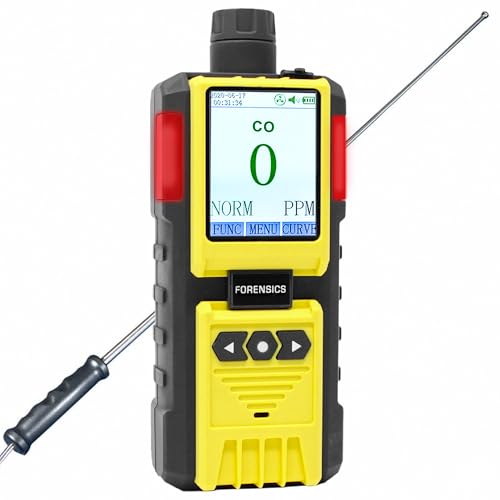
Six CO meters for furnace servicing, compared on range, resolution, alarm thresholds, calibration data and logging, with the limits of each stated plainly.
Read Guide→
Seven calibration kits and components compared on blend, cylinder size, regulator type, and what the listing does and does not publish.
Read Guide→
Five electronic sniffers and one brass tank gauge, sorted by probe reach and stated detection range, for the four places a grill actually leaks.
Read Guide→
Six leak detectors that cover R410A, sorted by sensor technology, published sensitivity and what each one costs to keep running.
Read Guide→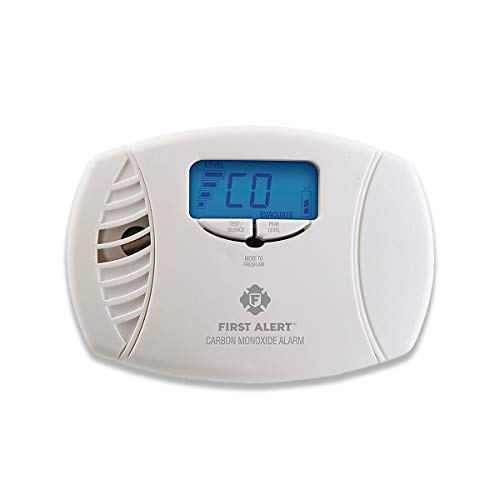
Six plug-in carbon monoxide alarms, all with battery backup, sorted by backup cell type, whether they show a digital level, and how they behave at night.
Read Guide→
Six hydrogen sulfide instruments, from maintenance-free single gas clips to four gas monitors with pumps, sorted by how each one is meant to be worn and maintained.
Read Guide→
Both use heated diode sensors. The Elitech states maximum sensitivity of 0.1 oz per year with three sensitivity levels and a TFT screen; the Fieldpiece states below 0.03 oz per year, IP54 and a 300 hour sensor life.
Read Guide→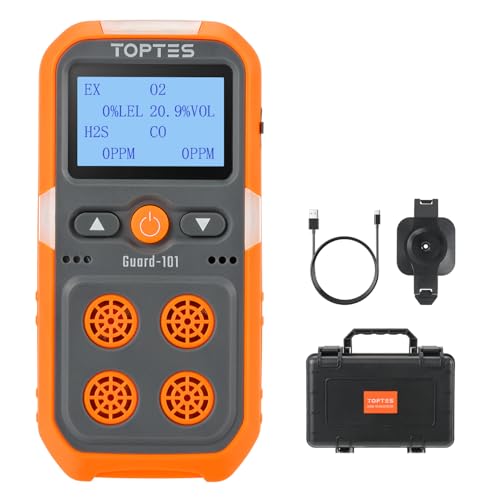
Both monitor oxygen, carbon monoxide, hydrogen sulfide and combustibles. The Guard-101 states a 14 hour battery and alarm record storage; the Forensics unit states NIST calibration and zero and span calibration options.
Read Guide→The ET120 finds combustible gas leaks from 50 to 10,000 ppm. The Guard-101 is a wearable four gas monitor for H2S, CO, LEL and oxygen with a stated 14 hour battery.
Read Guide→
The CD100A states an 18 inch gooseneck with a tip light and seven detectable gases. The PT199 is a compact unit stating a 0.5 second alarm, a red high-level screen and included batteries.
Read Guide→
A close look at the Kidde plug-in CO alarm with 9V backup, digital display and 85 dB alarm, with emphasis on the maintenance and battery replacement the listing mentions only in passing.
Read Review→
A review of the Inficon-718-202-G1 combustible gas detector, focusing on the sparse listing data and its place among other gas detection tools.
Read Review→A plain review of the First Alert plug-in carbon monoxide alarm, focused on who it protects and who it misleads.
Read Review→
A listing-led review of the BW Technologies MCXL-XWHM-Y-NA four-gas detector, focused on what the published bullets tell you and what they leave out.
Read Review→
A listing-led review of the MSA ALTAIR 2X H2S-LC, focused on its traceability, bump-status indication and where it stops being the right detector.
Read Review→
A mechanism-first review of the BW Clip oxygen detector, its 19.5 percent low and 23.5 percent high alarms, and the specifications the listing leaves blank.
Read Review→
A review of the Robinair LD7, a high-end refrigerant leak detector with visual leak-size feedback and a long-life sensor, aimed at professional HVAC work.
Read Review→
A single-product review of the SMART SENSOR portable H2 detector, explaining its 0 to 1000 ppm range, adjustable alarms, and where the design stops being the right instrument.
Read Review→
A single-gas ammonia meter for livestock buildings and similar spaces, with temperature and humidity alongside the ppm reading.
Read Review→
A wall-mounted, explosion-proof 0-1000 ppm hydrogen monitor with relay outputs, reviewed for battery room use.
Read Review→
A single-product review of the Forensics FD formaldehyde detector, focused on how its electrochemical sensor works and what the published specifications do and do not tell you.
Read Review→
A single-product review of the DANOPLUS clip-on H2S monitor, focused on its stated range, alarm behaviour and the personal-warning trade-off.
Read Review→A normal oxygen meter reading outdoors or in a ventilated room is about 20.9 percent by volume; readings below 19.5 percent or above 23.5 percent usually trigger alarms because they indicate oxygen deficiency or enrichment.
Read Article→Carbon monoxide detectors read in parts per million, but the display is often a peak hold or a status indicator, not a live measurement; the alarm threshold is set by safety standards, not by what is healthy.
Read Article→A methane detector is a combustible gas instrument that converts a catalytic or infrared sensor signal into a percentage of the lower explosive limit, and it is not the same thing as a natural gas alarm or a CO meter.
Read Article→A guide to the physical forms of gas leak detectors and what each shape implies about the job it does.
Read Article→A combustible gas detector responds to the total concentration of flammable gas in air as a percentage of its lower explosive limit, not to a specific gas, and not to carbon monoxide.
Read Article→A practical diagnosis of oxygen meter faults, from sensor exhaustion to placement error, with the physics behind each symptom.
Read Article→A practical explanation of how to check an oxygen meter, covering bump testing, calibration, alarm set points and the situations where a single gas detector is not enough.
Read Article→A plain explanation of the sensing mechanisms used to detect methane, how each converts a physical signal into LEL or ppm, and the conditions under which those conversions fail.
Read Article→A plain explanation of what methane detectors sense, where they fail, and which instrument suits which job.
Read Article→Calibration sets an oxygen meter's response against a known reference so its readings mean something in the field.
Read Article→A practical explanation of why household CO alarms are not field-calibrated, what the test button actually checks, and how real sensor calibration works on instruments that support it.
Read Article→Oxygen meters measure O2 concentration in percent by volume, and they matter for confined spaces, cryogenic gases and inert atmospheres, not for general indoor air quality.
Read Article→