Best Plug-In Carbon Monoxide Detectors: 6 Alarms With Battery Backup
A plug-in alarm solves the two problems people actually have with carbon monoxide detection: it never needs its main power changing, and it keeps working during the power cut that makes generators and alternative heating appear in the first place.
As an Amazon Associate, Akermin earns from qualifying purchases. Product links on this page are affiliate links.
Our Top Picks
Alarms were compared on the backup battery each listing specifies, whether a digital carbon monoxide level is displayed, peak level memory, stated alarm volume, and features affecting night-time use. We did not run laboratory tests and publish no measurements of our own. Where a listing gives no figure, the entry reads Not stated.
Best Overall
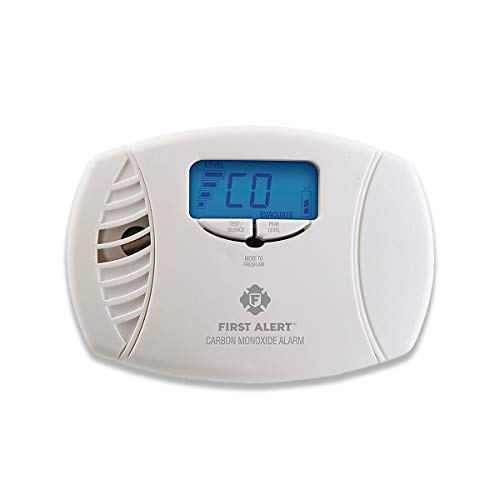
First Alert Plug-In CO Alarm with Digital Display
Digital level display with a peak level memory that survives the event.
Advanced electrochemical carbon monoxide sensor
Digital display of the current level
Peak level feature showing the highest concentration measured
All six are alarms rather than meters. None displays low level concentrations continuously the way a technician instrument does, and a digital display on an alarm is context rather than a diagnostic tool.
How to Choose a Plug-In CO Alarm
Every model here will wake you. The differences are in what happens the rest of the time.
Backup Is the Whole Point
Power cuts are exactly when generators, camping stoves and unusual heating appear. A plug-in alarm without a working backup cell is switched off at the worst moment.
Chirping Is Why Alarms Get Removed
The most common cause of an unprotected home is a low battery chirp at night followed by somebody unplugging the device. A hush function or a chirp-free design protects against that.
Peak Memory Turns an Event Into Evidence
Levels fall as soon as doors open. A stored peak is what persuades an engineer or a landlord that something real happened.
Outlet Orientation Matters
A fixed plug can leave the alarm hanging awkwardly or blocking the second socket, which leads to relocation somewhere worse. A rotating plug avoids that.
Height Is Less Critical Than People Think
Carbon monoxide mixes with air rather than rising or sinking strongly, so breathing height in the right room beats a precise height in the wrong one.
Every Alarm Has an Expiry Date
Electrochemical sensors age from manufacture whether used or not. Check the date on the back and replace the whole unit, not the battery, when it arrives.
Because the main power never needs changing and the device cannot be quietly disabled by a flat cell. The backup battery then covers power cuts, which is exactly when the risk rises because generators and alternative heating appear.
Does a digital display make it a better alarm?
Not for protection. An alarm is engineered to sound at combinations of concentration and exposure time that protect people, and that logic does not depend on showing a number. A display is useful for context and for peak memory after an event, not for deciding whether to leave.
Where should a plug-in alarm go?
On the same level as sleeping areas, ideally in the hallway outside bedrooms, and on each storey of the house. Avoid sockets directly above or beside a fuel burning appliance, where normal brief emissions cause nuisance alarms, and avoid bathrooms and very humid spots.
How long do they last?
Every carbon monoxide alarm has a finite sensor life, commonly stated on the back of the unit. When it expires the whole alarm is replaced, not the battery. An end of life chirp is frequently mistaken for a low battery, so check the date rather than only fitting new cells.
Is this the same as a gas leak detector?
No, and confusing the two is dangerous. A combustible gas detector finds unburned fuel such as methane or propane escaping from a pipe. A carbon monoxide alarm detects a product of incomplete combustion. They use different sensors and a home with gas appliances needs both. See gas leak detector versus carbon monoxide detector.
What do I do if it sounds?
Get everyone into fresh air immediately, then call the emergency number or your gas supplier from outside. Do not look for a reading, do not open the boiler, and do not silence the alarm and go back to bed.
Reviews
First Alert Plug-In CO Alarm with Digital Display Best Overall
The peak level memory is the reason this one leads. When an alarm sounds and everyone leaves, the level in the room starts falling as doors open. By the time anyone comes back with an engineer, a live display shows something unremarkable and the incident becomes an argument about whether it happened at all. A stored peak settles it.
That single feature turns an alarm into evidence, which matters if you are a tenant reporting a boiler, a landlord dealing with a complaint, or a homeowner who wants an engineer to take the call seriously. The rest is conventional and sound: an electrochemical sensor, an 85 decibel alarm and battery backup so a power cut does not silence it.
Strengths
Peak level retained after the event
Live digital reading as well as an alarm
Battery backup for power cuts
Long established brand and sensor type
Limitations
Backup battery type not stated in the bullets
A display invites people to interpret numbers rather than evacuate
Kidde COP Plug-In with AA Backup Best for Bedrooms
The reason carbon monoxide alarms get unplugged is almost never the alarm. It is the low battery chirp at three in the morning, which is unbearable, undiagnosable in the dark, and reliably leads to somebody removing the device and never refitting it. A listing that explicitly addresses night-time chirping is addressing the actual failure mode of home CO protection.
The rotating plug is the other practical detail. Outlets sit in both orientations, and a fixed plug that leaves the alarm hanging sideways or blocking the second socket often ends up somewhere worse. Surge immunity matters for a device permanently connected to the mains in a home with heavy appliances.
Strengths
Addresses the chirping problem that gets alarms unplugged
Kidde Plug-In with 9V Backup and Digital Display Best Backup Cell
A 9 volt backup instead of AA cells is a real difference in a device that spends years plugged in. One cell to check, one cell to replace, and a form factor that is hard to insert incorrectly. Whether that suits you is partly a question of what is already in your drawer.
The digital display gives you the level the alarm is sensing, which is useful for a device near a boiler or an attached garage where you want to know whether the reading is genuinely zero most of the time. It is worth repeating that the number is context, not a decision tool: if the alarm sounds, the response is fresh air and a phone call, not a reading.
The eight hour low battery mute deserves more credit than it gets. It is the designed answer to the chirp at three in the morning: press once, get back to sleep, deal with the battery in daylight. Without it, the realistic outcome is a device pulled out of the wall and left on a shelf.
Everything else is deliberately plain. One button that tests and silences, an electrochemical sensor, 85 decibels, battery backup. For a household that wants protection rather than a gadget, a single-button alarm is more likely to be tested occasionally and less likely to be disabled, and both of those matter more than any feature.
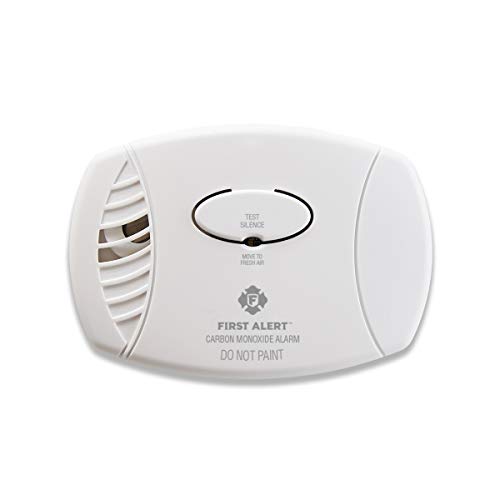
First Alert Plug-In CO Alarm, 3 Pack Best for Whole-House Cover
Most homes are under-protected for carbon monoxide not because people refuse to buy an alarm but because they buy one, put it near the boiler, and leave the bedrooms uncovered. Carbon monoxide does not stay where it is produced, and the room where protection matters most is the one where people are asleep and least able to notice symptoms.
A three pack fixes the arithmetic. One near the appliance, one in the hallway outside the bedrooms, one on another floor. Buying them together also means they age together, which makes the replacement schedule easy to remember rather than three separate dates nobody tracks.
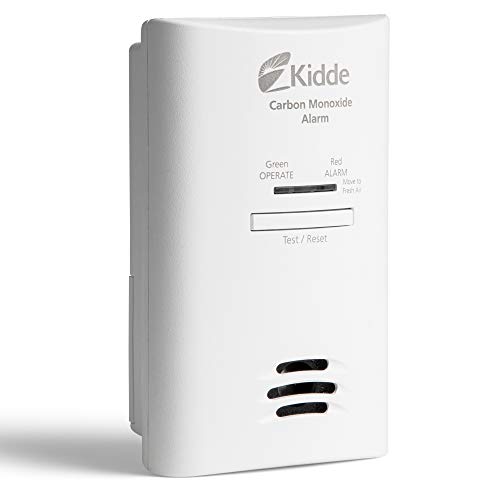
Kidde Plug-In with AA Battery Backup Best Straight Replacement
This is the straightforward modern plug-in: nothing unusual, nothing missing. AA backup cells are cheap and universally available, the 85 decibel alarm is the standard, and the LED indicators separate normal operation from a fault at a glance.
It is the sensible choice when you are replacing an alarm that has reached end of life and simply want an equivalent unit without thinking about it. That is worth saying clearly, because every carbon monoxide alarm has a finite sensor life and the most common mistake in this category is not choosing the wrong model, it is keeping the right one for ten years.
Short answer: the First Alert digital display model is the best overall because its peak level memory survives the event and turns an alarm into evidence; the Kidde COP is the best bedroom choice because it directly addresses night-time chirping, which is the single biggest reason CO alarms end up unplugged; and the First Alert 3 pack is the cheapest way to cover a whole house properly.
Why plug-in rather than battery
A battery-only alarm has one failure mode that dominates all others: the cell runs down, it chirps, and somebody removes it. A plug-in alarm removes the main power problem entirely and uses the battery only as a backup. That backup is not a nicety either. The circumstances that produce carbon monoxide in homes, generators running, camping stoves brought indoors, alternative heating, cluster around power cuts, which is exactly when a mains-only device would be dead.
The chirp is the real enemy
Ask anyone who works in housing what they find during inspections and the answer is carbon monoxide alarms in drawers. Almost none were removed because the household objected to protection. They were removed because a low battery chirp at three in the morning is impossible to locate in the dark, impossible to sleep through, and trivially solved by unplugging the thing. Features that address this, an eight hour mute on the First Alert CO605, a stated chirp-free night behaviour on the Kidde COP, are not conveniences. They are the difference between a protected house in two years and an unprotected one.
An alarm is not a meter
Some of these show a number and some do not, and it is worth being clear about what that number is for. A certified alarm responds to the combination of concentration and exposure time, deliberately ignoring brief low level excursions that are not harmful, and sounds when the exposure becomes significant. That is a protective judgement made by the device. A technician’s meter shows parts per million continuously so a combustion appliance can be investigated. If your alarm sounds, the correct response is fresh air and a phone call, not a reading. Our page on CO meter versus CO alarm covers the distinction.
Peak memory is the feature worth paying for
Here is the situation that makes it valuable. An alarm sounds at midnight, the family goes outside, windows get opened, and by the time an engineer arrives at ten the next morning every reading in the house is zero. Without a stored peak there is nothing to show, and the episode becomes a disagreement about whether the alarm was faulty. With one, there is a number and a reason to inspect the appliance properly.
Placement, and the expiry date nobody checks
Carbon monoxide mixes with air rather than rising or sinking strongly, so the room matters far more than the height. Protect sleeping areas first, put one on each storey, and avoid sockets directly beside an appliance where brief normal emissions cause nuisance alarms. Then check the date on the back. Every alarm here uses an electrochemical sensor that ages from manufacture whether or not it is ever exposed to gas, and an expired alarm is a plastic box with a green light. The carbon monoxide detector roundup covers battery and sealed models as well.
How We Research
Alarms were compared on the backup battery each listing specifies, whether a digital level is displayed, peak level memory, stated alarm volume, plug orientation, hush and chirp behaviour, and how many units are supplied. All products included are described by their own listings as carbon monoxide alarms rather than meters. We did not run laboratory tests and publish no measurements of our own.
Six hydrogen sulfide instruments, from maintenance-free single gas clips to four gas monitors with pumps, sorted by how each one is meant to be worn and maintained.