Best Portable Carbon Monoxide Detectors for Travel: Battery Picks for Hotels, Rentals and RVs
A hotel room or a rental may have no working CO alarm, and an RV has a generator and a furnace within a few feet of the bed. These battery-powered alarms and meters were compared from manufacturer documentation for weight, power, readout and what each one will tell you at 3 a.m.
As an Amazon Associate, Akermin earns from qualifying purchases. Product links on this page are affiliate links.
Our Top Picks
Everything here runs without an outlet and fits a bag. Units were compared on power source, readout, alarm type, stated range and listing from manufacturer documentation and owner feedback. No laboratory testing was carried out.
Best Overall
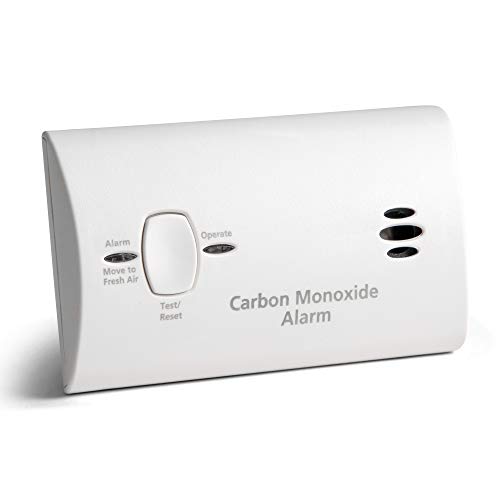
Kidde Portable AA Carbon Monoxide Alarm
Two AA batteries, 85 dB, sits on a nightstand.
Electrochemical CO sensor; runs on two AA batteries (included)
Green LED for power, red LED and 85 dB alarm for CO
Manufacturer listing statements at the time of research. The Kidde and First Alert units are residential alarms; the Sensorcon, Klein and Forensics meters are instruments with a live reading and are not UL 2034 alarms.
How to Choose a Travel CO Detector
Travel changes the priorities:
Battery, Not Plug
Outlets in hotel rooms are behind furniture and RV outlets die with the inverter. AA, lithium or a rechargeable cell you can top up in the car.
Alarm or Meter
A listed alarm wakes you at dangerous levels. A meter shows the number at any level. Carry the alarm; add the meter if you inspect or camp with a generator.
Memory
Event or peak memory tells you the alarm went off while you were at dinner. On the road, that is the difference between changing rooms and shrugging.
Vibration for RVs
A generator and a furnace fan are loud. The Sensorcon and the Forensics meter add vibration; the household alarms are horn-only.
A battery CO alarm is an ordinary electronic device with AA or lithium cells and travels in carry-on luggage without special handling. Keep lithium-battery units in the cabin rather than checked bags, as airlines generally require, and remove AA cells if the unit will be packed for a long time.
Where do I put a portable CO alarm in a hotel room?
On the nightstand or a shelf at roughly head height when you are lying down, away from the window, the air conditioner outlet and the bathroom exhaust. Carbon monoxide mixes with room air, so it does not need to be high or low, but it needs to be where you will hear it.
Do RVs need a separate CO detector?
Most RVs ship with a 12V propane or dual LP/CO alarm, but that unit ages out on a printed date and many are past it. A battery CO alarm on the bunk shelf costs little, works when the coach battery is flat, and covers the generator and the furnace, which are the two CO sources in a camper.
What is the difference between a CO alarm and a CO meter for travel?
The alarm sounds at a listed threshold and otherwise stays silent. The meter shows the concentration continuously, from 1 ppm on the Sensorcon, and alerts at thresholds you or the factory set. Travelers mostly need the alarm; inspectors, pilots and people who camp with a generator want the meter as well.
Reviews
Kidde Portable AA Carbon Monoxide Alarm Best Overall
Kidde's AA-powered CO alarm is the travel pick because it has nothing to plug in and nothing to configure: two AA batteries (included), a green LED that shows it is powered, and a red LED plus an 85 dB horn when carbon monoxide is present. It sits on a nightstand or a shelf, and Kidde states it can also be wall-mounted at home between trips.
The sensor is electrochemical, the type used in every listed residential CO alarm, and the unit's Event Memory records the last time CO was detected or the alarm was tested, so if it sounded while you were out of the room you can still see that it did.
It has no numeric display, which is the main difference from the COBD in the table, and the listing bullets do not name a standard, though the title carries the 3rd Edition designation Kidde uses on its listed alarms. For a bag that goes to hotels, rentals and an RV, the simplicity is the point.
Sensorcon Inspector 2 Portable CO Monitor Best Low-Level Meter
The Inspector 2 is a different class of device: a professional CO meter with a live reading from 1 to 1,999 ppm at 1 ppm resolution, worn on a steel clip or lanyard. For travel it answers the question a household alarm cannot: how much CO is in this room right now, before it ever reaches an alarm level.
Sensorcon states a response under five seconds, simultaneous LED, 80 to 85 dB audible and vibration notifications, factory thresholds at 35 ppm low and 200 ppm high (NIOSH occupational levels), and a MAX mode that logs the peak reading. The housing is IP67 waterproof and shockproof, and the replaceable CR123A battery is rated for two to four years.
It is CE certified to EN 50271 for occupational use and is not intended for formally classified hazardous locations. It is also not a UL 2034 residential alarm, so at home it complements one rather than replacing it. Two-year warranty.
This small monitor exists for the gap that a listed alarm leaves on purpose: a residential CO alarm is designed not to sound at low concentrations for a period, so a reading of 15 or 20 ppm in a hotel room with a gas water heater next door goes unreported. The Forensics unit's LCD starts displaying at 10 ppm, and the manufacturer states the buzzer and LED sound at 25 ppm.
The sensor is rated for a 7-year life, and the unit mounts on a table or a wall, which makes it as easy to put on a hotel desk as the Kidde. Forensics lists it for home, work, transport, industrial and office use, with a 1-year limited warranty.
What the listing does not state is the power source, the alarm volume or any UL listing, so it belongs alongside a listed alarm rather than in place of one. For the traveler who wants to see the number, not just hear a horn, it is the least expensive way to get one.
Short answer: drop a Kidde AA portable CO alarm in the bag; it needs no outlet, runs on two AA batteries and sounds an 85 dB horn on a nightstand in any room. If you want a number rather than a horn, the Sensorcon Inspector 2 reads from 1 to 1,999 ppm on a clip and adds vibration, which suits an RV or an inspector. The Forensics low-level monitor is the low-cost way to see readings from 10 ppm that a listed alarm ignores by design.
Why a travel CO alarm earns its space
Hotel rooms are not always fitted with a working carbon monoxide alarm, vacation rentals depend on the owner having remembered, and boiler rooms, pool heaters and gas water heaters share walls with guest rooms. An RV puts a propane furnace, a water heater and often a generator within a few feet of the bed, and the factory alarm has a printed replacement date that many owners have never read. A battery CO alarm weighs less than a phone charger and does one thing: it sounds when carbon monoxide reaches a dangerous level in the room you are sleeping in. Carbon monoxide is odorless and is produced by any fuel burning incompletely, so nothing else will warn you.
Alarm or meter: two different answers
The Kidde and First Alert units are residential alarms. They stay silent until CO reaches the concentration and time the listing standard defines, then sound at 85 dB. The Sensorcon, Klein and Forensics meters in the table are instruments: they show the concentration continuously, from 1 ppm on the Sensorcon, and alert at thresholds set by the factory or by you. An alarm is what you need to be woken; a meter is what you need to decide whether a slightly stuffy room with a gas fireplace is 5 ppm or 50 ppm. Inspectors, pilots, EMTs and people who camp with a generator carry both. The CO meter vs CO alarm explainer covers the distinction, and how to choose a carbon monoxide meter goes through the meter features.
What the low-level monitor is for
A residential alarm is designed to ignore low concentrations for a period so it does not sound at every passing exhaust smell. That is correct for a house and a nuisance for a traveler who wants to know whether the room next to the boiler is clean. The Forensics low-level monitor displays from 10 ppm and sounds its buzzer at 25 ppm, from a sensor rated for a 7-year life. It is not a listed alarm and its listing does not state its power source, so pack it with the Kidde rather than instead of it.
Placement in a hotel room or rental
Put the unit where you will hear it and where the air is representative: a nightstand or dresser near the bed, not on the floor behind a curtain, not in the bathroom, not beside the air-conditioner outlet where a draft dilutes the sample. In a rental with a gas water heater or furnace, a second unit near that appliance catches a problem earlier. Switch the alarm on and press test when you arrive; the Kidde units confirm power with a green LED, and a unit that has been in a bag for months deserves fresh batteries.
RVs: the generator and the furnace
The two carbon monoxide sources in a camper are the generator, whose exhaust drifts under a slide-out or through an open window, and the propane furnace or water heater when a burner or flue is fouled. A battery alarm on the bunk shelf works when the coach battery is flat and the 12V alarm is dark, and the Sensorcon’s vibration alert is the one you will notice over a running generator. The factory propane alarm is a separate device with a separate job; the RV gas detector guide covers it and the replacement dates.
Before the trip
Check the batteries, press the test button, and read the end-of-life date on the back. First Alert and Kidde alarms chirp an end-of-life pattern, and a unit that starts chirping in a hotel room at 2 a.m. is a familiar traveler’s story. The Sensorcon’s CR123A is rated for two to four years and the Forensics CO meter charges over micro-USB, so put those on the same checklist as the phone charger.
If it sounds in the night
Leave the room, take everyone with you, and get to outside air before you do anything else; then call 911 or the front desk from outside. Do not stay to open windows or hunt for the source. A CO alarm does not respond to natural gas or propane, so a smell of gas is a different emergency with the same first step. For alarms to install at home see best carbon monoxide detectors.
How We Research
Units were compared on manufacturer documentation: power source, stated range and resolution, alarm modes and thresholds, memory features, ingress rating and listing. Owner feedback was reviewed for battery life and nuisance alarms in RVs. We did not run laboratory tests and publish no measurements of our own. Amazon data supplies images, availability and links only.
A WiFi natural gas alarm with an LCD showing gas concentration status and temperature, a stated response within 30 seconds, an alarm of at least 85 decibels and notifications to a phone app.
A rechargeable chlorine detector with an electrochemical sensor reading 0 to 50 ppm at 0.1 ppm resolution, a response time under 30 seconds, adjustable audible, visual and vibrating alarms and a supplied calibration certificate.
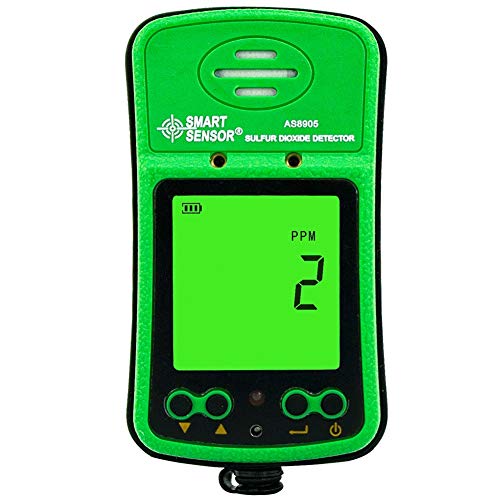
A clip on sulfur dioxide monitor built on an electrochemical sensor, reading 0 to 20 ppm in 0.1 ppm steps, with adjustable high and low alarms signalled by sound, flash and vibration and a rechargeable cell quoted at 8 to 9 hours.