As an Amazon Associate, Akermin earns from qualifying purchases. Product links on this page are affiliate links.
A carbon monoxide alarm is a certified life-safety device that sounds when CO reaches a level and duration that would harm the people in the building, following a time-weighted curve so it ignores brief low levels and reacts fast to high ones. A carbon monoxide meter is an instrument that displays the concentration continuously, in ppm, so a technician can find where the gas is coming from and how much a boiler, flue or appliance is producing. Homes need alarms; investigation needs a meter; neither does the other’s job.
Same gas, same sensor, different purpose
Both use an electrochemical cell in which CO is oxidized at an electrode, producing a current proportional to concentration. The alarm’s electronics integrate that reading over time and compare it with a certified curve. The meter’s electronics show it on a display, usually with peak hold and sometimes with logging.
Side by side
| CO alarm | CO meter | |
|---|---|---|
| Purpose | Warn occupants before a harmful dose | Measure and locate CO |
| Certification | UL 2034 (US), EN 50291 (EU) or equivalent; required for the purpose | Instrument accuracy spec; no life-safety certification |
| Response | Time-weighted: no alarm below 30 ppm for 30 days; alarm at 70 ppm within 1 to 4 hours; at 400 ppm within 4 to 15 minutes | Instant display, updated every second |
| Display | Some show ppm above 30; many show only the alarm | Full range, typically 0 to 1,000 ppm or more, 1 ppm resolution |
| Mounting | Wall or ceiling near sleeping areas and on each level | Handheld |
| Power | Sealed 10-year battery or mains with backup; runs continuously | Rechargeable or replaceable battery; used intermittently |
| Sensor life | 7 to 10 years; whole unit replaced | 2 to 5 years; sensor replaced |
| Cost | Low | Moderate |
Why the alarm waits
CO harm depends on concentration multiplied by time. The certification curves are designed so that alarms do not sound for the brief low levels a gas hob or a car in the driveway produces, which would cause people to ignore or remove them, while guaranteeing an alarm well before a dangerous dose at any concentration. A meter showing 40 ppm in a kitchen while the oven runs is showing something worth improving; an alarm not sounding at that level is doing its job correctly.
What a meter is for
- Finding the source when an alarm has sounded: which appliance, which room.
- Combustion analysis and flue-gas checks by heating engineers (usually a dedicated analyzer).
- Checking garages, workshops, boats and vehicles where engines run.
- Verifying that a repair worked.
- Personal monitoring for workers around engines and furnaces.
Placement of alarms
At least one on every level and one near each sleeping area, mounted per the manufacturer (CO mixes with air; height is less critical than for smoke). Not inside a garage, directly above a fuel-burning appliance, in dead-air corners, or within a meter of vents and windows. Test the button monthly and replace the unit at its end-of-life date.
Not the same as CO₂
Carbon monoxide (CO) and carbon dioxide (CO₂) are different gases with different detectors. A CO₂ monitor cannot detect CO. See CO₂ vs CO. CO meters and alarms are covered in the gas detection category; sensor aging in sensor lifespan.
Recommended Tools

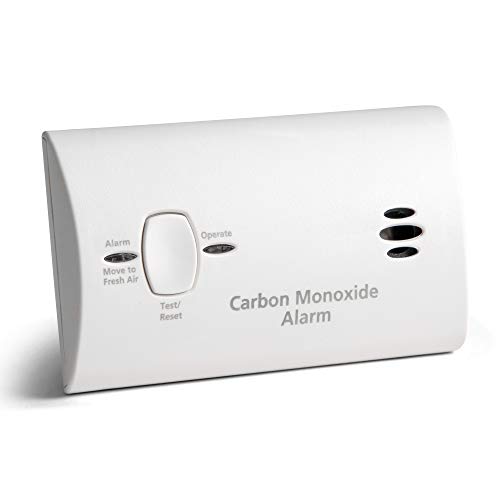
Products shown because their documented specifications fit this guide. Price and availability are on Amazon and can change.
Frequently Asked Questions
Can I use a CO meter instead of a CO alarm?
No. A meter is not certified to wake you, does not run continuously for years, and is not designed to be mounted where an alarm belongs. Install certified alarms; use a meter to investigate.
Why does my CO alarm not sound at 30 ppm?
By design. Certified alarms follow a time-weighted curve: they must not alarm below 30 ppm for at least 30 days, must alarm at 70 ppm within 60 to 240 minutes, and faster at higher levels. Low levels for short periods are not treated as an emergency.
What CO level is dangerous?
Symptoms begin around 70 ppm over hours; 150 to 200 ppm causes serious effects within hours; 400 ppm and above is life-threatening in under three hours. Any alarm activation means leave the building.
Affiliate disclosure: Akermin earns a commission from qualifying Amazon purchases made through links on this page. Our editorial picks are based on documented specifications and owner feedback, not commissions.