An RV runs propane through a stove, furnace, water heater and fridge in a space the size of a bedroom. The alarm has to be 12V, rated for cold, mounted low, and replaced on its end-of-life date. These picks were compared on those specifications from manufacturer documentation.
As an Amazon Associate, Akermin earns from qualifying purchases. Product links on this page are affiliate links.
Our Top Picks
RV alarms are 12V devices designed for low mounting and wide temperature swings. These were compared on trip point, current draw, temperature rating, mount style, replacement fit and CO coverage using manufacturer documentation and owner feedback; no laboratory testing was carried out.
Best Overall
Safe-T-Alert 30-442 LP Gas Alarm
The factory-fit flush-mount propane alarm.
Alarm at under 25% LEL of propane
12V DC, 90 mA, tolerant of 12V ±15%
Self-cleaning long-life sensor, 85 dB
Direct replacement for most CCI Controls detectors; -40 to +158 °F
Low on a wall, typically within about 12 inches of the floor and near the propane appliances, because propane sinks. Factory positions are usually beside the entry step or under the dinette. Keep it away from the stove, the furnace outlet and places where a pet or a bag will block it.
Why does my RV propane alarm keep going off?
Most reports trace to aerosols (sunscreen, hairspray, bug spray, cleaning sprays), off-gassing from new cushions or flooring, a dog against the vent, or a low coach battery, which several MTI models flag with a low-voltage warning. Ventilate and use the mute; if it re-arms and alarms again with no sprays present, treat it as a leak, get out, and check the system with a sniffer outside.
How long does an RV gas detector last?
MTI prints an end-of-life or replace-by date on the unit, generally five to seven years from manufacture. When the alarm begins chirping an end-of-life signal, or the date passes, replace it.
Can I use a household plug-in gas alarm in an RV?
Only while on shore power, and it will not work while dry camping or driving. Household alarms are also not rated for the temperature swings of a parked RV. A 12V unit wired to the coach system is the correct fit.
Reviews
Safe-T-Alert 30-442 LP Gas Alarm Best Overall
If your RV came with a brown or black rectangular propane alarm low on the wall, it was probably a 30 Series, and this is its like-for-like replacement. MTI states that it drops into the cutout left by most CCI Controls units without modification, which is the main reason to choose it when an old alarm reaches its date.
The specification is what an RV needs: 12V operation with a ±15 percent tolerance for a coach battery that sags, a 90 mA draw that will not flatten the battery, a stated trip point under 25 percent LEL, and a temperature rating from -40 to +158 °F. The mute lets you ventilate after a nuisance trigger and the sensor re-arms if propane is still present.
It does not sense carbon monoxide. If you run a propane furnace or a generator, choose the 35 Series or the 25 Series dual unit instead.
Safe-T-Alert 25-742 Mini Dual LP/CO Alarm Best Dual LP/CO
The 25-742 solves a specific problem: an RV that has only a propane alarm and no CO alarm, or an old Atwood 31013 or 31014 that has reached its date. It fits the Atwood cutout and adds a carbon monoxide sensor, so one hole in the wall now covers both hazards.
MTI specifies 12V operation at 108 mA with a low-voltage warning, a mute for ventilation, and a rapid-recovery sensor that re-arms if propane or CO is still present. The case is the compact mini size, which matters in a camper with little free wall.
CO and propane want different mounting heights (CO mixes, propane sinks), and MTI's instructions place the dual unit low, in the propane zone, because that is the hazard that needs the floor position. Follow the manual rather than splitting the difference.
Safe-T-Alert 20-441 Mini LP Gas Alarm Best for Small Campers
Truck campers, folding campers and older trailers often have no cutout and no room for one. The 20 Series mounts on the surface with a bracket, draws only 75 mA, and is the smallest listed propane alarm in the range.
MTI states the same trip point (under 25 percent LEL) and the same temperature rating as the larger units, so the compromise is size and mount style, not sensitivity. The mute and rapid-recovery behavior are the same too.
Because it is surface mounted, it can be placed anywhere 12V can be run to, which makes it the easy way to add propane detection to a vehicle that never had it. It does not cover CO.
Short answer: replace a dated factory alarm with the Safe-T-Alert 30-442 if it fits the existing cutout, or the 25-742 dual LP/CO if the RV has no carbon monoxide alarm or an old Atwood unit. For a truck camper or trailer with no cutout, the surface-mount 20-441 adds propane detection anywhere 12V reaches. Keep a TopTes PT520A or PT199 sniffer for the tank bay.
Why RV alarms are their own category
A household gas alarm plugs into 120V, expects room temperature and lives at outlet height. An RV alarm has to run on a 12V coach battery that sags, sit in a vehicle that goes from below freezing to over 150 °F in storage, and mount low because propane is heavier than air and collects along the floor of a small enclosed space. MTI Industries’ Safe-T-Alert range is what most manufacturers fit, which is why the replacement question usually comes down to which series matches the old cutout. Where to place a propane detector covers the height rules in detail.
Trip point, draw and temperature
Three numbers in the specification matter. The trip point: MTI states under 25 percent of propane’s lower explosive limit for the 20 and 30 Series, which leaves a wide margin below the concentration that can ignite. The current draw: 75 to 108 mA sounds trivial until you add it up over a week of dry camping, and it is the reason the alarm is on the same circuit as the fridge control board rather than a switched one. The temperature rating: -40 to +158 °F on the propane-only units, which is the range a stored RV actually sees. What LEL means explains the trip-point figure.
Adding carbon monoxide
Every propane appliance in an RV is a carbon monoxide source when combustion goes wrong, and a generator exhaust drifting under an awning is another. Older RVs often have a propane alarm only. The 25 and 35 Series put a CO sensor in the same housing, and the 25-742 fits the cutout left by the Atwood 31013 and 31014, so the upgrade is a swap rather than a new hole. Gas leak detector vs carbon monoxide detector explains why the two sensors are separate.
Nuisance alarms and the mute button
The most common owner complaint about any RV propane alarm is that it sounds when there is no leak. The sensor is a semiconductor type and it responds to aerosols, alcohol, off-gassing upholstery and even a warm dog against the vent. Every Safe-T-Alert lists a mute button with a rapid-recovery sensor: mute, open the door, and if propane is really present the unit re-arms and sounds again. Treat a repeat alarm with no sprays around as a real leak: get everyone out, shut the tank valve outside, and only then trace the system with a sniffer. How to test a gas leak detector covers checking the alarm itself.
Checking the propane system
RV leaks appear at the tank valve, the pigtails, the regulator, the appliance connectors and the flexible line to a portable grill. A gooseneck sniffer reaches into the tank bay without removing the cover; sweep below each fitting because the gas falls. The propane detector guide covers homes and cabins on LP as well, and the main gas leak detector guide covers the household side for when the RV is parked next to a natural gas house.
How We Research
Alarms were compared on manufacturer documentation: trip point, supply voltage and current, temperature rating, case and cutout dimensions, replacement compatibility and CO coverage. Owner feedback was reviewed for nuisance alarms from aerosols and for battery-drain complaints. We did not run laboratory tests. Amazon data supplies images, availability and links only.
A WiFi natural gas alarm with an LCD showing gas concentration status and temperature, a stated response within 30 seconds, an alarm of at least 85 decibels and notifications to a phone app.
A rechargeable chlorine detector with an electrochemical sensor reading 0 to 50 ppm at 0.1 ppm resolution, a response time under 30 seconds, adjustable audible, visual and vibrating alarms and a supplied calibration certificate.
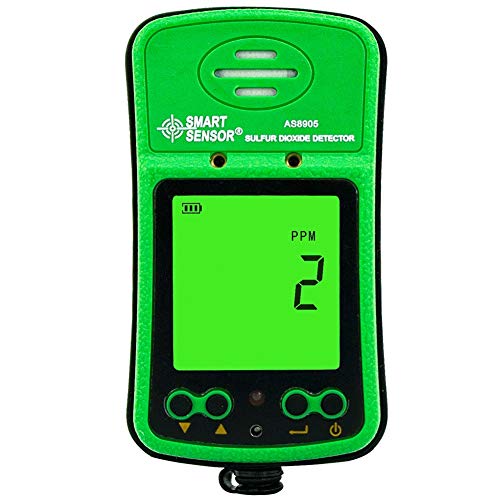
A clip on sulfur dioxide monitor built on an electrochemical sensor, reading 0 to 20 ppm in 0.1 ppm steps, with adjustable high and low alarms signalled by sound, flash and vibration and a rechargeable cell quoted at 8 to 9 hours.