Best Carbon Monoxide Detectors: Plug-In, Battery and Low-Level Picks Compared
Carbon monoxide has no smell, and a listed alarm is the only thing in a house that will notice it at night. This guide compares plug-in, AA-battery and sealed ten-year CO alarms from manufacturer documentation, explains what a display adds, and covers the low-level monitors that report concentrations a standard alarm ignores by design.
As an Amazon Associate, Akermin earns from qualifying purchases. Product links on this page are affiliate links.
Our Top Picks
Every pick here is a residential CO alarm the manufacturer states meets UL 2034 or UL standards, compared on power source, display, backup, listing and warranty from manufacturer documentation and owner feedback. We did not run laboratory tests and publish no measurements of our own.
Best Overall
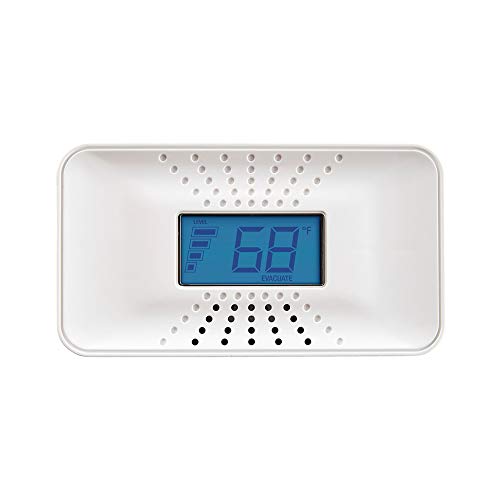
Kidde COPD Plug-In CO Alarm with Display
Plug-in with AA backup, backlit CO readout, UL 2034 5th Edition.
Backlit display shows the CO level; 85 dB alarm and LED hazard light
120V AC with two AA backup batteries included
Rotating plug for vertical or horizontal outlets; power surge immunity
Stated to meet UL 2034 5th Edition, ETL listed, 10-year limited warranty
Figures are the manufacturers' listing statements at the time of research. "Not stated" means the listing bullets give no figure; the manual or data sheet may. The Forensics unit is a low-level monitor, not a listed alarm.
How to Choose a Carbon Monoxide Detector
Four decisions cover most homes:
Look for UL 2034
A listed CO alarm has had its alarm timing and false-alarm resistance checked. The Kidde units state the 5th Edition; First Alert states UL standards.
Pick the Power Source
Plug-in with backup for rooms with an outlet, AA for rooms without, a sealed ten-year cell if you never want to change a battery.
Get a Display
A ppm readout and a peak memory tell you and the technician how bad it was. A plain horn only tells you that it was.
One Per Level, Near Bedrooms
First Alert states one on each level and in each bedroom. A second unit in the furnace room catches the source earlier.
Does a carbon monoxide detector go high or low on the wall?
Carbon monoxide mixes with air rather than rising or sinking the way methane and propane do, which is why plug-in CO alarms at outlet height and battery units on a shelf are both accepted by their manufacturers. Follow the mounting instructions for the specific model and keep it out of dead-air corners and away from vents.
Why did my CO alarm not sound when the monitor showed 20 ppm?
A residential alarm listed to UL 2034 is designed to ignore low concentrations for a period so that it does not sound over every passing exhaust smell. That is deliberate. A low-level monitor such as the Forensics unit exists to show those readings; the two products answer different questions.
How long does a carbon monoxide detector last?
The manufacturers here state 7-year and 10-year limited warranties, and both build in an end-of-life signal. The electrochemical sensor degrades whether or not it ever alarms, so replace the unit when it chirps its end-of-life pattern, not when it fails a test.
Will a CO alarm detect a natural gas leak?
No. The electrochemical CO cell does not respond to methane or propane. A house with gas appliances needs a combustible gas alarm as well, or a combination unit; the explainer on whether a CO detector senses natural gas covers the options.
Reviews
Kidde COPD Plug-In CO Alarm with Display Best Overall
The COPD is Kidde's current plug-in CO alarm with a display, and it is the one most homes should start with. It runs on 120V from the outlet and keeps two AA backup batteries (included) for outages, which matters because a generator or a furnace restarting after a blackout is a classic carbon monoxide event.
The backlit display shows the CO level rather than only sounding, so you can tell a modest reading from a serious one when the 85 dB horn goes off. Kidde states no nighttime chirps, a Test/Hush button, an LED hazard light, a rotating plug for vertical or horizontal outlets and power surge immunity.
The listing states UL 2034 5th Edition and ETL listing with a 10-year limited warranty on the alarm. Kidde also calls it travel-ready, and it is compact enough to pack, though a battery-only unit is simpler on the road. The one thing it does not do is warn your phone; that is the COPDW in the table.
First Alert 10-Year Battery CO Alarm with Digital Display Best Sealed Battery
This is the alarm for anyone who does not want to think about batteries again. First Alert builds in a 10-year lithium cell that the manufacturer states powers the unit for the life of the alarm, and it needs no outlet, so it works in a hallway with no socket and keeps working through a power failure.
The backlit digital display shows both the CO concentration and the room temperature, and the Peak Level feature stores the highest reading measured, which is the number a technician wants when you call about a furnace. The horn is the standard 85 dB, and an end-of-life chirp tells you when the ten years are up.
First Alert states testing to UL standards and a 10-year limited warranty from the date of purchase with the original receipt. The trade-off is that when the sealed battery or sensor is done, the whole unit is replaced; there is nothing to swap.
Kidde COBD Battery CO Alarm with Display Best Value
The COBD is the battery-powered Kidde with a display, and it is the pick for rooms without a spare outlet, for renters who cannot mount anything permanent, and for anyone who wants a second alarm on another floor at the lowest cost that still includes a readout. Kidde lists it as the replacement for the 900-0146LP, a model that has been in hardware stores for years.
It runs on two AA batteries (included), mounts on the wall with the supplied hardware or sits on a table, and sounds an 85 dB alarm with a backlit display that shows status and alarm operation. The Test/Hush button checks the circuit or silences a nuisance alert.
Like the plug-in COPD, it is stated to meet UL 2034 5th Edition, is ETL listed and carries a 10-year limited warranty on the alarm. Batteries will need changing over its life; if that bothers you, the sealed First Alert above is the alternative.
Short answer: plug a Kidde COPD into an outlet near the bedrooms and another in the furnace room; it shows the CO level on a display and keeps running on AA backup. If you never want to change a battery, the sealed First Alert 10-Year alarm with a display is the alternative, and the AA-powered Kidde COBD is the low-cost way to add a third unit or cover a room without an outlet. Add a low-level monitor only if you want to see readings a listed alarm ignores by design.
What a CO alarm senses, and what it will not
Carbon monoxide is produced when a fuel burns incompletely: a furnace with a cracked heat exchanger, a water heater with a blocked flue, a range used for heat, a generator run too close to the house, a car idling in an attached garage. It has no color and no smell, so the only warning a sleeping household gets is the alarm. The sensor in every unit on this page is an electrochemical cell that responds to CO alone. It does not react to methane, propane or smoke, which is why a gas home needs a combustible gas alarm as well; does a carbon monoxide detector detect natural gas covers that split, and the gas leak detector vs CO detector comparison explains why the two sensors cannot be merged into one cell.
What the listing standard means
UL 2034 is the US standard for residential carbon monoxide alarms. A listed alarm has had its alarm timing checked against concentration, so that it sounds within a defined time at dangerous levels and does not sound at low levels that would only cause nuisance alarms. The Kidde COPD, COBD and COPDW listings state UL 2034 5th Edition with ETL listing; the First Alert listings state testing to UL standards without naming an edition. Both are listed alarms. The Forensics low-level monitor and the various generic ten-year plug-ins on the marketplace do not state a listing, and in a safety role they belong next to a listed alarm, not in its place.
Plug-in, AA or sealed: choosing the power source
The plug-in units run on 120V and carry backup batteries, two AA on the current Kidde models and a 9V on the third-edition ones. Backup matters more for CO than for most alarms, because the events that produce carbon monoxide, a generator during an outage or a furnace relighting after one, coincide with the power being off. Battery-only units such as the COBD go where there is no outlet, which in practice means bedrooms and hallways, and they travel. The sealed First Alert takes the third route: a lithium cell rated for the ten-year life of the unit, no outlet and no battery changes, with the whole alarm replaced at the end. Which is best depends on the room; most homes end up with a mix.
Why a display is worth having
A horn tells you carbon monoxide reached alarm level. A display tells you how much, and the Peak Level or Event Memory features on the Kidde and First Alert units store the highest reading or the last event, so that if the alarm sounded while the house was empty you still know it happened. That number is what the utility or HVAC technician will ask for, and it separates a furnace producing dangerous levels from a car that idled briefly in the garage. The COPD, the First Alert 10-Year and the COBD all include a display; the COB and the Kidde portable in the table are LED-only versions at a lower cost.
Low-level monitors: the number below the alarm
Because a listed alarm is designed to stay silent at low concentrations, a household with a sensitive occupant, an older furnace or an attached garage sometimes wants to see the readings underneath that threshold. That is what the Forensics low-level monitor does: its LCD starts displaying at 10 ppm and its buzzer and LED sound at 25 ppm, from a sensor the manufacturer rates for a 7-year life. It is a monitor, not a listed alarm, so it complements the Kidde rather than replacing it. Carbon monoxide meter vs CO alarm goes through the difference in detail, and the handheld meters that professionals carry are covered in the travel guide linked below.
Placement
First Alert’s own instruction is one alarm on each level of the home and one in each bedroom, and Kidde’s plug-in and tabletop designs assume the same layout. CO mixes with air rather than layering at the ceiling or the floor, so outlet height and shelf height are both acceptable to the manufacturers. Keep the unit out of dead-air corners, away from the direct draft of a vent or a window, and not inside the furnace closet itself, where a brief flue puff at start-up can trigger a nuisance alarm; the adjoining hallway sees the same leak a minute later.
If the alarm sounds
Get everyone, including pets, out to fresh air and call 911 from outside. Do not go back in to reset the alarm, open windows or find the source; carbon monoxide symptoms (headache, dizziness, nausea, confusion) are easy to mistake for flu and get worse with time indoors. The fire department or utility will meter the house and tell you when it is safe. For a portable unit to carry to hotels and rentals see portable CO detectors for travel, and the rest of the carbon monoxide category covers meters and combination alarms.
How We Research
Alarms were compared on manufacturer documentation: listing standard and edition, power source and backup, display and peak memory, alarm level, end-of-life signaling and warranty. Owner feedback was reviewed for early end-of-life chirps and nuisance alarms. We did not run laboratory tests and publish no measurements of our own. Amazon data supplies images, availability and links only.
A WiFi natural gas alarm with an LCD showing gas concentration status and temperature, a stated response within 30 seconds, an alarm of at least 85 decibels and notifications to a phone app.
A rechargeable chlorine detector with an electrochemical sensor reading 0 to 50 ppm at 0.1 ppm resolution, a response time under 30 seconds, adjustable audible, visual and vibrating alarms and a supplied calibration certificate.
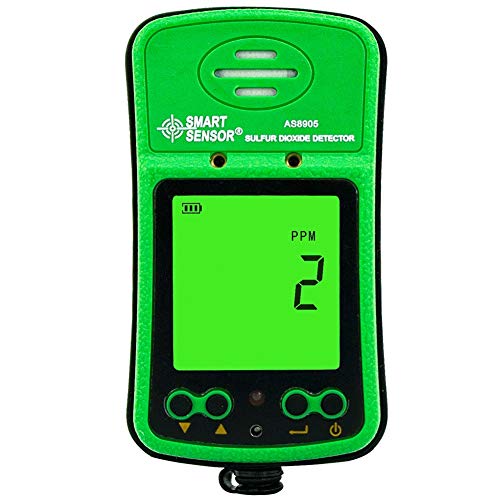
A clip on sulfur dioxide monitor built on an electrochemical sensor, reading 0 to 20 ppm in 0.1 ppm steps, with adjustable high and low alarms signalled by sound, flash and vibration and a rechargeable cell quoted at 8 to 9 hours.