As an Amazon Associate, Akermin earns from qualifying purchases. Product links on this page are affiliate links.
Choose a CO meter with an electrochemical sensor, a range of at least 0 to 500 ppm at 1 ppm resolution, a response time (T90) under 60 seconds, configurable low and high alarms (commonly 35 and 200 ppm) with sound, light and vibration, peak hold, and time-weighted average (TWA) and short-term exposure (STEL) readouts if it will be worn. Check the sensor life (2 to 3 years), whether it is replaceable, and whether the meter can be bump-tested and calibrated. For flue and appliance servicing, a combustion analyzer replaces the meter. In every case, keep certified CO alarms installed at home.
Types
| Type | Use | Typical spec | Examples |
|---|---|---|---|
| Personal single-gas CO monitor | Worn by workers around engines, furnaces, garages; sounds alarms | 0 to 500 ppm; TWA/STEL; 2-year sensor or 2-year disposable | TOPTES CT-580 class; industrial single-gas monitors |
| Handheld CO meter | Investigating a source in a home, garage, boat, workshop | 0 to 1,000 ppm; 1 ppm; peak hold; logging on some | Handheld ambient CO meters |
| Multi-gas detector with CO | Confined space, industrial | CO alongside O₂, LEL, H₂S | TopTes Guard-101 class; see multi-gas detectors |
| Combustion analyzer | Flue gas on boilers and furnaces | CO to 8,000 ppm or more, O₂, temperature, efficiency | Testo, Bacharach, Kane analyzers |
| Home CO alarm | Continuous protection of occupants | Certified UL 2034 / EN 50291; 7 to 10 year life | Kidde and similar; see CO meter vs CO alarm |
Specifications for a meter
- Sensor: electrochemical; hydrogen-compensated if you work near charging batteries, since hydrogen causes false CO readings.
- Range and resolution: 0 to 500 or 1,000 ppm; 1 ppm.
- Response: T90 under 60 seconds; see why response time matters.
- Alarms: low (35 ppm typical), high (200 ppm), with TWA and STEL for personal monitors; sound, light, vibration.
- Peak hold and logging: peak for reporting; logging for a survey of an appliance cycle.
- Sensor life and replacement: 2 to 3 years; replaceable cell preferred over a disposable unit for meters in regular use.
- Bump test and calibration: compatible with CO calibration gas; see bump tests and calibration.
- Build: IP rating, drop resistance, clip.
Reading the levels
| CO (ppm) | Meaning |
|---|---|
| 0 to 9 | Normal indoor background |
| 10 to 35 | Elevated; a source is present (traffic, gas hob, tobacco); investigate if sustained |
| 35 to 70 | Occupational 8-hour limits in this range; headaches with prolonged exposure |
| 70 to 200 | Alarms sound within hours; symptoms in most people within hours |
| 200 to 400 | Serious symptoms within 1 to 2 hours |
| Over 400 | Life-threatening; leave immediately |
Using a meter to find a source
- Zero in outdoor air; note the reading.
- Walk the building; note readings by room and near each appliance, flue, garage door and vehicle.
- Run each combustion appliance and watch the reading nearby for 10 to 15 minutes.
- Elevated readings near a boiler, water heater, stove or fireplace point to spillage or a flue problem; call a qualified engineer. Readings near an internal garage door point to a vehicle or a generator.
CO is not CO₂; see CO₂ vs CO. CO meters and alarms are in the gas detection category.
Recommended Tools

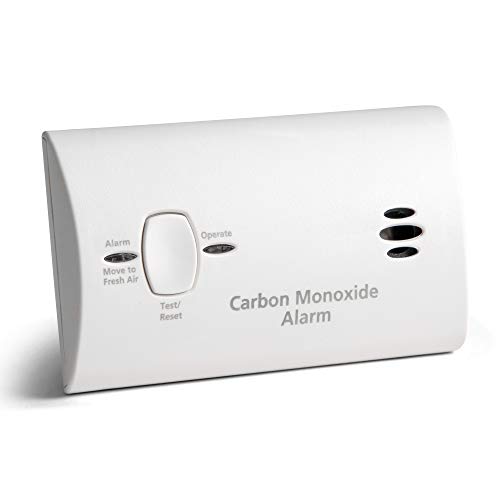
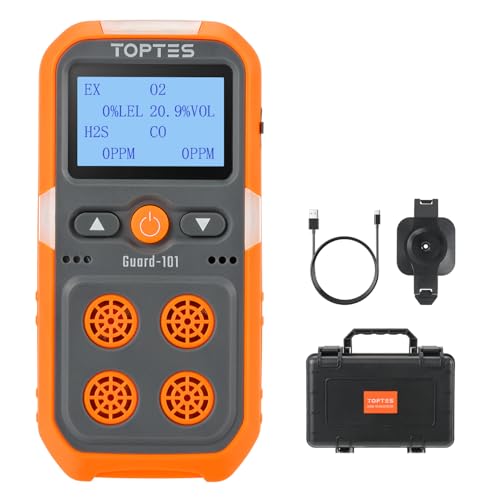
Products shown because their documented specifications fit this guide. Price and availability are on Amazon and can change.
Frequently Asked Questions
What CO levels should a meter be able to read?
0 to at least 500 ppm with 1 ppm resolution covers investigation; 0 to 1,000 or 2,000 ppm for combustion and flue work. The dangerous range begins at tens of ppm sustained.
What is the difference between a CO meter and a combustion analyzer?
A CO meter reads ambient air. A combustion analyzer samples flue gas through a probe, reads CO in thousands of ppm, oxygen and temperature, and calculates efficiency. Heating engineers need the analyzer; investigators need the meter.
Does a CO meter replace my home CO alarm?
No. The alarm is certified to wake you and runs for years unattended; the meter is a handheld instrument. Have the alarm, use the meter to investigate.
Affiliate disclosure: Akermin earns a commission from qualifying Amazon purchases made through links on this page. Our editorial picks are based on documented specifications and owner feedback, not commissions.
Related Guides

WiFi Natural Gas Alarm Review: One Unit Reveals the Whole Design
A WiFi natural gas alarm with an LCD showing gas concentration status and temperature, a stated response within 30 seconds, an alarm of at least 85 decibels and notifications to a phone app.
Read More→
Forensics Detectors Cl2 Review: 5 Percent of Full Scale Is 2.5 ppm
A rechargeable chlorine detector with an electrochemical sensor reading 0 to 50 ppm at 0.1 ppm resolution, a response time under 30 seconds, adjustable audible, visual and vibrating alarms and a supplied calibration certificate.
Read More→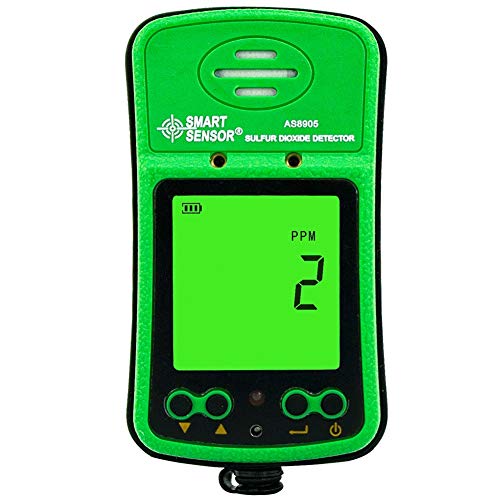
Smart Sensor SO2 Detector Review: 0.1 ppm Steps, No Accuracy Figure
A clip on sulfur dioxide monitor built on an electrochemical sensor, reading 0 to 20 ppm in 0.1 ppm steps, with adjustable high and low alarms signalled by sound, flash and vibration and a rechargeable cell quoted at 8 to 9 hours.
Read More→