As an Amazon Associate, Akermin earns from qualifying purchases. Product links on this page are affiliate links.
Gas detectors need bump tests because a failed or blocked sensor gives the same reading as clean air: zero. Exposing the detector to a known gas before use proves every sensor responds and every alarm sounds. They need calibration because sensors drift; catalytic beads lose activity, electrochemical cells deplete, and a detector reading 8 %LEL when the true value is 15 will not alarm when it should. Calibration against certified gas resets the scale. Bump daily, calibrate on schedule, and record both.
Why sensors fail silently
- Catalytic bead sensors are poisoned by silicones, lead, sulfur and phosphorus compounds; the bead stops catalyzing and reads zero in gas.
- Electrochemical cells (CO, H₂S, O₂, Cl₂) consume their electrolyte and electrodes; sensitivity fades until they stop responding.
- Filters and membranes clog with dust, water or oil, blocking gas from reaching the sensor.
- Drift shifts zero and span; the detector still responds but reads wrong.
- Impact and immersion damage sensors without visible sign.
Each of these leaves a detector that powers up normally and shows clean-air readings. Only gas reveals the fault. See what sensor drift is.
Bump test
A quick functional check: apply calibration gas (a cylinder of a known mixture, typically including methane or pentane at 50 %LEL, CO, H₂S and reduced oxygen) via a regulator and hood for 30 to 60 seconds. The detector must respond within its stated time and trigger its alarms. No adjustment is made. Pass: use the detector. Fail: calibrate; if calibration fails, replace the sensor. Docking stations automate the test and keep the record.
Calibration
Zero the detector in clean air (or zero gas), then apply span gas of certified concentration and adjust the reading to match. This corrects drift and restores accuracy. Calibration gas has an expiry; reactive gases such as H₂S and Cl₂ have short shelf lives. Use gas matched to the sensor’s target; a methane-calibrated combustible sensor reads other gases with a correction factor. See calibration vs adjustment.
How often
| Detector type | Bump test | Calibration |
|---|---|---|
| Portable multi-gas for confined space or hot work | Before each day’s use | Every 3 to 6 months, or per manufacturer; after any failed bump |
| Personal single-gas (CO, H₂S) | Before each day’s use | Per manufacturer; some are disposable and non-calibratable |
| Combustible leak sniffer | Before each job, against a reference leak or gas | Sensor replacement rather than calibration on many models |
| Refrigerant leak detector | Before each job, against a reference leak | Sensor replacement on schedule |
| Fixed gas detection system | Per site procedure, often monthly | Every 3 to 12 months by a technician |
| Domestic CO and gas alarms | Test button weekly (checks electronics, not sensor) | None; replace at end of stated life |
Records
For workplace detectors, a log of bump tests and calibrations (date, gas lot, result, who) is both a safety practice and, in most jurisdictions, a compliance requirement. Docking stations produce it automatically; a notebook works too.
When a test fails
- Do not use the detector for protection.
- Check the filter and inlet for blockage; clean and retest.
- Calibrate. If the sensor cannot reach span, it is exhausted or poisoned.
- Replace the sensor; see sensor lifespan.
- Bump test again after replacement.
Detectors and calibration accessories are covered in the gas detection category; see also what can cause false gas detector readings.
Recommended Tools
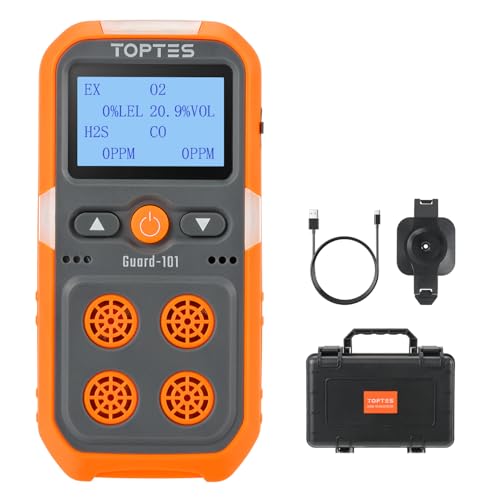

Products shown because their documented specifications fit this guide. Price and availability are on Amazon and can change.
Frequently Asked Questions
What is the difference between a bump test and calibration?
A bump test exposes the detector to a known gas to confirm the sensors respond and alarms activate; it is pass/fail. Calibration exposes it to a certified concentration and adjusts the reading to match; it corrects accuracy.
How often should a gas detector be bump tested?
Manufacturers and safety bodies generally recommend before each day's use for portable detectors used in hazardous work. Calibration is typically every 3 to 6 months, or sooner if a bump test fails.
Can I bump test with a lighter or a gas hob?
It confirms the combustible sensor reacts but does not check the other sensors or the alarm at a known concentration. Use a calibration gas cylinder for a proper bump test.
Affiliate disclosure: Akermin earns a commission from qualifying Amazon purchases made through links on this page. Our editorial picks are based on documented specifications and owner feedback, not commissions.