As an Amazon Associate, Akermin earns from qualifying purchases. Product links on this page are affiliate links.
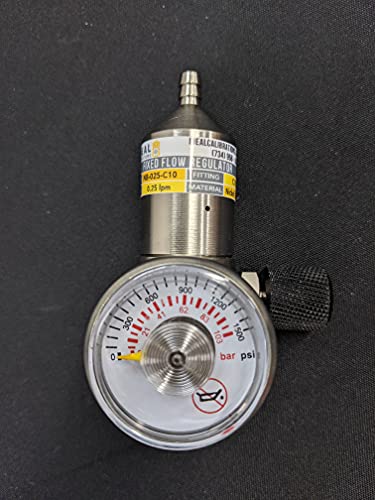
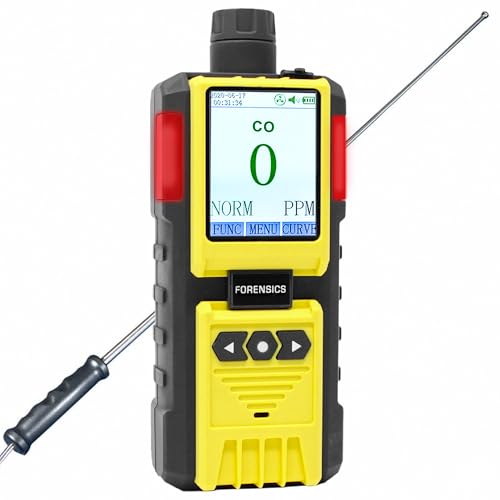
Short answer: For a complete, transportable kit, P1 and P2 are the MSA Altair 4X detector and calibration kit bundles, and they are the only picks here that include the instrument itself. If you already own detectors and need consumables, P3, P5 and P8 are four-gas blends matched to specific instrument families, and P9 and P10 are single cylinders. P11 and P12 are regulators, not kits. The single most important match is regulator flow rate to detector type: P11 is a 0.25 LPM fixed flow regulator for diffusion detectors, while P12 is a demand flow regulator for pumped detectors. Using the wrong one is the most common field error.
What a calibration kit actually contains
A calibration kit is not a single object. It is a set of parts that have to work together. The cylinder holds the gas at a known concentration. The regulator controls how fast that gas reaches the detector. The tubing carries it from the regulator to the sensor, or to the pump inlet. The procedure ties the parts together and tells you how long to flow gas and what reading to expect.
Each part can be bought separately, and many technicians do exactly that. P3, P5 and P9 are cylinders. P11 is a regulator. P6 is a case with a demand flow regulator and room for two cylinders. P1 and P2 are the only picks here that bundle the detector with the calibration hardware. If you are equipping a van from scratch, the bundle is simpler. If you already own detectors, buy the cylinder and regulator that match them.
The reason the parts matter individually is that a mismatch between any two of them produces a calibration that looks successful and is not. A detector that passes calibration against the wrong blend will read incorrectly in the field, and the error will not be obvious until someone gets hurt or a process trips.
Bump test versus calibration: what each one proves
A bump test is a response check. You expose the sensor to gas, watch for the reading to move, and confirm the alarm sounds. You do not adjust anything. The detector is telling you it can still see gas. A calibration is a correction. You expose the sensor to a known concentration, and the detector adjusts its internal scaling so the displayed reading matches that concentration. The detector is telling you how much gas it sees, and you are making that number true.
The two serve different purposes. A bump test before each shift catches a sensor that has died, a pump that has failed, or an inlet that is blocked. A calibration at a set interval corrects the slow drift that every electrochemical and catalytic sensor experiences. Skipping the bump test means you find out about a dead sensor when you need it. Skipping the calibration means the detector reads slightly wrong for weeks, and the error compounds.
For a fuller picture of how detectors are used in the field, see our guide to multi-gas detectors and the piece on how often to test a gas detector. The interval your site procedure specifies is the one that matters, not a generic recommendation.
Cylinder and regulator choice: the two mismatches that ruin a calibration
The first mismatch is the blend. Four-gas cylinders look similar but differ in the combustible component and in the oxygen concentration. P3 uses 50 percent LEL methane and 18.0 percent oxygen. P5 uses 58 percent LEL pentane simulant and 15.0 percent oxygen. P9 uses 2.5 percent methane and 18.0 percent oxygen. A detector built for one blend will not calibrate correctly against another. The pentane simulant is the trap, because pentane and methane respond differently on a catalytic bead sensor, and the detector applies a correction factor that assumes the gas it was designed for.
The second mismatch is the regulator. P11 is a fixed flow regulator at 0.25 litres per minute. P6 is a demand flow kit. Fixed flow delivers gas continuously and suits diffusion detectors, where gas reaches the sensor by diffusion. Demand flow delivers gas only when the pump pulls, and suits pumped detectors. Put a demand flow regulator on a diffusion detector and no gas flows. Put a fixed flow regulator on a pumped detector and the pump may be overwhelmed or the flow rate may be wrong. Either way, the calibration is invalid.
If you are building a kit around a pumped instrument, our guide to gas detectors for confined spaces covers the sampling side in more detail.
The running cost nobody budgets for
The detector is the visible purchase. The gas is the recurring one. A four-gas cylinder has a shelf life, and the listings here state 24 months from order for the Ideal Calibrations blends. That clock starts when the cylinder ships, not when you first open it. A cylinder bought for a small fleet and used slowly can expire before it is empty. The hydrogen sulfide component is the usual reason, because it degrades faster than the other gases, which is why stabilized cylinders exist.
Regulators, tubing and replacement sensors add to the total. A sensor that lasts four years instead of two, as the P1 listing claims for the Altair 4X, halves the sensor line in the budget. A detector with a 24-hour run time needs fewer batteries and fewer mid-shift swaps. Those are the numbers that decide the five-year cost, and they are not on the price tag.
The practical move is to track your own consumption. Note how many bump tests and calibrations you perform per month, and how long a cylinder lasts. After two cylinders you will have a real figure, which is better than any estimate. The listing does not publish a number of tests per cylinder, so your own log is the only reliable source. For the wider toolkit, see how to build a gas detection toolkit for field technicians.
Where a calibration kit stops being the right answer
A calibration kit verifies a detector. It does not detect gas. If your problem is that you do not have a detector yet, a kit is the wrong purchase. Start with the instrument, then buy the gas to maintain it. Our guide to four-gas detectors covers the instrument side.
A kit is also the wrong answer if your site requires a docking station. A docking station automates bump tests and calibrations, records the results, and manages the fleet without a technician standing over each unit. P7 is a docking station for the RKI GX-3R and GX-3R Pro, and it is not a kit in the sense used here. If you have more than a handful of detectors, the labour cost of manual calibration usually exceeds the cost of a station.
Finally, a calibration kit does not satisfy a confined space entry procedure on its own. A detector that passes calibration is one part of the permit. You still need pre-entry testing, a rescue plan, and a second person. The kit keeps the detector honest. It does not make the space safe.