As an Amazon Associate, Akermin earns from qualifying purchases. Product links on this page are affiliate links.
Build the kit in three layers. Protection: a personal monitor worn on the job, a single-gas CO monitor for combustion work or a 4-gas monitor for confined spaces and plant rooms, bump-tested daily. Location: a combustible gas sniffer for fuel lines, a refrigerant leak detector rated for the refrigerants you service, and a handheld CO meter or combustion analyzer for appliances. Support: bubble fluid, a reference leak, calibration gas and regulator or a docking station, spare sensors and tip filters, a case, and a log. Add a fixed-alarm knowledge for what you leave behind at the customer’s.
Layer 1: Personal protection
| Trade | Monitor | Notes |
|---|---|---|
| Heating and gas fitting | Personal CO monitor | Worn at every combustion appliance; alarms at 35 and 200 ppm |
| HVAC and refrigeration | Personal CO monitor; oxygen or 4-gas for plant rooms | Large refrigerant charges displace oxygen |
| Utilities, wastewater, confined spaces | 4-gas monitor (O₂, LEL, CO, H₂S), pumped for pre-entry | Intrinsically safe; docking station for the fleet |
| Facilities and building maintenance | Personal CO monitor; 4-gas if entering tanks or pits |
See how to choose a multi-gas detector and how to choose a CO meter.
Layer 2: Locating tools
- Combustible gas sniffer with gooseneck for natural gas and LPG lines. See choosing a combustible gas leak detector.
- Refrigerant leak detector, infrared and A2L-rated for HVAC and refrigeration. See choosing a refrigerant leak detector.
- Handheld CO meter for tracing a CO source in a building; combustion analyzer for flue gas on heating service.
- Ultrasonic leak detector (optional) for large leaks in noisy plant rooms.
Layer 3: Support
| Item | Why |
|---|---|
| Leak-detection (bubble) fluid | Confirms every sniffer indication before repair |
| Reference leak (3 g/yr) | Proves the refrigerant detector each day; see testing before use |
| Calibration gas cylinder, regulator, hood | Bump tests and calibration for personal and multi-gas monitors; check expiry |
| Docking station | For fleets: automated bump, calibration, charging and records |
| Spare sensors and tip filters | Sensors are consumables; filters foul |
| Chargers and spare batteries | A dead detector is no detector |
| Hard case, probe caps | Protects sensors from van conditions and fumes |
| Log (book or app) | Bump tests, calibrations, sensor changes, findings |
Weekly routine
- Daily: bump test personal monitors; reference-leak check the refrigerant detector; visual check of probes and filters; charge everything.
- Weekly: review the log; check calibration due dates; inspect bubble fluid and gas cylinder levels.
- Monthly to quarterly: calibrate monitors per manufacturer; replace tip filters; test spare sensors.
- On sensor age or a failed test: replace the sensor, bump test, record.
See why gas detectors need bump tests and calibration.
Kits by trade
- Plumber and gas fitter: CO monitor, combustible sniffer, bubble fluid, combustion analyzer for appliance commissioning.
- HVAC technician: CO monitor, infrared refrigerant detector with reference leak, combustible sniffer, bubble fluid; oxygen monitor for plant rooms. See gas detectors for HVAC work.
- Refrigeration engineer: refrigerant detectors for each refrigerant class in use, oxygen and CO₂ monitors, reference leaks.
- Utility and confined-space worker: 4-gas pumped and diffusion monitors, docking station, calibration gas, combustible sniffer for line work.
Units and setpoints are explained in understanding ppm, %LEL and %volume; safe sniffer technique in how to use a combustible gas detector safely. Instruments are in the gas detection category.
Recommended Tools
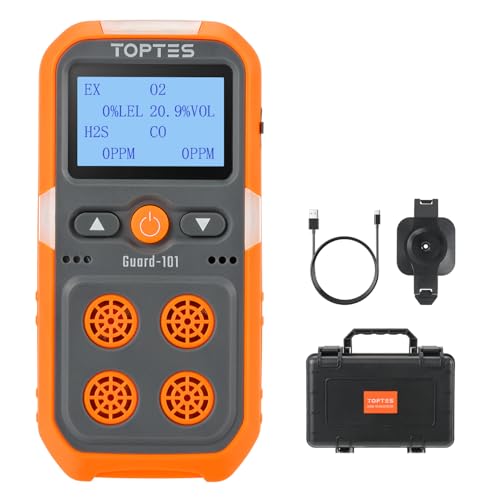


Products shown because their documented specifications fit this guide. Price and availability are on Amazon and can change.
Frequently Asked Questions
What is the first gas detection item a technician should buy?
A personal monitor for the gas most likely to hurt them: a CO monitor for anyone around combustion appliances; a 4-gas monitor for anyone entering plant rooms, manholes or tanks. Locating tools come second.
Do I need calibration gas for a sniffer?
Sniffers are locating tools and are checked against a reference leak or a whiff of gas rather than calibrated. Personal and multi-gas monitors need calibration gas and regular bump tests.
How should I store gas detectors in a van?
In a case, at moderate temperature, away from solvents, sealants and refrigerant cylinders. Heat, cold and chemical fumes shorten sensor life and cause false readings.
Affiliate disclosure: Akermin earns a commission from qualifying Amazon purchases made through links on this page. Our editorial picks are based on documented specifications and owner feedback, not commissions.
Related Guides

WiFi Natural Gas Alarm Review: One Unit Reveals the Whole Design
A WiFi natural gas alarm with an LCD showing gas concentration status and temperature, a stated response within 30 seconds, an alarm of at least 85 decibels and notifications to a phone app.
Read More→
Forensics Detectors Cl2 Review: 5 Percent of Full Scale Is 2.5 ppm
A rechargeable chlorine detector with an electrochemical sensor reading 0 to 50 ppm at 0.1 ppm resolution, a response time under 30 seconds, adjustable audible, visual and vibrating alarms and a supplied calibration certificate.
Read More→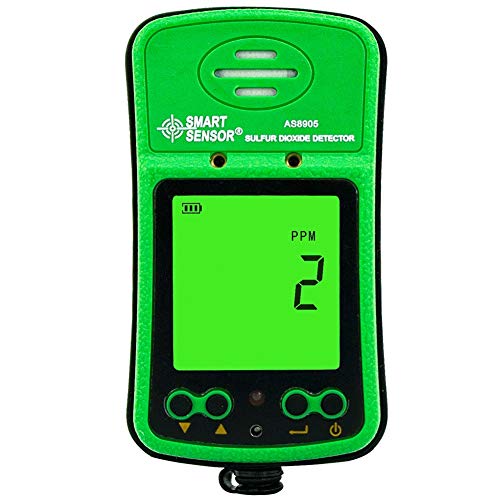
Smart Sensor SO2 Detector Review: 0.1 ppm Steps, No Accuracy Figure
A clip on sulfur dioxide monitor built on an electrochemical sensor, reading 0 to 20 ppm in 0.1 ppm steps, with adjustable high and low alarms signalled by sound, flash and vibration and a rechargeable cell quoted at 8 to 9 hours.
Read More→