As an Amazon Associate, Akermin earns from qualifying purchases. Product links on this page are affiliate links.
First assess: a strong smell of gas means leave, do not touch switches, and call the gas emergency line; the detector is for faint smells and confirmation. Otherwise, switch the detector on in clean air, let it warm up and zero, and set sensitivity high. Move the probe slowly along every joint, valve, fitting and appliance connection, tip within 5 to 10 mm, checking above joints for natural gas and below for LPG. When the tick rate rises, back off, lower sensitivity and re-approach to pinpoint. Confirm with leak-detection fluid, repair, and re-check with the detector and fluid.
Step 1: Assess before entering
| Situation | Action |
|---|---|
| Strong smell, hissing, or a fixed alarm sounding | Do not operate any switch or the detector; leave; ventilate from outside if possible; shut the meter valve if safely reachable; call the emergency line |
| Faint or intermittent smell | Open windows and doors; then use the detector to locate |
| No smell; routine check after work | Use the detector as a verification tool |
Methane at 5 percent by volume is explosive; a smell you can barely notice is around 10 to 50 ppm, far below that, which is the range where sniffing is safe and useful. See PPM vs %LEL.
Step 2: Prepare the detector
- Switch on outdoors or in a clean room; wait for warm-up (30 to 60 seconds).
- Let it zero; if it has manual zero, press it in clean air.
- Check the tip filter is clean and the battery adequate.
- Set sensitivity to high for searching.
- Confirm it responds: a brief whiff from an unlit lighter (outdoors, away from any gas) should trigger it.
Step 3: Search
- Turn off fans and close doors so gas is not dispersed.
- Work from the meter or cylinder along the pipe toward appliances.
- Probe every joint, union, valve stem, flexible connector, regulator and appliance inlet.
- Natural gas rises: check the top of horizontal joints and above fittings. LPG sinks: check below.
- Move at 25 to 50 mm per second, tip 5 to 10 mm from the surface.
- When the tick rate rises, note the spot, move away until it settles, reduce sensitivity, and approach again to find the exact point.
Step 4: Confirm
Apply leak-detection fluid (or soapy water) to the suspect joint; bubbles confirm. Semiconductor sniffers also respond to solvents, sealants and cleaners, so a detector indication alone is not proof. See what can cause false gas detector readings.
Step 5: Repair and verify
- Isolate the gas; make the repair or call a qualified fitter (in many places gas work is regulated).
- Restore supply; re-check the joint with the detector on high sensitivity and with fluid.
- Check the whole run again; a repair can disturb neighboring joints.
Safety rules
- No smoking, flames or sparks; consumer sniffers are not intrinsically safe.
- Do not use the detector as a room monitor; it locates, it does not protect. A certified fixed alarm does that; see how to choose a natural gas detector.
- Keep the detector out of liquid and away from sealant fumes; both damage the sensor.
- Replace the sensor on schedule and check it before each use; see sensor lifespan.
Detector selection is in how to choose a combustible gas leak detector.
Recommended Tools

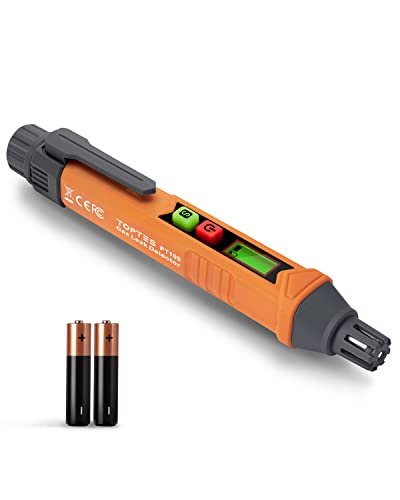
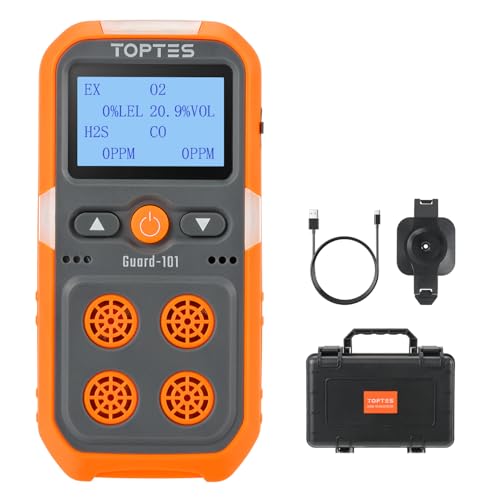
Products shown because their documented specifications fit this guide. Price and availability are on Amazon and can change.
Frequently Asked Questions
Should I use a gas detector if I smell gas strongly?
No. A strong smell means the concentration may be near or above the explosive limit. Do not operate switches, leave, ventilate if it can be done from outside, shut the gas at the meter if safely reachable, and call the emergency line. The detector is for faint smells and post-incident checks.
Are handheld gas detectors intrinsically safe?
Some professional models carry an intrinsic safety rating; many consumer sniffers do not. A non-rated detector is itself a potential ignition source in an explosive atmosphere.
How slowly should I move the probe?
About 25 to 50 mm per second, with the tip within 5 to 10 mm of the joint. Semiconductor sensors respond in a second or two; moving faster passes small leaks before the sensor registers.
Affiliate disclosure: Akermin earns a commission from qualifying Amazon purchases made through links on this page. Our editorial picks are based on documented specifications and owner feedback, not commissions.
Related Guides

WiFi Natural Gas Alarm Review: One Unit Reveals the Whole Design
A WiFi natural gas alarm with an LCD showing gas concentration status and temperature, a stated response within 30 seconds, an alarm of at least 85 decibels and notifications to a phone app.
Read More→
Forensics Detectors Cl2 Review: 5 Percent of Full Scale Is 2.5 ppm
A rechargeable chlorine detector with an electrochemical sensor reading 0 to 50 ppm at 0.1 ppm resolution, a response time under 30 seconds, adjustable audible, visual and vibrating alarms and a supplied calibration certificate.
Read More→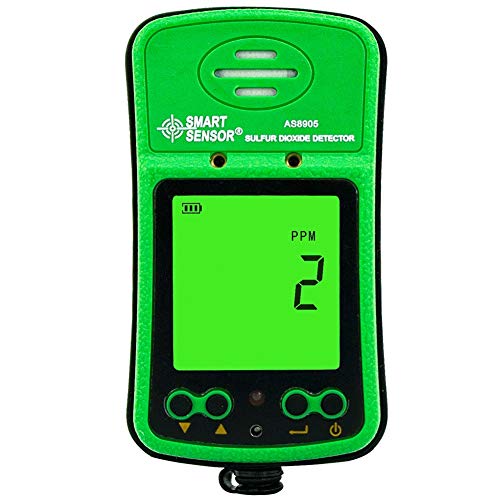
Smart Sensor SO2 Detector Review: 0.1 ppm Steps, No Accuracy Figure
A clip on sulfur dioxide monitor built on an electrochemical sensor, reading 0 to 20 ppm in 0.1 ppm steps, with adjustable high and low alarms signalled by sound, flash and vibration and a rechargeable cell quoted at 8 to 9 hours.
Read More→