As an Amazon Associate, Akermin earns from qualifying purchases. Product links on this page are affiliate links.
Choose a combustible gas leak detector with a semiconductor sensor sensitive to about 50 ppm methane or better, a flexible gooseneck of 300 to 450 mm to reach behind appliances, adjustable sensitivity so you can back off near a strong source and pinpoint, an audible tick rate plus a visual bar or LED scale, warm-up under a minute, and a stated response to the gases you work with (natural gas, propane, butane, hydrogen). Rechargeable or standard batteries, a belt holster and a probe cap complete it. It locates leaks; a certified fixed alarm protects the building.
How it works
A heated metal-oxide element changes resistance when combustible gas reaches it; the electronics convert the change into a tick rate and a bar graph that rise as the probe approaches a leak. Semiconductor sensors are very sensitive and non-specific, which is right for locating. Catalytic-bead and infrared sensors quantify %LEL for safety monitors and are less suited to sniffing. See what a combustible gas detector is.
Specifications
| Spec | Look for |
|---|---|
| Sensor | Semiconductor (MOS) for sniffing |
| Sensitivity | 50 ppm methane or better; stated |
| Gases | Methane, propane, butane, hydrogen, plus solvents and some refrigerants listed |
| Probe | Flexible gooseneck 300 to 450 mm; protected tip |
| Indication | Tick rate that accelerates, plus LED or bar graph; a numeric ppm display on some |
| Sensitivity control | High and low, or a dial; auto-zero to background |
| Warm-up | Under 60 seconds |
| Power | Rechargeable or AA/AAA; 5+ hours |
| Build | Holster, wrist strap, drop resistance |
| Certification | Intrinsic safety rating if used in hazardous areas professionally |
Picks by user
- Homeowner: a mid-priced sniffer with gooseneck and adjustable sensitivity (TOPTES PT199, PT520A class) for checking appliance connections and cylinder fittings.
- Plumber, HVAC technician: a trade sniffer with a numeric readout, longer gooseneck and holster (Klein ET120, UEi CD100A class), plus bubble fluid.
- Gas fitter, industrial: an intrinsically safe detector meeting relevant standards, or a %LEL instrument alongside the sniffer.
- Refrigerant work: a dedicated refrigerant detector; see how to choose a refrigerant leak detector.
Features that matter in use
- Auto-zero and background tracking: the detector re-zeros to ambient so it can find a leak in a room that already smells of gas.
- Mute: for quiet environments.
- Peak hold: for reporting the highest reading.
- Tip filter: keeps dust and moisture off the sensor; replaceable.
False alarms
Semiconductor sensors respond to alcohol, solvents, aerosols, sealants, exhaust and steam. Let the area clear, zero the detector in clean air, and confirm with leak-detection fluid before repair. See what can cause false gas detector readings.
What it is not
It is not a room monitor and not a certified alarm. A fixed natural gas or LPG alarm near the appliances, tested monthly and replaced at end of life, provides protection. The sniffer is what you reach for when the alarm sounds or the room smells. Use is covered in how to use a combustible gas detector safely; the natural-gas-specific choice in how to choose a natural gas detector.
Recommended Tools

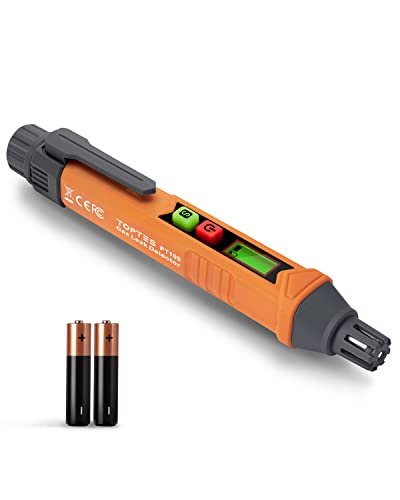


Products shown because their documented specifications fit this guide. Price and availability are on Amazon and can change.
Frequently Asked Questions
What sensitivity should a gas leak detector have?
Detection down to about 50 ppm of methane or better for finding small pipe-fitting leaks. Detectors stating 10 to 20 ppm are more sensitive but alarm more on interferents.
Does a gas leak detector work for propane and natural gas?
Semiconductor sensors respond to both, and to butane, hydrogen, acetylene and most hydrocarbons. Sensitivity differs by gas; the spec sheet lists what it was calibrated to.
Can I use a leak detector instead of a gas alarm?
No. A leak detector is a handheld locating tool. A fixed, certified gas alarm mounted near appliances is the protection; the detector is what you use to find the leak after the alarm or a smell.
Affiliate disclosure: Akermin earns a commission from qualifying Amazon purchases made through links on this page. Our editorial picks are based on documented specifications and owner feedback, not commissions.
Related Guides

WiFi Natural Gas Alarm Review: One Unit Reveals the Whole Design
A WiFi natural gas alarm with an LCD showing gas concentration status and temperature, a stated response within 30 seconds, an alarm of at least 85 decibels and notifications to a phone app.
Read More→
Forensics Detectors Cl2 Review: 5 Percent of Full Scale Is 2.5 ppm
A rechargeable chlorine detector with an electrochemical sensor reading 0 to 50 ppm at 0.1 ppm resolution, a response time under 30 seconds, adjustable audible, visual and vibrating alarms and a supplied calibration certificate.
Read More→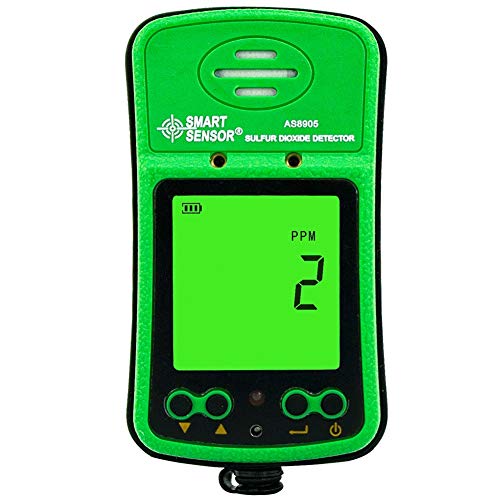
Smart Sensor SO2 Detector Review: 0.1 ppm Steps, No Accuracy Figure
A clip on sulfur dioxide monitor built on an electrochemical sensor, reading 0 to 20 ppm in 0.1 ppm steps, with adjustable high and low alarms signalled by sound, flash and vibration and a rechargeable cell quoted at 8 to 9 hours.
Read More→