As an Amazon Associate, Akermin earns from qualifying purchases. Product links on this page are affiliate links.
Test a fixed gas alarm once a month by pressing its test button, and test a handheld sniffer every time you pick it up, not on a calendar. Those two rules cover almost every home. On top of them, add a test after any event that could have disturbed the unit: a power outage, a move, a renovation, a real alarm, or a long stretch in storage. Industrial monitors that a worker relies on to decide whether a space is safe follow a stricter routine, a bump test before each shift and periodic calibration, but that is a different world from a plug-in alarm in a kitchen. This article gives the schedule; the companion article on how to test a gas leak detector explains the mechanics of each test.
The Monthly Button Test
Nearly every plug-in, battery or 12-volt gas alarm sold for homes and RVs carries a test button, and the instructions that come with it call for pressing it monthly. The test confirms that the unit has power, that the horn sounds at full volume, that the indicator lights work and that the alarm circuit responds. What it does not do is put gas on the sensor. A unit can pass the button test every month for years and still have a sensor that has quietly lost sensitivity, which is why the schedule below pairs the button test with a date check and, for units where it is practical, an occasional response check with a real source.
Pick a date you already remember, such as the first of the month or the day you pay a bill, and test every alarm in the house at once. Kidde plug-in combination units such as the COPDLG and the 9-volt backup model show a display that confirms the unit is awake; on those, the test also confirms the display is legible. RV alarms from Safe T Alert, such as the 30-442, run on the 12-volt house system, so a monthly test also tells you that circuit is live.
Handheld Sniffers: Before Every Use
A sniffer is not running while it sits in the toolbox, so nothing degrades between uses except the batteries. The right time to test it is the moment before you rely on it. Power it up in clean air away from the appliance, let the warm-up finish (the TopTes PT199 and PT520A both specify 30 seconds, the UEi CD100A 10 seconds), and bring the tip near a small known source so you see the bars or hear the tic rate rise. Then sweep. If it fails to respond, replace the batteries and try again; if it still fails, the sensor is the problem and the tool goes on the replacement list rather than back in the drawer. A sniffer that has been used to find a large leak also deserves a fresh check next time, because a heavy exposure can leave a semiconductor sensor sluggish for a while.
Event-Driven Tests
Between monthly tests, a few events call for an extra one because they can change what the alarm sees or whether it works at all.
| Event | Fixed alarm | Handheld sniffer | Why |
|---|---|---|---|
| Power outage | Test after power returns and warm-up ends; check backup batteries | Not affected | Backup cells may be drained; the sensor restarts cold |
| Moving the alarm or moving house | Test at the new location | Check before first use in the new home | New placement may be in a draft or dead-air corner |
| Painting, floor refinishing, new furniture | Test after fumes clear | Wait until the room airs out before sweeping | Solvent vapor can trip or desensitize semiconductor sensors |
| New or reconnected gas appliance | Test, then leave running | Sweep every new joint | Fresh connections are the most common leak point |
| Any real alarm | Test once the utility has cleared the building | Check before the next use | A heavy exposure can shift sensor response |
| RV out of storage | Test with the house battery charged | Check batteries and warm-up | Winter storage drains 12-volt systems and dries out fittings |
| Unit reaches its stated age | Stop testing, replace | Replace if the manufacturer gives a sensor life | Testing cannot restore a worn sensor |
When a Bump Test Belongs on the Calendar
A bump test exposes the sensor to a known gas and confirms that it alarms. For a homeowner it is optional and awkward, because consumer alarms are not built for test gas; a small butane source near a sniffer is the practical home version. For anyone using a portable monitor to decide whether a crawlspace, a tank or a manhole is safe to enter, it is standard practice before each use, and full calibration follows the manufacturer’s interval. The reasoning is in why gas detectors need bump tests and calibration, and how to calibrate a gas detector covers which consumer units can be calibrated at all (most cannot).
The Once-a-Year Date Check
Once a year, look at the date you wrote on each alarm when you installed it, or the manufacture date printed on the back, and compare it with the service life the manufacturer states. Sensors age even when the unit never sounds, and no amount of testing extends that limit. The signs that a unit is due, and what to do about a unit with no date on it, are in when to replace a gas detector.
Keeping a Simple Record
A line on the back of the unit or a note in a phone is enough: install date, each monthly test, any real alarm and any replacement. The record earns its keep the day an alarm sounds and you need to know whether it is a fresh unit reporting a real leak or a seven-year-old one that has been chirping for a week. Households that own several alarms, as counted in how many gas detectors you need, benefit most from writing it down.
What Testing Does Not Change
A tested alarm is a more trustworthy alarm, but it is still only a warning device. When it sounds for real, or when you smell gas whether or not it sounds, the response is the same as it would be with no alarm at all: get out, leave every switch and appliance untouched on the way, and call the gas utility or 911 from outside. Alarms and testing sit on top of that procedure; they do not stand in for it. Fixed units that are easy to keep on a monthly schedule are compared in the natural gas detector roundup, and both fixed and handheld options are in the gas leak detector guide.
Recommended Tools
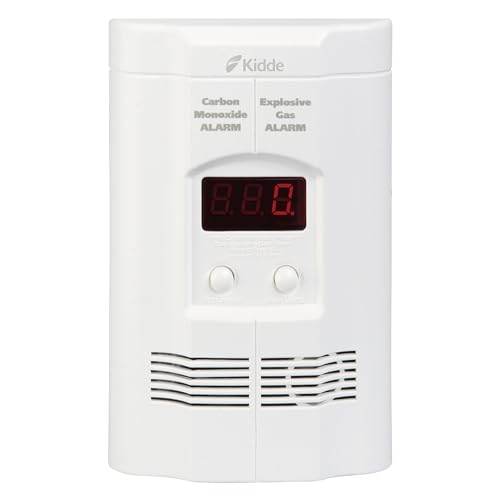

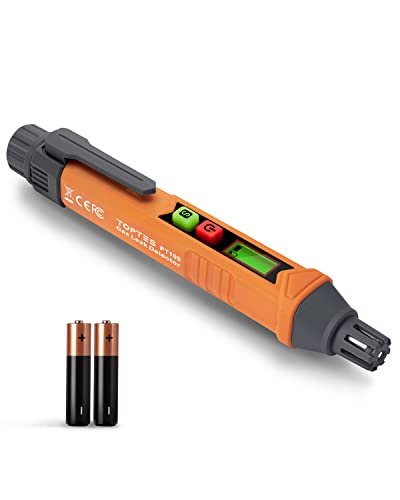

Products shown because their documented specifications fit this guide. Price and availability are on Amazon and can change.
Frequently Asked Questions
Does pressing the test button every month wear the alarm out?
No. The button exercises the horn, the lights and the alarm circuit, none of which age noticeably from a few seconds of use. The sensor ages with time and exposure whether or not you test, so monthly testing costs nothing in sensor life.
Should I test the alarm again after a power outage?
Yes, once power is back and the unit has finished its warm-up. A plug-in alarm that ran on its backup battery through a long outage may also need fresh backup cells, and a unit that shows nothing on its display after power returns needs attention before you trust it again.
How often should I check a sniffer that sits in a drawer for months?
Before every use, not on a schedule. Switch it on in clean air, let it finish warming up, and confirm it responds to a small source before you sweep any fittings. A sniffer that has been idle is most likely to have flat batteries, which most models flag with a low-battery light.
Do RV propane alarms follow a different schedule?
The same monthly button test applies, with two additions: test when you bring the RV out of storage and again after any 12-volt electrical work, because the alarm only runs when the house battery is up. A low-voltage warning on the alarm is a battery problem, not a leak.
Affiliate disclosure: Akermin earns a commission from qualifying Amazon purchases made through links on this page. Our editorial picks are based on documented specifications and owner feedback, not commissions.
Related Guides

WiFi Natural Gas Alarm Review: One Unit Reveals the Whole Design
A WiFi natural gas alarm with an LCD showing gas concentration status and temperature, a stated response within 30 seconds, an alarm of at least 85 decibels and notifications to a phone app.
Read More→
Forensics Detectors Cl2 Review: 5 Percent of Full Scale Is 2.5 ppm
A rechargeable chlorine detector with an electrochemical sensor reading 0 to 50 ppm at 0.1 ppm resolution, a response time under 30 seconds, adjustable audible, visual and vibrating alarms and a supplied calibration certificate.
Read More→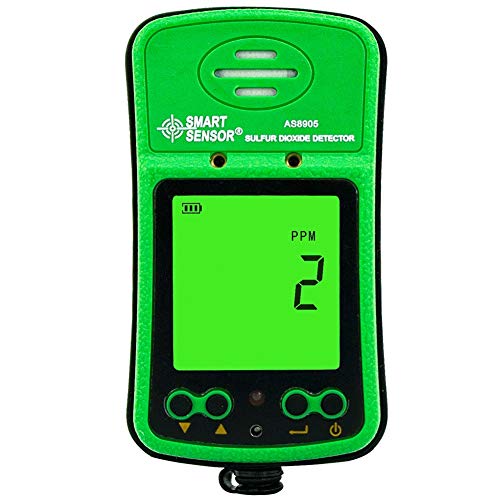
Smart Sensor SO2 Detector Review: 0.1 ppm Steps, No Accuracy Figure
A clip on sulfur dioxide monitor built on an electrochemical sensor, reading 0 to 20 ppm in 0.1 ppm steps, with adjustable high and low alarms signalled by sound, flash and vibration and a rechargeable cell quoted at 8 to 9 hours.
Read More→