Natural gas is methane, it rises, and it is odorized so you can smell it, but only when you are awake and in the room. These detectors were chosen from manufacturer specifications for a home on a natural gas supply, with notes on the one placement rule that most buyers get wrong.
As an Amazon Associate, Akermin earns from qualifying purchases. Product links on this page are affiliate links.
Our Top Picks
These picks are for a home supplied with natural gas (methane). They were compared on gases covered, listing standards, power backup and display, using manufacturer documentation and owner feedback; no laboratory testing was carried out.
Best Overall
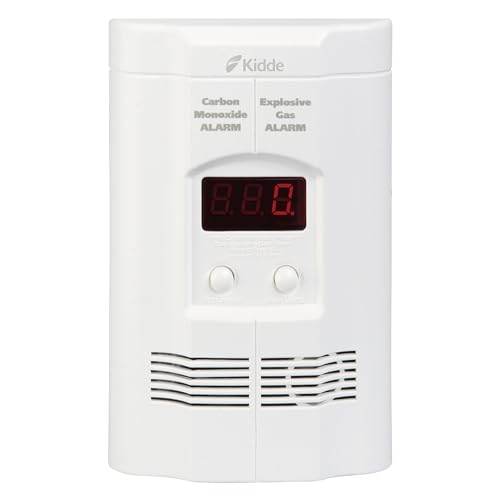
Kidde COPDLG Explosive Gas and CO Alarm
Natural gas, propane and CO from one listed plug-in.
Explosive gas sensor plus low-level CO sensing
Backlit display reads CO ppm or shows GAS
120V plug-in with two AA backup batteries, no low-battery chirp
UL 2034 5th Edition, ETL listed, 7-year limited warranty
Manufacturer-published specifications at the time of research. Only the fixed alarms are intended for continuous monitoring; the two handhelds are included for finding the leak afterwards.
How to Choose a Natural Gas Detector
Methane behaves differently from propane, and the detector has to match:
Mount High
Methane rises. A dedicated natural gas detector belongs within about a foot of the ceiling; a plug-in at an outlet is a compromise the manufacturer must approve.
Look for the Listing
UL 1484 for gas, UL 2034 for CO. It is the only evidence that the alarm threshold and false-alarm resistance were checked.
Battery Backup
Outages and furnace failures often coincide. A plug-in without backup is off when you need it.
Add CO If You Burn Gas
Any gas appliance can produce carbon monoxide. A combination alarm covers both hazards in one outlet.
How high should a natural gas detector be mounted?
Methane is lighter than air, so a dedicated natural gas detector is mounted high on the wall, generally within about 12 inches of the ceiling, in the room with the appliance. Plug-in combination alarms sit at outlet height because the manufacturer has designed and listed them for that position. Follow the manual for the specific model.
Will a natural gas detector also detect propane?
The Kidde and Orabal units listed here detect both. The catch is placement: propane sinks, so a ceiling-mounted methane detector will be slow to see a propane leak at floor level. If your home uses propane, see the propane detector guide.
Does natural gas have a smell?
Raw methane is odorless. Utilities add mercaptan, which smells like rotten eggs or sulfur, so leaks can be noticed. A detector matters for the times you are asleep, away, have a reduced sense of smell, or the odorant has faded in a long pipe run.
Can I test a natural gas detector with a lighter?
Use the test button for the alarm circuit. Holding an unlit butane lighter near the sensor will usually trip the combustible sensor, but do it briefly, in a ventilated room, and never with a flame. Kidde and most manufacturers describe the approved method in the manual.
Reviews
Kidde COPDLG Explosive Gas and CO Alarm Best Overall
For a natural gas home the COPDLG is the sensible default because a house with a gas furnace or water heater has two risks, not one: a supply leak (methane) and a combustion problem (carbon monoxide). One plug-in covers both, and the display tells you which has tripped.
Kidde lists it as the replacement for the KN-COEG-3 and 900-0113, which have been the standard hardware-store gas alarm for years, so mounting and behavior are familiar. The AA backup keeps it running through an outage, which matters because a furnace blower stopping is exactly when a flue problem can appear.
The compromise is height. Methane collects at the ceiling, and an outlet is near the floor. Kidde accepts outlet mounting, and in a kitchen with an eight-foot ceiling the difference is small; in a tall utility room, or if you want a methane-only alarm at the ceiling, pair it with a ceiling-zone detector.
Kidde CO and Explosive Gas Alarm, 9V Backup Best With Peak Memory
This is Kidde's other plug-in combination alarm, the third-edition model with a 9V backup battery instead of AA cells. Function is the same: it samples for explosive gas and carbon monoxide, shows the CO reading in ppm and switches the display to GAS when the combustible sensor trips, with an 85 dB horn.
The feature that sets it apart is Peak Level Memory, which stores the highest CO reading since the last reset. If the alarm sounded while you were out, or a low-level CO event resolved itself when the furnace cycled off, you can still see that it happened, which is the kind of evidence a technician needs.
Choose the COPDLG if you want AA backup and the newer low-level CO alert pattern; choose this one if the peak memory matters to you or the 9V version is what your local store stocks. Either way, keep it in the room with the appliance, not in a bedroom.
Orabal 4-in-1 Plug-In Gas Detector Best Live Display
The Orabal is here for one reason: it shows a live gas concentration in ppm rather than a silent standby, so you can see a small rise when the oven igniter takes a few seconds too long, and see it fall again. That is useful information that a listed alarm, which stays quiet until its threshold, does not give you.
The listing states continuous monitoring of natural gas, methane, propane and LPG, a preset alarm threshold with an 85+ dB horn and flashing display, and a brief warm-up after plugging in. It also shows temperature and humidity.
What the listing does not state is any UL 1484 or ETL listing, and there is no battery backup, so it goes dark in an outage. Treat it as a monitor that complements a listed alarm rather than as the alarm itself. Used that way, it is the cheapest way to make a methane leak visible before it becomes audible.
Strengths
Live ppm reading rather than silent standby
Covers natural gas and LPG
Plug-and-play, compact
Temperature and humidity on the same screen
Limitations
No listing standard stated
No battery backup
Semiconductor sensors react to alcohol and cleaning sprays
Short answer: for a home on natural gas, plug a Kidde COPDLG into an outlet in the room with the furnace, water heater or range. It is listed, covers methane, propane and carbon monoxide, and keeps running on AA backup. If you want to watch the level rather than wait for an alarm, add an Orabal 4-in-1 monitor; if you want the peak-memory feature, the 9V-backup Kidde is the equivalent alternative.
What a natural gas detector actually senses
Natural gas is 85 to 95 percent methane. Residential detectors use a semiconductor or catalytic sensor that responds to combustible gas in general, then set the alarm at a fraction of methane’s lower explosive limit, which is about 5 percent by volume. Because the sensor is not gas-specific, the same alarm usually also responds to propane and butane; what changes between a “natural gas” and a “propane” model is the mounting position the manufacturer designed it for. How gas leak detectors work covers the sensor types.
Why height is the whole placement question
Methane is lighter than air. A leak from a range connector or a furnace valve rises and spreads along the ceiling before it fills the room downward. A detector at the ceiling sees that early; one at the floor sees it last. This is why the Kidde plug-ins, which live at outlet height, are a compromise: Kidde has designed and listed them for that position, and in a normal-height kitchen the delay is small, but the physics favors the ceiling. For the full set of rules, including distance from the stove, vents and windows, read where to place a natural gas detector and does natural gas rise or fall.
Combination units versus dedicated alarms
A home with gas appliances has two risks: the gas itself leaking, and the appliance producing carbon monoxide when combustion goes wrong. The two Kidde units cover both from one outlet and their display says which one has tripped. A dedicated methane-only alarm at the ceiling is the better sensor position but does nothing for CO, so most homes end up with either a combination unit or a pair. Gas leak detector vs carbon monoxide detector explains why the sensors cannot be merged.
Listed or not
UL 1484 is the residential gas detector standard. A listed alarm has had its trip level, resistance to nuisance alarms and long-term sensor drift checked by a laboratory. The Orabal monitor in our picks is useful precisely because it shows a live reading, but its listing does not state a certification, so we place it as a supplement. The generic ten-year-battery plug-ins on the marketplace fall into the same category.
After the alarm: finding the leak
A fixed alarm does not tell you which joint failed. That is a job for a handheld sniffer with a gooseneck, held near each fitting once the utility has said the building is safe. The handheld gas leak detector guide compares them; the TopTes PT520A in the table above is the usual recommendation for a homeowner. Our how-to-choose article covers the decision in more depth, and the main gas leak detector guide covers propane and RV cases.
How We Research
Selection was based on manufacturer documentation (gases detected, display, power and backup, listing standards, warranty) and recurring owner feedback on false alarms and longevity. We did not run laboratory tests. Amazon data supplies images, availability and links only.
A WiFi natural gas alarm with an LCD showing gas concentration status and temperature, a stated response within 30 seconds, an alarm of at least 85 decibels and notifications to a phone app.
A rechargeable chlorine detector with an electrochemical sensor reading 0 to 50 ppm at 0.1 ppm resolution, a response time under 30 seconds, adjustable audible, visual and vibrating alarms and a supplied calibration certificate.
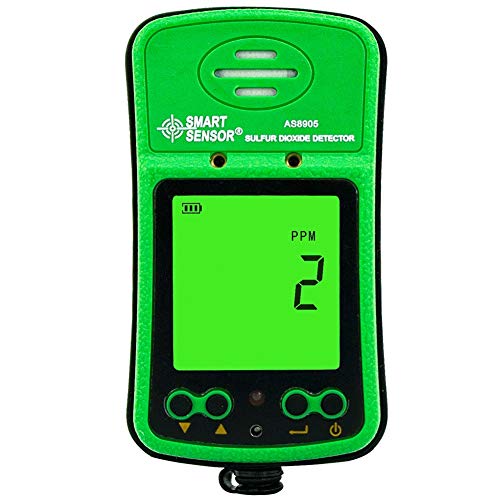
A clip on sulfur dioxide monitor built on an electrochemical sensor, reading 0 to 20 ppm in 0.1 ppm steps, with adjustable high and low alarms signalled by sound, flash and vibration and a rechargeable cell quoted at 8 to 9 hours.