As an Amazon Associate, Akermin earns from qualifying purchases. Product links on this page are affiliate links.
Natural gas rises. It is mostly methane, and methane is lighter than air, so gas leaking from a stove connector, a furnace union or a meter drifts upward, spreads along the ceiling and collects in the highest enclosed space it can reach. That single fact decides where a fixed natural gas alarm is mounted (high), where you sweep a handheld sniffer (cabinet tops, ceiling joints, the top of a water heater closet) and how you ventilate a room that smells of gas (open something high). The rest of this article covers what “rises” does and does not mean inside a real house.
Why Methane Rises
Gases sort themselves by density when they are left alone. Methane is lighter than the nitrogen and oxygen mix we call air, so buoyancy pushes it upward the same way a helium balloon is pushed up. Utility natural gas is not pure methane, but the small amounts of ethane and other components do not change the picture; the blend delivered to a home is lighter than air and behaves as such. The mercaptan odorant utilities add so that you can smell a leak is present in tiny amounts and rides along with the gas rather than changing where it goes. (If you have wondered what that odorant actually smells like, see what natural gas smells like.)
What “Rises” Means Inside a House
The clean textbook picture is a layer of gas forming under the ceiling. Inside a lived-in house it is messier, for three reasons.
- The ceiling is a lid. Gas that rises has nowhere to go once it reaches the ceiling. It pools there and the layer thickens downward as the leak continues. A slow leak in a closed room does not stay harmlessly out of reach; it works its way down to the height of light switches and pilot flames.
- Air currents mix it. A running furnace blower, a ceiling fan, a range hood or an open window moves air faster than buoyancy separates gases. In a room with active airflow, methane ends up partly mixed through the whole volume, which is why you can smell a leak at nose height long before the ceiling concentration is high.
- Openings above the leak act as chimneys. Stairwells, duct chases, the gap around a flue pipe and the hole a plumbing stack passes through all let gas travel upward into the next level. A basement leak can show up first as a smell in an upstairs hallway.
Where a Natural Gas Leak Collects
These are the places gas from a leak tends to gather. They are also the places to check first with a sniffer.
- Under the ceiling of the room with the appliance, especially in dead-air corners with no vent or return grille.
- Along the top of upper kitchen cabinets and inside the soffit above them.
- The top of a furnace or water heater closet, above the appliance, particularly if the door is solid rather than louvered.
- The highest point of an attic if a leak feeds a chase that opens into it.
- The upper part of a crawlspace or basement ceiling cavity below a leaking floor connector.
What This Means for Detector Placement
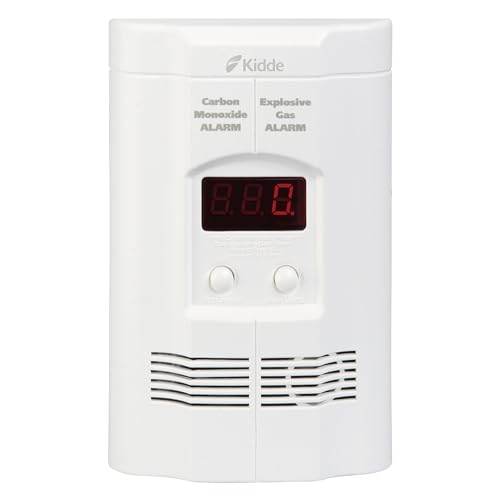
Because the gas gathers high, a fixed natural gas alarm belongs high on the wall or on the ceiling, and manufacturers typically specify mounting within roughly 12 inches of the ceiling. It also needs to be away from the stove, vents, windows and dead-air corners so that neither cooking fumes nor stagnant air skew the reading. Our natural gas detector placement guide gives the room-by-room version. If your alarm is a plug-in combination unit, it sits at outlet height by design; that is a compromise the manufacturer accepts in exchange for easy installation, and you should follow its instructions rather than improvising an extension cord to the ceiling.
A handheld sniffer is the second half of the picture. A fixed alarm tells you gas is present; a probe such as the TopTes PT520A lets you trace the cloud back to the fitting that is leaking. The natural gas detector roundup covers the fixed alarms, and the overall gas leak detector guide covers both types side by side.
Ventilating a Room That Smells of Gas
Because the gas is overhead, the openings that clear it are high ones: a transom, a window sash lowered from the top, a door to an upper porch. That advice only applies to a faint odor you have already reported. If the smell is strong, do not stay to ventilate. Leave the building, avoid touching any switch, phone or garage door opener on the way out, and call the gas utility or 911 once you are outside. A detector or an article like this supplements that procedure; it never replaces it.
Natural Gas Is the Opposite of Propane
Everything above flips for propane and butane, which are heavier than air and pool at floor level. That is why the two fuels need different alarm placement and, in many homes, different products. The companion article on whether propane rises or falls covers the low side, and choosing a natural gas detector explains how to make sure the alarm you buy is rated for the fuel you actually have.
How Much Gas Is Dangerous?
Methane will ignite in air once it reaches about 5 percent by volume, its lower explosive limit. A pocket of gas under a ceiling can reach that figure while the air at nose height is still far below it, which is the practical reason for mounting the sensor where the gas is rather than where you are. The units used on detector displays are explained in this guide to ppm, LEL and volume.
Recommended Tools


Natural-Gas-Detector with Plug-in Design, Gas-Leak-Detector with High Accuracy Sensor, Portable
View on Amazon
Products shown because their documented specifications fit this guide. Price and availability are on Amazon and can change.
Frequently Asked Questions
Does natural gas rise through floors to upper levels?
It moves toward any opening above it. A leak in a basement can travel up a stairwell, a duct chase or a plumbing penetration and collect under the ceiling of the floor above. Closed doors slow it down but do not seal it.
If natural gas rises, does it leave the house on its own?
Only if there is an opening high in the room. The ceiling acts as a lid. In a closed room the gas accumulates under the ceiling first and then, as more leaks, the layer thickens downward toward the height where an ignition source or your nose is.
Does natural gas sink when it is cold?
Cold gas from a pressure drop is briefly denser, but it warms to room temperature within moments of leaking. Inside a house you should assume methane behaves as a lighter-than-air gas at all times.
Affiliate disclosure: Akermin earns a commission from qualifying Amazon purchases made through links on this page. Our editorial picks are based on documented specifications and owner feedback, not commissions.
Related Guides

WiFi Natural Gas Alarm Review: One Unit Reveals the Whole Design
A WiFi natural gas alarm with an LCD showing gas concentration status and temperature, a stated response within 30 seconds, an alarm of at least 85 decibels and notifications to a phone app.
Read More→
Forensics Detectors Cl2 Review: 5 Percent of Full Scale Is 2.5 ppm
A rechargeable chlorine detector with an electrochemical sensor reading 0 to 50 ppm at 0.1 ppm resolution, a response time under 30 seconds, adjustable audible, visual and vibrating alarms and a supplied calibration certificate.
Read More→
Smart Sensor SO2 Detector Review: 0.1 ppm Steps, No Accuracy Figure
A clip on sulfur dioxide monitor built on an electrochemical sensor, reading 0 to 20 ppm in 0.1 ppm steps, with adjustable high and low alarms signalled by sound, flash and vibration and a rechargeable cell quoted at 8 to 9 hours.
Read More→