As an Amazon Associate, Akermin earns from qualifying purchases. Product links on this page are affiliate links.
If natural gas is piped into your home, a natural gas detector is worth installing, and if any of the following is true it moves from “worth it” to “get one this week”: someone in the house has a reduced sense of smell, the appliances or flexible connectors are old or of unknown age, a gas appliance sits in a room you rarely enter, or you rent and did not choose the equipment. If your home is all electric, you do not need one. Most US building codes do not require a combustible gas alarm, so nobody will make the decision for you; this article gives you the basis for making it.
Why Smell Alone Is Not Enough
Utilities add a mercaptan odorant to natural gas precisely so that people notice leaks, and for most awake, healthy adults in a small room it works. The gaps are the situations where a detector earns its place.
- Sleep. Odor does not reliably wake people. A leak that starts at midnight has hours to build before anyone is conscious enough to notice it.
- Adaptation. The nose stops registering a steady smell after a while. A slow leak that has been there since morning can become unnoticeable to the people living with it while still being obvious to a visitor.
- Reduced smell. Colds, allergies, smoking, some medications, some illnesses and normal aging all dull the sense of smell, sometimes without the person realizing it.
- Distance. Gas collecting under the ceiling of a basement mechanical room is not in anyone’s breathing zone until a great deal has leaked.
What the odorant actually smells like, and the conditions in which it can be misleading, are covered in what natural gas smells like.
Who Benefits Most
| Situation | Recommendation |
|---|---|
| Gas service, household sleeps in the home | Install a fixed natural gas alarm in the kitchen and the mechanical room |
| Older appliances, flexible connectors of unknown age, recent DIY appliance work | Fixed alarm plus a handheld sniffer to check the connections |
| Older adults, young children, anyone with reduced smell | Fixed alarm; consider a model with a loud alarm rated for the room |
| Rental with a gas range | Plug-in alarm that needs no installation |
| Vacation home or property that sits empty | Fixed alarm; a leak that starts while nobody is there is the worst case for smell |
| Gas furnace or water heater in a rarely visited basement, attic or closet | Fixed alarm in that space |
| All-electric home | Not needed; a CO alarm may still be |
What a Natural Gas Detector Does
A fixed natural gas alarm monitors the air near the ceiling continuously and sounds when the concentration crosses its alarm setpoint, which for residential units is typically set at a fraction of the lower explosive limit so that the warning comes well before the air can ignite. That is the whole job. It does not shut the gas off, it does not tell you which fitting is leaking, and it does not detect carbon monoxide unless it is a combination unit with a separate CO sensor. The article on whether a CO detector detects natural gas clears up the most common confusion on that point.
It also does not change what you do when it sounds. The alarm is a prompt to follow the same procedure you would follow for a strong gas smell: leave, keep your hands off light switches and appliances on the way out, and call the gas company or 911 from outside. Do not go looking for the leak first.
Which Type to Get
For continuous protection you want a fixed alarm: plug-in models such as the Kidde combination units are the simplest, and hardwired or battery models exist for rooms without a convenient outlet. A handheld sniffer such as the pocket-sized TopTes PT199 is a different tool; you switch it on to check a suspect fitting and switch it off again. Owning one is sensible if you ever connect a range or dryer yourself, but it does not watch the house while you sleep. The handheld versus fixed comparison goes into the trade-offs, and choosing a natural gas detector covers the specifications to look for, including the UL 1484 listing for residential gas detectors.
Current fixed models are compared in the natural gas detector roundup, and the wider gas leak detector guide includes propane and handheld options.
When You Can Reasonably Skip It
An all-electric home has nothing to detect. A home with gas service only to an outdoor grill or pool heater has little indoor exposure, though a sniffer for checking the outdoor connections each season is still useful. Otherwise, the arguments against a detector come down to nuisance alarms and replacement cost. Nuisance alarms are usually a placement problem, solved by keeping the unit away from the stove and from aerosol use; replacement is a fact of life for any gas sensor, as explained in why gas detectors do not last forever. Neither is a strong reason to go without one in a house that runs on gas.
Recommended Tools
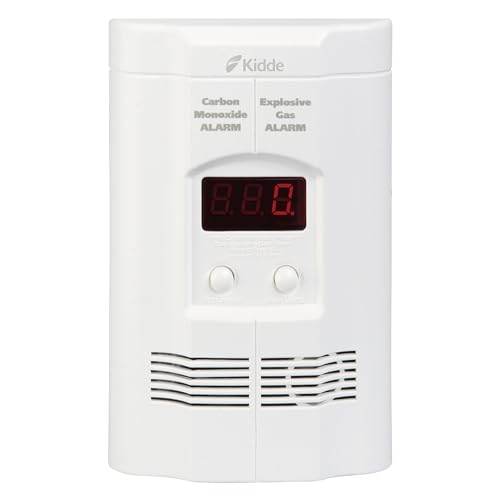

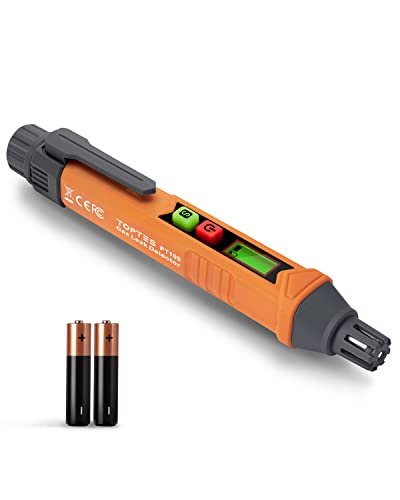
Products shown because their documented specifications fit this guide. Price and availability are on Amazon and can change.
Frequently Asked Questions
Is a natural gas detector required by code?
In most of the United States, no. Smoke and CO alarms are required almost everywhere; combustible gas alarms are required in only a small number of jurisdictions, New York City among them. Check your local building department, and treat the alarm as a voluntary safeguard elsewhere.
I have a CO alarm. Does that cover natural gas?
No. A CO alarm uses an electrochemical sensor that responds to carbon monoxide only. It will not sound for methane or propane. You need a separate combustible gas alarm or a combination unit that contains both sensors.
Do renters need a natural gas detector?
Renters are often the people who benefit most, because they did not install the appliances and may not know their age or condition. A plug-in alarm needs no wiring and leaves with you when you move.
My house is all electric. Do I need one?
No. With no gas piped in, there is nothing for a combustible gas alarm to detect. A CO alarm is still sensible if you have an attached garage, a wood stove or any fuel-burning appliance.
Affiliate disclosure: Akermin earns a commission from qualifying Amazon purchases made through links on this page. Our editorial picks are based on documented specifications and owner feedback, not commissions.
Related Guides

WiFi Natural Gas Alarm Review: One Unit Reveals the Whole Design
A WiFi natural gas alarm with an LCD showing gas concentration status and temperature, a stated response within 30 seconds, an alarm of at least 85 decibels and notifications to a phone app.
Read More→
Forensics Detectors Cl2 Review: 5 Percent of Full Scale Is 2.5 ppm
A rechargeable chlorine detector with an electrochemical sensor reading 0 to 50 ppm at 0.1 ppm resolution, a response time under 30 seconds, adjustable audible, visual and vibrating alarms and a supplied calibration certificate.
Read More→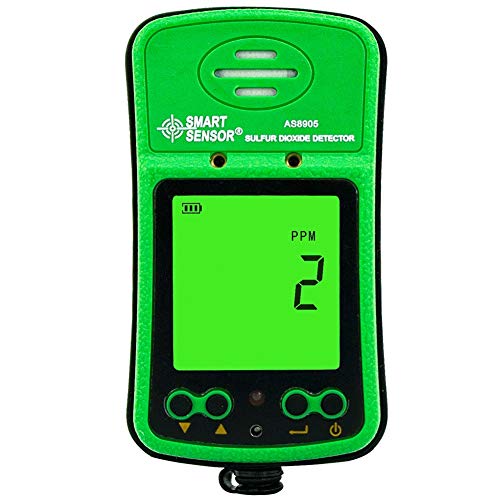
Smart Sensor SO2 Detector Review: 0.1 ppm Steps, No Accuracy Figure
A clip on sulfur dioxide monitor built on an electrochemical sensor, reading 0 to 20 ppm in 0.1 ppm steps, with adjustable high and low alarms signalled by sound, flash and vibration and a rechargeable cell quoted at 8 to 9 hours.
Read More→