As an Amazon Associate, Akermin earns from qualifying purchases. Product links on this page are affiliate links.
The Answer for Most Homes
If you have gas appliances and no gas detector at all, buy a fixed alarm first. It watches the room continuously, it is mounted where the gas collects, and it sounds whether you are awake, asleep or away. A handheld sniffer is a second purchase for a narrower set of people: those who connect their own appliances, own an RV or boat, have chased a faint smell they could not locate, or simply want to confirm fittings after a service visit. A sniffer cannot stand in for an alarm, and an alarm cannot tell you which fitting is leaking. They are complementary tools, and most gas homes need the first before the second.
Side by Side
| Item | Fixed gas alarm | Handheld sniffer |
|---|---|---|
| Job | Continuous protection of a room | Locating a suspected leak |
| Operation | Always on, mounted in place | Switched on for minutes, carried to fittings |
| What it reports | Horn at a set threshold; some show a reading | Rising LEDs, bars or beep rate; some show percent LEL |
| Sensitivity | Trips at a fraction of the explosive limit | Responds from about 50 ppm on many models |
| Power | Outlet, 12V DC or hardwired, often with battery backup | AAA batteries or rechargeable pack |
| Position | High for natural gas, low for propane | Probe tip within a few centimeters of the fitting |
| Standard | UL 1484 for residential units | Not an alarm standard; a test instrument |
| Typical examples | Kidde combination alarm, Orabal plug-in | Klein ET120, TopTes PT520A |
What a Fixed Alarm Is Good At
A fixed alarm is the device that catches the leak nobody expected: a failed valve at 3 a.m., a burner knob nudged by a child, a corroded fitting behind a dryer. It runs continuously, which is why it draws its power from an outlet or a 12V circuit. It is listed to the residential standard and mounted at the height where the gas collects, and it makes a decision for you by sounding at a preset fraction of the explosive limit. The Kidde combination alarm adds a CO sensor and a display; plug-in units like the Orabal show a live reading with temperature and humidity and sound an alarm above their threshold. What a fixed alarm does not do is tell you where the gas is coming from. Its sensor is in one place, and gas reaching it could have come from anywhere in the room.
What a Handheld Sniffer Is Good At
A sniffer answers the question the alarm cannot: which fitting. You warm it up in clean air, run the probe along pipes, valves, flex connectors and appliance joints, and watch the scale rise as you approach the source. The gooseneck models reach behind and under appliances; the Klein ET120 lists an 18-inch flexible gooseneck that clips to the meter for storage, and the TopTes PT520A lists a 17-inch gooseneck and tells you to bring the tip within 1 to 5 cm of the suspected source. Sniffers are sensitive to low concentrations, which is what makes them good locating tools and useless as alarms: at the levels a sniffer flags, a room is nowhere near hazardous, and a device that beeped at every whiff of cooking vapor would be unplugged within a week.
Sniffers also switch themselves off. The TopTes listings state auto power-off after 5 or 10 minutes of inactivity; the Klein ET120 runs from batteries that would not last a night of continuous operation. They are designed to be used for a few minutes and put away, and how to use a combustible gas detector safely explains the routine.
When Both Earn Their Place
- You install or reconnect gas appliances. A sniffer checks every joint in a minute and finds leaks too small to bubble soapy water.
- You own an RV or boat. The fixed 12V alarm is standard equipment. A sniffer checks the regulator, hoses and appliance connections before a trip and after a cylinder swap.
- Your fixed alarm has sounded and the utility found nothing. A sniffer can trace an intermittent leak that was not active during the visit.
- You want to confirm a smell. Aging pipe dope, a dead animal in a wall and a rotten-egg odor from a drain all get mistaken for gas. A sniffer settles it quickly, though if it shows gas, the response is the same as any other leak: leave, do not touch switches, and call the utility or 911 from outside.
When One Is Enough
A household that never touches its own gas connections and has a utility or contractor service the appliances gets almost all of the safety benefit from a fixed alarm alone. Conversely, a technician or serious DIYer who works on gas lines every week will lean on the sniffer daily while the alarm sits quietly on the wall, but that person still needs the alarm at home. The choice is never sniffer instead of alarm; it is alarm alone, or alarm plus sniffer.
Choosing Each One
Fixed units are compared in the best gas leak detectors guide, with power and placement trade-offs in plug-in vs battery gas detector. Sniffers are compared in the best handheld gas leak detectors roundup, and the Klein ET120, the most common homeowner choice, is examined in the Klein Tools ET120 review. The earlier post on choosing a combustible gas leak detector covers response time and sensor features common to both, and how gas leak detectors work explains why the two classes read gas so differently.
Recommended Tools
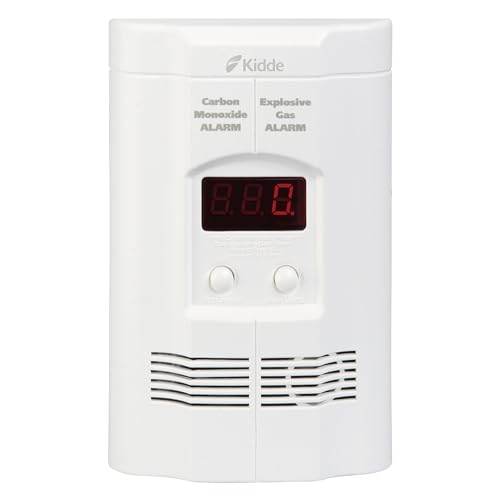


Products shown because their documented specifications fit this guide. Price and availability are on Amazon and can change.
Frequently Asked Questions
Can I leave a handheld sniffer switched on as a room alarm?
No. Consumer sniffers auto power-off after 5 or 10 minutes of inactivity per their listings, run on small batteries, are not listed to the residential alarm standard, and are not mounted at the height where gas collects. Use a fixed alarm for continuous protection.
Do I need a sniffer to check a new gas range or dryer connection?
Soapy water on the fittings works and always has. A sniffer is faster, reaches behind the appliance, and finds leaks that are too small to bubble; the UEi CD100A listing describes it as faster than the soap method.
Which one first for an RV?
The fixed 12V propane alarm. It is standard equipment, mounted low where propane collects, and it works while you sleep. A sniffer is a good second purchase for pre-trip checks of the regulator, hoses and appliance connections.
Are handheld detectors more sensitive than fixed alarms?
They report from much lower concentrations; the Klein ET120 and TopTes PT520A listings start at about 50 ppm of methane. Fixed alarms deliberately stay silent at those levels and sound at a fraction of the explosive limit. Sensitivity suits a locating tool; a set threshold suits an alarm.
Affiliate disclosure: Akermin earns a commission from qualifying Amazon purchases made through links on this page. Our editorial picks are based on documented specifications and owner feedback, not commissions.
Related Guides

WiFi Natural Gas Alarm Review: One Unit Reveals the Whole Design
A WiFi natural gas alarm with an LCD showing gas concentration status and temperature, a stated response within 30 seconds, an alarm of at least 85 decibels and notifications to a phone app.
Read More→
Forensics Detectors Cl2 Review: 5 Percent of Full Scale Is 2.5 ppm
A rechargeable chlorine detector with an electrochemical sensor reading 0 to 50 ppm at 0.1 ppm resolution, a response time under 30 seconds, adjustable audible, visual and vibrating alarms and a supplied calibration certificate.
Read More→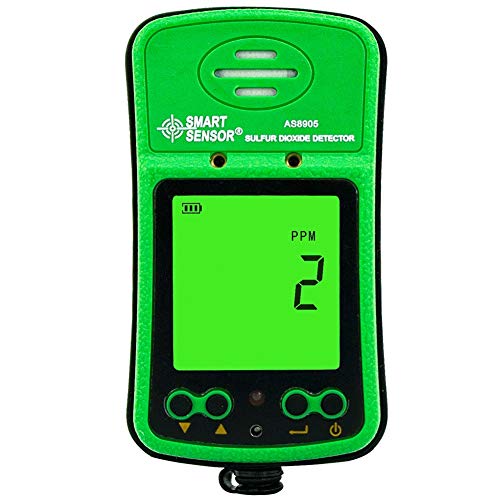
Smart Sensor SO2 Detector Review: 0.1 ppm Steps, No Accuracy Figure
A clip on sulfur dioxide monitor built on an electrochemical sensor, reading 0 to 20 ppm in 0.1 ppm steps, with adjustable high and low alarms signalled by sound, flash and vibration and a rechargeable cell quoted at 8 to 9 hours.
Read More→