As an Amazon Associate, Akermin earns from qualifying purchases. Product links on this page are affiliate links.
The Short Version
For a fixed combustible gas alarm in a house, buy a plug-in unit with a backup battery. That is the mainstream format, it is what the listed combination alarms use, and it exists for a physical reason: the sensor in a gas alarm is heated, and heating it around the clock takes far more power than a battery can supply for years. In an RV or boat, the equivalent is a hardwired 12V DC alarm. Battery-only combustible gas alarms are rare, and the battery-powered gas detectors you do see for sale are handheld sniffers, which are a different tool used for minutes at a time.
Why a Gas Alarm Is Power-Hungry
A smoke alarm and a CO alarm can run for years on a battery because their sensors need almost nothing: a photoelectric chamber and an electrochemical cell both draw tiny currents. A combustible gas sensor is different. Whether it is a semiconductor element or a catalytic bead, it works only when hot, and the heater runs the whole time the alarm is monitoring. That continuous draw is modest for a wall outlet or a vehicle battery and impossible for a pair of AA cells over a multi-year service life. The Safe T Alert 20 series RV alarm lists a draw of 75 mA at 12V, which gives a sense of the scale: small for a vehicle, ruinous for a battery-only alarm. The sensor technologies and why they run hot are explained in gas detector sensor types.
Power Options Compared
| Format | Runs on | Backup | Placement freedom | Typical use | Example |
|---|---|---|---|---|---|
| Plug-in, no backup | Wall outlet | None | Tied to an outlet | Kitchens, utility rooms | BIXTEK plug-in |
| Plug-in with battery backup | Wall outlet | 9V or AA cells | Tied to an outlet | Whole-home combination alarms | Kidde with 9V backup; Kidde COPDLG with AA backup |
| Hardwired 12V DC | Vehicle or boat battery system | The vehicle battery itself | Anywhere a wire reaches | RVs, boats | Safe T Alert 20 and 30 series |
| Battery only, continuous alarm | Replaceable cells | Not applicable | Anywhere | Rare for combustible gas | Few listed examples |
| Battery, handheld sniffer | AAA cells or rechargeable pack | Not applicable | Anywhere, for minutes | Leak locating | TopTes PT520A, Klein ET120 |
What the Backup Battery Does
The backup battery in a plug-in alarm is there for power outages. The Kidde combination alarm with 9V backup states that the battery provides protection during an outage, and the COPDLG lists two included AA cells for the same purpose and adds that there are no low-battery chirps at night. What the backup powers varies by model. The electrochemical CO sensor draws little and typically keeps running. The gas sensor’s heater is the heavy load, and some manufacturers state that the explosive gas sensor does not operate on backup power, precisely because it would empty the battery in short order. That is not a defect; it is the same power constraint that rules out battery-only gas alarms. It does mean you should read the manual for the exact model, and treat a power outage as a period of reduced gas coverage. Outages are also when people light candles and run generators, so the CO half of the unit is doing important work during that time.
The Placement Trade-Off
Plug-in power ties the alarm to an outlet, and outlets are near the floor or at counter height. For propane, which pools low, that is often close enough to the recommended floor zone. For natural gas, which rises, it is a compromise, and it is the main reason people look for a battery unit in the first place. The options, a high outlet, a manufacturer that accepts outlet-height installation for its combination alarm, or an added outlet in the appliance room, are laid out in where to place a natural gas detector. A hardwired alarm wired to a high junction box solves it completely, and that is the approach in RVs where the wire runs wherever the installer chooses.
Outlet Rules for Plug-In Units
- Use a wall outlet that is always live. Not one controlled by a light switch, and not a power strip that gets switched off or unplugged to charge a phone.
- Keep the vents clear. The BIXTEK listing specifically says to keep the side vents unobstructed. An alarm plugged in behind a refrigerator or a couch is monitoring still air.
- Avoid outlets on the range wall directly above the burners. Heat and cooking vapor shorten sensor life and cause false alarms.
- Check that the plug orientation fits. Some units block the second socket; the Kidde COPDLG lists a rotating plug for vertical or horizontal outlets.
- Test after any outage. Press the button once power is restored to confirm the unit came back.
Choosing
For a house, the plug-in combination alarms from Kidde are the mainstream choice and are compared in the best natural gas detectors roundup, with the current 9V-backup model examined in the Kidde explosive gas and CO alarm review. Dedicated plug-in gas alarms without CO, including units with a live display, are in the best gas leak detectors guide. RV owners should look at the 12V alarms in the best gas leak detectors for RV roundup. Whatever the power source, the sensor inside has a finite life, which is the subject of why gas detectors do not last forever, and the earlier post on choosing a natural gas detector covers the remaining features.
No power format changes the response to a gas smell or an alarm: get out, leave switches and appliances alone, and call the utility or 911 from outside.
Recommended Tools
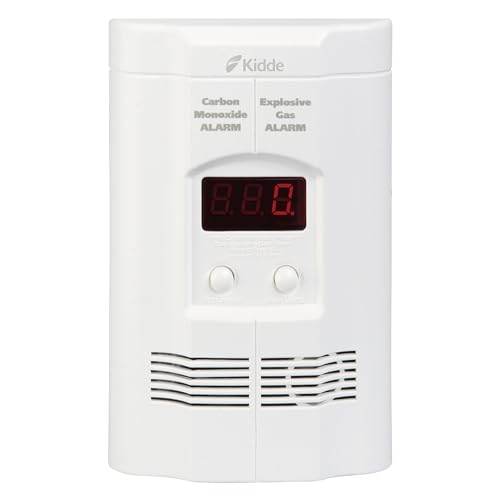


Products shown because their documented specifications fit this guide. Price and availability are on Amazon and can change.
Frequently Asked Questions
Why are there so few battery-only gas alarms?
The sensing element in a combustible gas alarm is kept hot by a heater that runs continuously. That draw would empty a set of batteries in days to weeks. A CO alarm uses an electrochemical cell that needs almost no power, which is why CO-only alarms can run for years on a sealed battery and gas alarms cannot.
Does the backup battery keep the gas sensor working in a power outage?
It depends on the model. Some combination alarms state that only the CO sensor operates on backup power, because the gas sensor heater would drain the battery quickly. Read the manual for the unit you buy rather than assuming full protection during an outage.
Can I plug a gas alarm into a power strip or extension cord?
Use a wall outlet. Power strips get switched off, unplugged to free a socket, or tripped by other loads, and a gas alarm that is off gives no warning. The Kidde COPDLG listing notes a rotating plug so it fits vertical or horizontal outlets without an adapter.
Are handheld sniffers battery gas detectors?
They are battery powered, but they are locating tools rather than alarms. The TopTes PT520A runs on three AAA cells and the PT520A+ on a rechargeable pack with a stated 3,000 charge cycles; both switch off after minutes of inactivity.
Affiliate disclosure: Akermin earns a commission from qualifying Amazon purchases made through links on this page. Our editorial picks are based on documented specifications and owner feedback, not commissions.
Related Guides

WiFi Natural Gas Alarm Review: One Unit Reveals the Whole Design
A WiFi natural gas alarm with an LCD showing gas concentration status and temperature, a stated response within 30 seconds, an alarm of at least 85 decibels and notifications to a phone app.
Read More→
Forensics Detectors Cl2 Review: 5 Percent of Full Scale Is 2.5 ppm
A rechargeable chlorine detector with an electrochemical sensor reading 0 to 50 ppm at 0.1 ppm resolution, a response time under 30 seconds, adjustable audible, visual and vibrating alarms and a supplied calibration certificate.
Read More→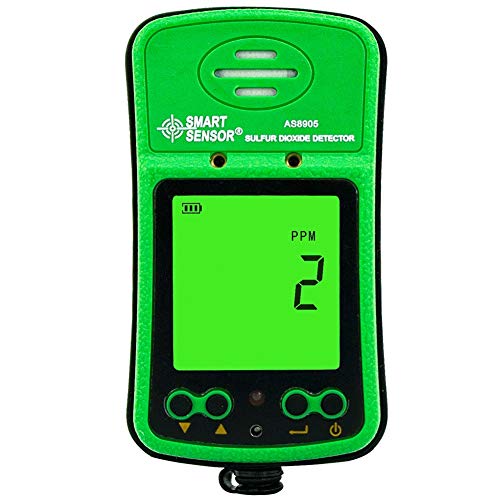
Smart Sensor SO2 Detector Review: 0.1 ppm Steps, No Accuracy Figure
A clip on sulfur dioxide monitor built on an electrochemical sensor, reading 0 to 20 ppm in 0.1 ppm steps, with adjustable high and low alarms signalled by sound, flash and vibration and a rechargeable cell quoted at 8 to 9 hours.
Read More→