As an Amazon Associate, Akermin earns from qualifying purchases. Product links on this page are affiliate links.
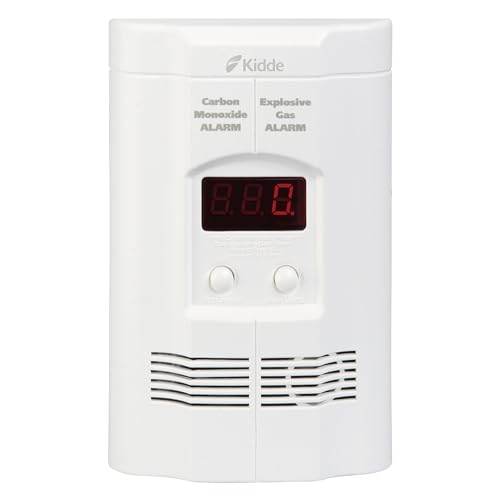
Kidde · Kidde Carbon Monoxide + Explosive Gas, Natural Gas & Propane Alarm, Plug-in with 9V Battery Backup, Digital Display, 85 dB Alarm, LED Status Indicators, 3rd Edition
View on AmazonPrice and availability are shown on Amazon and can change at any time.
Verdict
The Kidde plug-in explosive gas and carbon monoxide alarm is the practical answer for anyone who wants one device in the kitchen or mechanical room that watches for both leaking fuel and combustion exhaust. It plugs into a standard 120 V outlet, carries a 9 V battery backup for outages, shows the carbon monoxide level on a digital display and the word GAS when its combustible gas sensor trips, sounds an 85 dB horn and remembers the peak CO level it recorded. Its compromises are inherent to any plug-in combination unit: outlet-height placement rather than the ceiling or floor mounting each gas ideally wants, and a GAS indication without a number. For most gas-served homes those are fair trades for something installed in ten seconds.
Who It Is For
- Gas-served households with no combustible gas alarm yet, who want the fastest route to coverage.
- Renters who cannot mount hardware and need the alarm to move with them.
- Anyone who wants a CO number on a display in the appliance room, in addition to CO alarms near bedrooms.
It is a weaker fit as the only alarm in a propane home, where the vapor collects at floor level, and for anyone who wants a gas concentration readout.
Documented Specifications
| Item | Manufacturer or listing statement |
|---|---|
| Hazards | Carbon monoxide; explosive gas (natural gas and propane) |
| Power | Plug-in, standard 120 V outlet |
| Backup | 9 V battery |
| Display | Digital LED; shows CO level, or GAS when explosive gas is present |
| Alarm | 85 dB |
| Memory | Peak level memory records the last CO detection or last test |
| Indicators | LED status lights |
| Edition | Listed as 3rd Edition |
The listing does not name the sensor technologies. Combination alarms in this class typically pair an electrochemical CO cell, which is the standard for UL 2034 residential CO alarms, with a semiconductor combustible gas sensor; treat that as background rather than a stated specification. The listing also does not state the sensor’s rated life, so check the end-of-life date printed on the unit or in the manual when you install it, and see why gas detectors do not last forever for what that date means.
Two Hazards, Two Sensors
This product exists because the two hazards need different sensors. A CO alarm’s electrochemical cell does not respond to methane or propane, and a combustible gas sensor does not reliably measure CO at the low concentrations that matter for health. One housing gives one room both kinds of protection without making either sensor do the other’s job, as gas leak detector versus carbon monoxide detector explains. The display reflects the split: a CO reading in ppm, because CO exposure is about dose over time, and a plain GAS flag, because any confirmed leak means leaving regardless of the number.
Placement Realities
Natural gas rises and propane sinks, so a dedicated gas alarm is mounted near the ceiling or floor accordingly. A plug-in unit sits at outlet height, and Kidde’s instructions accept that placement. In a room with air movement the gas mixes well enough for an outlet-height sensor to catch a meaningful leak, and owner reports of the unit tripping on real leaks support that; in a still room with natural gas collecting under the ceiling, it responds later than a high-mounted alarm would. What you control is the outlet: same room as the appliance, several feet from the burner, not behind the appliance, not beside a window, door or vent, and not in a bathroom. Placement in mechanical rooms specifically is covered in gas detector placement near a furnace or water heater.
Display, Memory and Backup
The digital display separates this from a basic alarm. Between alarms it shows the current CO reading, so a low but nonzero level is visible long before any alarm threshold. The peak level memory stores the highest CO level since the last reset, so if the alarm sounded while you were out, you can see what it saw; for a dedicated instrument, CO meter versus CO alarm explains the difference. The 9 V backup keeps the unit alive through an outage, which is exactly when generators and gas heaters come out. The trade-off is a battery to replace; the newer Kidde COPDLG moves to two AA cells.
Strengths
- Both hazards in one outlet, no installation.
- Digital CO display with peak level memory.
- 85 dB horn and battery backup.
- Established brand with a long owner-report history.
Limitations
- Outlet-height placement is a compromise for both natural gas and propane.
- GAS indication only; no gas concentration figure.
- 9 V battery to maintain.
- Sensor life not stated on the listing; verify on the unit.
How It Compares
The Kidde COPDLG is the closest alternative from the same maker: plug-in with two AA backup cells, a rotating plug, low-level CO alerts at 30 to 70 ppm with a distinct pattern, a UL 2034 5th Edition rating and a 7-year limited warranty per the listing. The First Alert GCO1CN and the BRK 1039760 are the equivalent combination explosive gas and CO alarms from First Alert, the latter battery powered with AA cells. Which one to choose mostly comes down to whether you want the newer low-level CO alerting or the simpler, longer-established 3rd Edition design. If you decide you want ceiling-height natural gas coverage in addition, the natural gas detector roundup lists dedicated alarms; the combustible gas detector roundup covers the category, and the gas leak detector guide puts fixed and handheld options side by side. For a look at what the power choice means, see plug-in versus battery gas detector.
When It Sounds
A CO alarm means get to fresh air and call for help. A GAS alarm means the same, plus not touching a light switch, the range or the alarm itself on the way out; call the gas utility or 911 once outside. The alarm supplements that procedure, does not replace it, and does not shut off the gas.
How We Research
This review is based on Kidde’s published product information, the Amazon listing and patterns in owner reports. We did not run laboratory tests. Sensor-type comments are general background on the product class rather than manufacturer statements.
Recommended Tools


Products shown because their documented specifications fit this guide. Price and availability are on Amazon and can change.
Frequently Asked Questions
Does the Kidde combination alarm show a number for gas the way it does for CO?
No. The display shows the carbon monoxide level and shows the word GAS when the combustible gas sensor trips. There is no ppm or percent LEL figure for gas; for that you need a separate monitor or a handheld sniffer.
Where should I plug it in for natural gas if gas rises?
Plug-in units necessarily sit at outlet height, and the manufacturer's instructions accept that for both hazards. Choose an outlet in the room with the gas appliance, away from the stove, vents and windows. If you want a sensor at ceiling height as well, add a dedicated high-mounted natural gas alarm.
Does it work during a power outage?
Yes. The 9 V battery backup keeps the alarm running when the outlet loses power. Replace the battery when the unit signals low battery; owners note that the periodic chirp is the usual reminder.
Will it alarm for propane as well as natural gas?
The listing states it detects explosive gas including natural gas and propane. Because propane pools at the floor, an outlet-height sensor sees it later than a floor-mounted propane alarm would; in a propane home, consider a dedicated low-mounted alarm in addition.
Affiliate disclosure: Akermin earns a commission from qualifying Amazon purchases made through links on this page. Our editorial picks are based on documented specifications and owner feedback, not commissions.
Related Guides

WiFi Natural Gas Alarm Review: One Unit Reveals the Whole Design
A WiFi natural gas alarm with an LCD showing gas concentration status and temperature, a stated response within 30 seconds, an alarm of at least 85 decibels and notifications to a phone app.
Read More→
Forensics Detectors Cl2 Review: 5 Percent of Full Scale Is 2.5 ppm
A rechargeable chlorine detector with an electrochemical sensor reading 0 to 50 ppm at 0.1 ppm resolution, a response time under 30 seconds, adjustable audible, visual and vibrating alarms and a supplied calibration certificate.
Read More→
Smart Sensor SO2 Detector Review: 0.1 ppm Steps, No Accuracy Figure
A clip on sulfur dioxide monitor built on an electrochemical sensor, reading 0 to 20 ppm in 0.1 ppm steps, with adjustable high and low alarms signalled by sound, flash and vibration and a rechargeable cell quoted at 8 to 9 hours.
Read More→