As an Amazon Associate, Akermin earns from qualifying purchases. Product links on this page are affiliate links.
The Four Sensor Types
Four sensor technologies account for nearly every gas detector sold to consumers. Metal-oxide semiconductor sensors are in handheld sniffers and plug-in gas alarms. Catalytic bead sensors provide the LEL channel on most portable multi-gas monitors. Nondispersive infrared sensors are the alternative LEL technology, immune to poisoning and needing no oxygen, and are spreading from industrial fixed systems into portable monitors. Electrochemical cells sense carbon monoxide and other toxic gases and are in every CO alarm. Knowing which one is inside a product tells you what it can sense, what fools it, and how it fails. This page is the sensor detail behind how gas leak detectors work.
At a Glance
| Sensor | Principle | Gases | Consumer product class | Strengths | Weaknesses |
|---|---|---|---|---|---|
| Metal-oxide semiconductor (MOS) | Heated oxide film; resistance drops when reducing gas adsorbs on it | Combustibles, solvents, alcohol, many VOCs | Handheld sniffers, plug-in gas alarms | Sensitive at low ppm, inexpensive, long life | Broad cross-sensitivity, drift, humidity effects, warm-up |
| Catalytic bead (pellistor) | Gas burns on a heated catalyst bead; temperature rise changes resistance | Combustibles, as percent LEL | LEL channel on multi-gas monitors | Linear percent LEL, well understood | Needs oxygen, poisoned by silicones and sulfur compounds, high draw |
| Nondispersive infrared (NDIR) | Gas absorbs infrared light at a hydrocarbon wavelength | Hydrocarbons and CO2; not hydrogen | Industrial fixed systems, some portable monitors | No oxygen needed, immune to poisoning, works above the UEL | Cost, no response to hydrogen, optics sensitive to dirt |
| Electrochemical | Gas reacts at an electrode; current is proportional to concentration | CO, H2S, O2 and other specific gases | CO alarms, toxic channels on multi-gas monitors | Gas-specific, very low power, ppm accuracy | Finite cell life, no response to combustibles |
Metal-Oxide Semiconductor
A MOS sensor is a thin film of metal oxide, commonly tin oxide, on a tiny heater. In clean air, oxygen sits on the film’s surface and holds its electrical resistance high. When a reducing gas such as methane, propane, alcohol or a solvent vapor reaches the film, it reacts with that surface oxygen, the resistance falls, and the electronics read the drop. The film must be hot to work, which is why every MOS device has a warm-up period and why battery-only MOS alarms are rare.
The strengths are real: MOS sensors respond at tens of ppm, cost little, and can run for years. The Forensics Detectors sniffer listing, for example, states a Japan-made methane-calibrated sensor with a seven-year sensor life. The weaknesses follow from the same chemistry. The film reacts to many reducing gases, so a MOS sniffer will chirp at rubbing alcohol, aerosol propellant, gasoline vapor and some cooking fumes; the list is in what can cause false gas detector readings. The baseline drifts with temperature, humidity and age, which is why consumer units zero themselves at every power-up. And the response is not linear, so a MOS display is a relative scale on most sniffers and only an approximate percent LEL on the ones that show a number.
Where you find it: consumer handheld sniffers such as the TopTes PT520A, plug-in home gas alarms, and the combustible gas side of combination CO and explosive gas alarms. Manufacturers of consumer units rarely name the sensor type in their listings, but the price class, the warm-up time and the broad gas list are the signatures of MOS.
Catalytic Bead
A catalytic bead sensor, also called a pellistor, has two small beads on heated platinum coils. One bead carries a catalyst; the other does not and serves as a reference. When combustible gas reaches the catalyst bead it burns on the surface, the bead gets hotter, its coil resistance rises, and the difference from the reference bead is read as percent LEL. The output is close to linear across the range below the LEL, which is why this is the standard sensor for measuring rather than merely detecting.
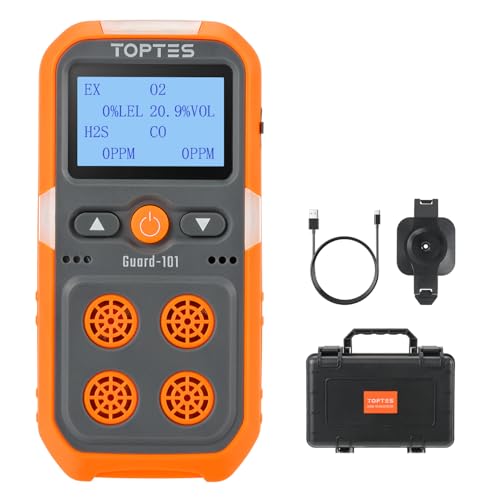
The limitations are specific. Combustion needs oxygen, so the sensor under-reads in oxygen-deficient air, and that is one reason multi-gas monitors pair the LEL channel with an oxygen cell. The catalyst can be poisoned by silicones, sulfur compounds and lead, after which the sensor reads low without any warning; that is the main reason bump tests and calibration are mandatory in professional use. Above the upper explosive limit the reading can fall back toward zero because there is not enough oxygen to burn the gas, a behavior that catches out the unwary. And the heater draws significant power, which is why a four-gas monitor such as the TopTes Guard-101 lists a battery life in hours (14 on its listing) rather than years.
Where you find it: the LEL channel on portable multi-gas monitors and on many professional sniffers. The category is introduced in what a multi-gas detector is.
Nondispersive Infrared
An NDIR sensor shines infrared light through a small chamber onto a detector behind a filter tuned to a wavelength that hydrocarbon molecules absorb. The more methane or propane in the chamber, the less light arrives, and the drop is read as concentration. Nothing burns and nothing reacts, so the sensor needs no oxygen, cannot be poisoned, keeps reading correctly above the upper explosive limit, and draws little power once the source is running. Its blind spot is any gas that does not absorb at the chosen wavelength; hydrogen is the important one, and NDIR cannot see it at all. The optics must also stay clean, and the sensor costs more than a catalytic bead.
Where you find it: fixed industrial gas detection, and increasingly the LEL channel on higher-end portable monitors. It is not yet common in consumer home alarms or sniffers.
Electrochemical
An electrochemical cell holds electrodes in an electrolyte behind a membrane. The target gas diffuses through the membrane and reacts at the sensing electrode, producing a current proportional to its concentration. Each cell is built for one gas: carbon monoxide, hydrogen sulfide, oxygen, and so on. The cell draws almost no power, which is why a CO alarm can run for years on a battery, and it reads accurately in ppm, which is why UL 2034 CO alarms and CO meters both use it. Its response to methane and propane is effectively nil, which is the physical reason a CO detector cannot detect a gas leak. Cells have a finite life as the electrolyte and electrodes are consumed, and every CO alarm has a replace-by date for that reason; the general point is made in why gas detectors do not last forever.
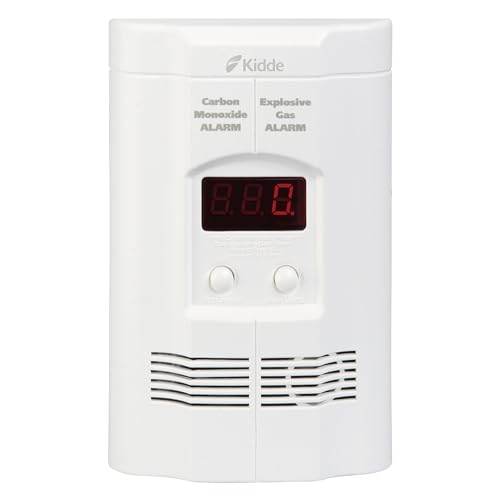
Where you find it: every CO alarm, including the CO side of combination units such as the Kidde plug-in with 9V backup; the CO, H2S and O2 channels of a four-gas monitor; and dedicated CO meters.
Which Sensor Is in Which Product
- Plug-in home gas alarm: semiconductor for the combustible sensor; electrochemical for the CO sensor if it has one.
- Handheld consumer sniffer: semiconductor. Relative scale, ppm-class sensitivity, 30-second warm-up.
- Professional sniffer or four-gas monitor: catalytic bead or infrared for the LEL channel, electrochemical cells for CO, H2S and O2.
- CO alarm or CO meter: electrochemical, and nothing else.
For a household, the practical conclusion is that a semiconductor alarm or sniffer is the right technology, and the buying decision is about placement, power and format rather than sensor chemistry. Those decisions are worked through in the best gas leak detectors guide and the best combustible gas detectors roundup. Readers who need a real percent LEL number should read what LEL means on a gas detector before choosing between catalytic and infrared. And no sensor of any type changes the response to a gas smell: leave, keep your hands off switches and phones until you are out, and call the gas utility or 911.
Recommended Tools


Products shown because their documented specifications fit this guide. Price and availability are on Amazon and can change.
Frequently Asked Questions
Which sensor type is best for a home gas detector?
A semiconductor sensor is well suited to a home alarm or a sniffer: sensitive, inexpensive and long-lived. Catalytic and infrared sensors matter when you need an accurate percent LEL number, which is a professional requirement rather than a household one.
Why does a catalytic bead sensor need oxygen?
It works by burning the gas on a heated catalyst and measuring the heat released. Without enough oxygen the gas cannot burn, so the sensor under-reads in oxygen-deficient air. Multi-gas monitors carry an oxygen cell partly for this reason.
Can an infrared sensor detect hydrogen?
No. NDIR sensing depends on the gas absorbing infrared light at a hydrocarbon wavelength, and hydrogen does not absorb there. Catalytic or semiconductor sensors are used for hydrogen.
Do semiconductor sensors need calibration?
Consumer units zero themselves at power-up in clean air, which corrects for drift but is not a calibration against a known gas. That is adequate for locating leaks and for alarms; it is not adequate for reading an accurate number.
Affiliate disclosure: Akermin earns a commission from qualifying Amazon purchases made through links on this page. Our editorial picks are based on documented specifications and owner feedback, not commissions.
Related Guides

WiFi Natural Gas Alarm Review: One Unit Reveals the Whole Design
A WiFi natural gas alarm with an LCD showing gas concentration status and temperature, a stated response within 30 seconds, an alarm of at least 85 decibels and notifications to a phone app.
Read More→
Forensics Detectors Cl2 Review: 5 Percent of Full Scale Is 2.5 ppm
A rechargeable chlorine detector with an electrochemical sensor reading 0 to 50 ppm at 0.1 ppm resolution, a response time under 30 seconds, adjustable audible, visual and vibrating alarms and a supplied calibration certificate.
Read More→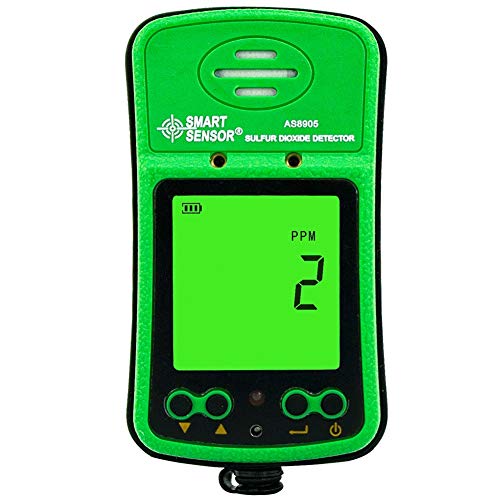
Smart Sensor SO2 Detector Review: 0.1 ppm Steps, No Accuracy Figure
A clip on sulfur dioxide monitor built on an electrochemical sensor, reading 0 to 20 ppm in 0.1 ppm steps, with adjustable high and low alarms signalled by sound, flash and vibration and a rechargeable cell quoted at 8 to 9 hours.
Read More→