Best Propane Leak Detectors for Grills: 6 Picks for Cylinders, Hoses and Regulators
A barbecue leak is almost always at one of four points: the cylinder valve, the regulator connection, the hose, or the manifold fittings. All four are outdoors in moving air, which changes what a detector has to do.
Independent Research
Verified Specifications
Honest Recommendations
Check the Valve
Sweep the Hose
Cook With Confidence
As an Amazon Associate, Akermin earns from qualifying purchases. Product links on this page are affiliate links.
Our Top Picks
Tools were compared on the stated detection range in ppm, probe length and flexibility, response time, alarm channels, warm-up requirement and power. One mechanical tank gauge is included and is clearly identified as a different kind of tool. We did not run laboratory tests and publish no measurements of our own.
Best Overall
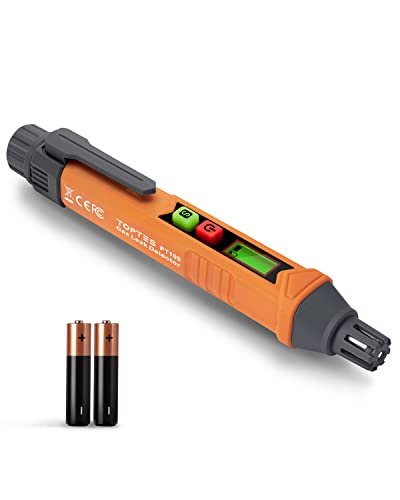
TopTes PT520A+ Rechargeable
A 17 inch gooseneck with a published 50 to 10,000 ppm range and rechargeable power.
Detection range stated as 50 to 10,000 ppm
17 inch bendable gooseneck probe
Reacts in 0.5 seconds, seven coloured bars and a 75 dB buzzer
Rechargeable, stated over 3,000 cycles, 30 second preheat
The DOZYANT is a tank level gauge with a connection check, not an electronic leak detector. It complements a sniffer rather than replacing one.
How to Choose a Grill Leak Detector
Outdoor cooking changes two things: propane behaves differently from natural gas, and moving air disperses the plume you are hunting.
Propane Sinks, It Does Not Rise
Propane is heavier than air and pools at ground level, in cabinets and in any low enclosure. Search downward from a fitting, not upward as you would for natural gas.
Reach Decides What You Can Test
The regulator, the hose behind a heat shield and the manifold inside the cabinet are the fittings that matter. A rigid pocket probe reaches none of them.
Warm Up in Clean Air, Always
Every sniffer here sets its baseline at switch-on. Start it beside a leaking cylinder and it treats that as normal and stays quiet. Warm up well away from the grill.
Wind Ruins the Search
A breeze disperses the plume before it reaches the probe. Test on a still day, or shield the fitting with your body, and accept that a negative outdoors is weaker evidence than indoors.
Soapy Water Still Confirms It
An alarm tells you gas is present nearby. A soap solution on the joint shows exactly which thread is bubbling. Use the detector to find the area and soap to confirm the fitting.
Seasonal Tools Want Alkaline Cells
A detector stored from autumn to spring is more likely to work on disposable cells than on a rechargeable battery nobody remembered to charge.
Four places: the cylinder valve, the regulator connection at the cylinder, the hose along its length and at both ends, and the manifold fittings inside the grill cabinet. The first two are accessible; the last two are why a flexible probe is worth having.
Do I search above or below the fitting?
Below. Propane is heavier than air and sinks, so it collects in the grill cabinet, in the cylinder enclosure and at ground level. This is the opposite of natural gas, which rises. See natural gas versus propane detectors.
Is soapy water still the right test?
Yes, as the confirmation step. An electronic detector finds the area quickly, including places you cannot see, and a soap solution then shows exactly which thread is bubbling. Use both: the sniffer to search, the soap to prove it.
Why does my detector alarm as soon as I turn it on?
Usually because it was switched on in air that already contains gas, or because it is still warming up. Move well away from the grill, switch on in clean air, wait the full stated warm-up, then approach the fittings.
Will a grill detector work on my RV or home appliances?
The combustible gas sniffers here detect propane, methane, butane and LPG, so yes for locating leaks. They are not fixed alarms and do not watch a space continuously, which an RV or a house with gas appliances also needs. See RV gas leak detectors.
What should I do if I find a leak?
Close the cylinder valve, move the cylinder away from ignition sources, and do not use the grill until the fitting is replaced or properly remade. If you can smell gas strongly, leave the area and do not operate anything electrical nearby.
Reviews
TopTes PT520A+ Rechargeable Best Overall
A grill puts its fittings in the worst places: the regulator sits low against the cylinder, the hose runs behind a heat shield, and the manifold connections are inside the cabinet under the burners. A 17 inch flexible probe reaches all of those without removing panels, which is the difference between actually checking the connections and checking the two you can see.
The published 50 to 10,000 ppm range is what makes it useful rather than merely reassuring. At the bottom end it picks up the seeping connection that has not yet produced a smell; seven bars of indication then tell you whether you are getting closer as you move the tip. Rechargeable operation with a stated 3,000 cycle life means no flat alkaline cells at the start of a summer, provided you remember to charge it.
For a tool used a few times a season, disposable cells are arguably the better arrangement. A grill detector lives in a drawer from October to April, and an alkaline powered unit that has been sitting untouched is far more likely to work on the first warm weekend than a rechargeable one nobody plugged in.
Everything else matches the rechargeable model: the same 17 inch gooseneck, the same stated 50 to 10,000 ppm range, the same 0.5 second response and seven bar display. The listing also names the specific places the probe is intended for, including tanks and fireplaces, which is a fair description of where a homeowner with a grill and a patio heater will use it.
Strengths
Same reach and stated range as the rechargeable version
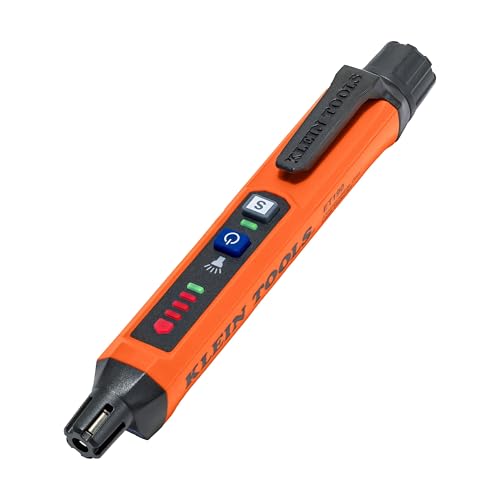
Grill fittings that are out in the open, the cylinder valve, the POL or QCC connection and the visible run of hose, do not need a gooseneck. They need something you will actually fetch from the drawer, and a slim pocket unit from a trade brand is more likely to get used than a larger instrument in a case.
The stated 50 to 2,000 ppm range is narrower at the top than the TopTes units, which matters less than it sounds for this job: the point of a grill check is to find a small leak before it becomes a large one, and the bottom of the range is where that happens. Klein's listing gives the range plainly, which is more than most competitors manage.
The listing states the warm-up requirement twice, and that is the single most important instruction for any sniffer. The sensor sets its baseline during warm-up, so a detector switched on next to a leaking regulator decides that atmosphere is normal and stays silent. Start it in clean air, away from the grill, and wait the full 30 seconds.
For checking a cylinder valve, a regulator connection and a visible hose, this does the job for very little money, and naming LPG and propane explicitly removes any doubt about coverage. Five LED levels give enough indication to tell whether you are closer or further from the source, which a single-alarm detector does not.
A screen that turns red removes interpretation entirely, which is the right design for a tool that anyone in the household might pick up. Nobody needs to know what a parts per million figure means to understand a red screen and a rising tone.
The five minute auto power off is the other feature aimed at occasional users. The commonest reason a safety tool fails when it is finally needed is a flat battery caused by it being left switched on in a drawer, and a device that turns itself off is protecting against its owner. As with every sniffer here, warm it up in clean air rather than beside the cylinder you are testing.
DOZYANT Propane Tank Gauge Different Tool, Worth Knowing
This is not an electronic leak detector and it is included because it is genuinely useful alongside one, not instead of one. It screws between the cylinder and the regulator, shows roughly how much gas is left, and indicates a problem at that connection.
The listing is unusually honest about its own limitation, stating that the reading is an estimate rather than an exact measurement and that temperature affects pressure. That is correct: a propane cylinder gauge reads vapour pressure, which rises on a hot afternoon and falls on a cold morning regardless of how much liquid is inside. Treat it as a rough fuel gauge and a connection check, and use a sniffer for the hose and the manifold.
Strengths
Shows roughly how much gas remains
Solid brass, weather resistant
Fits standard QCC1 and Type 1 connections
Listing states its own limitations honestly
Limitations
Not a leak detector for hoses or manifolds
Level reading is an estimate affected by temperature
Short answer: the TopTes PT520A+ is the best overall because a 17 inch gooseneck reaches the regulator, the hose behind the heat shield and the manifold inside the cabinet, and it publishes a 50 to 10,000 ppm range. The TopTes PT520A is the same tool on disposable cells, which suits a seasonal drawer better, and the Klein ET190 is the pocket option for accessible fittings.
Four fittings, two of which you cannot see
A gas grill has a short and predictable list of leak points. The cylinder valve itself, the regulator connection, the hose at both ends and along its length, and the manifold fittings inside the cabinet under the burners. The first two are in plain sight and a pocket sniffer or a soap solution handles them. The other two are behind a heat shield and inside a cabinet, and they are exactly the ones people skip because reaching them means dismantling the grill. That is the argument for a flexible probe rather than a pocket unit.
Propane goes down, and that changes the search
Natural gas is lighter than air and rises to the ceiling, which is why detectors for it are held high. Propane is heavier and does the opposite: it sinks, flows along the ground like a liquid, and pools in the grill cabinet, in the cylinder enclosure and in any low point nearby. Sweep downward from each fitting and check the bottom of the cabinet, and be particularly careful with a grill on a patio next to a basement window or a drain, because that is where a heavier-than-air gas ends up.
Wind is why outdoor testing is harder
Every sniffer on this page works by drawing a sample of air across a sensor, and outdoors that sample is being blown away before it arrives. A small leak that would be obvious in a still kitchen can produce nothing at all in a light breeze. Test on a calm day where you can, shield the fitting from the wind with your body, hold the probe within a centimetre of the joint, and move slowly. And treat a negative result outdoors as weaker evidence than the same result indoors.
The warm-up rule matters more than the brand
The TopTes listings state it explicitly, and it applies to every combustible gas sniffer made: the sensor establishes what it considers clean air during its warm-up period. Switch a detector on next to a leaking regulator and it concludes that atmosphere is normal, then sits silently while you sweep. Walk away from the grill, switch on, wait the full thirty seconds, then come back and start testing. If the alarm sounds strongly on arrival and then fades, that is the same effect in reverse and you should move to clean air and return.
Use the detector to search and soap to confirm
These two methods are complementary rather than competing. An electronic detector covers ground fast, works in places you cannot see, and finds leaks too small to produce visible bubbles. A soap solution shows you exactly which thread is at fault, which a detector alarming near three adjacent fittings cannot. Find the area electronically, confirm the joint with soap, then fix it. For the broader category, see the handheld gas leak detector roundup.
How We Research
Tools were compared on stated detection range in ppm, probe length and flexibility, stated response time, alarm channels and indication levels, warm-up requirement, power source and what the listing names among detectable gases. One mechanical tank gauge is included and clearly separated from the electronic detectors. We did not run laboratory tests and publish no measurements of our own.
Six plug-in carbon monoxide alarms, all with battery backup, sorted by backup cell type, whether they show a digital level, and how they behave at night.
Six hydrogen sulfide instruments, from maintenance-free single gas clips to four gas monitors with pumps, sorted by how each one is meant to be worn and maintained.