As an Amazon Associate, Akermin earns from qualifying purchases. Product links on this page are affiliate links.
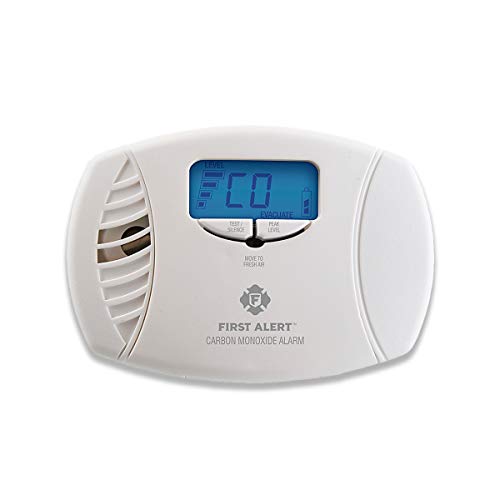
First Alert · First Alert Plug in Carbon Monoxide Alarm with Digital Display | CO615, AA Battery Backup
View on AmazonPrice and availability are shown on Amazon and can change at any time.
The First Alert Plug in Carbon Monoxide Alarm with Digital Display is the right choice for a homeowner who wants a permanent, outlet-powered CO alarm on each floor and in each bedroom, with a digital readout and peak level memory to show what happened after an alarm. It is the wrong choice for a technician, landlord doing spot checks, or anyone who needs a calibrated ppm meter for diagnosis. The listing does not publish a measurement range, accuracy figure or alarm threshold, so treat it as a life-safety alarm and not as an instrument.
What the Listing Actually Promises, and What It Leaves Out
The First Alert Plug Carbon listing is short and specific. It is a plug-in carbon monoxide alarm with a digital display, an advanced electrochemical sensor, a peak level feature, an 85 decibel alarm, a seven year limited warranty, an end of life chirp and a battery backup for power failures. It works with any standard outlet.
Those are the only figures you get. The listing does not publish a measurement range in ppm, an accuracy tolerance, an alarm threshold in ppm, a response time, or a display resolution. For a life-safety alarm that is normal, because the product is certified to sound at a dangerous level rather than to report a number you can act on. For a buyer who wants to log readings or compare rooms, it is a real gap. If you need a number to diagnose a boiler or check a flue, this is not that instrument.
The phrase advanced electrochemical carbon monoxide sensor is a technology description, not a performance claim. Electrochemical cells are the standard sensing method for domestic CO alarms because they respond to carbon monoxide specifically and draw very little power. The listing does not say how selective the cell is against other gases, and it does not publish a cross sensitivity figure. Do not assume it will ignore every other gas in a workshop.
The Peak Level Display Is the Feature That Earns Its Place
Most plug-in CO alarms give you an alarm and nothing else. The peak level feature on the First Alert Plug Carbon stores the highest concentration the unit has measured and lets you display it. That matters after the event. If the alarm sounds at three in the morning and stops before you get to the unit, a peak reading tells you whether the episode was a brief spike or a sustained rise. That changes what you do next: a short spike points to a backdrafting appliance or a car left running; a sustained rise points to a blocked flue or a failed heat exchanger.
The listing does not say how the peak value is reset, how long it is retained after power loss, or whether it is cleared by the test button. Those are the questions to ask before relying on it. A peak memory you cannot clear is a nuisance; one that clears itself on a power cut is worse. The battery backup should preserve it through an outage, but the listing does not state that explicitly.
The digital display also gives you a continuous number during normal operation. That is reassuring, but it is not a calibrated measurement. The listing publishes no accuracy figure, so the number on screen is best read as a trend indicator, not a reference value. If you want a number you can defend in a report, you need a carbon monoxide meter with a published range and tolerance.
Plug-In Power, Battery Backup and the Outlet Problem
The unit runs from any standard outlet and keeps working on battery if the power fails. That combination is the reason to choose a plug-in alarm over a battery-only one: you never have to remember to change the battery for day-to-day operation, but you are still covered during an outage. The listing does not state the battery type, the number of cells, or the backup runtime. Those are the details you will want at replacement time, and they are not in the bullets.
The practical weakness of any plug-in alarm is the outlet itself. A CO source near the floor, such as a basement boiler or a garage door, may not be well served by an outlet high on a wall in another room. The listing advises one unit on each level of the home and in each bedroom, which is a placement instruction rather than a performance claim. If the only free outlet in a bedroom is behind a dresser, the alarm is effectively blind. The site’s guide to plug-in carbon monoxide detectors covers placement in more detail.
The end of life signal chirp is a genuine safety feature. Electrochemical cells degrade, and a unit that chirps at end of life tells you to replace it rather than leaving you with a silent alarm. The listing pairs this with a seven year limited warranty, which suggests the service life is in that region, but the listing does not state a replacement interval. Follow the chirp, not the warranty date.
The Buyer This Alarm Is Wrong For
This is a household safety alarm. It is not a leak detector for natural gas or propane, and it will not respond to a gas leak that contains no carbon monoxide. If your concern is a gas hob, a propane cylinder or an RV supply, you need a combustible gas detector, and the site explains the difference in gas leak detector vs carbon monoxide detector. The Leakbee RV Propane is the kind of product that covers that job; the First Alert Plug Carbon does not.
It is also wrong for the technician who needs to measure CO in flue gas, compare rooms, or document a reading. The listing publishes no range, no accuracy and no resolution, so any number it shows is for reassurance, not for diagnosis. A portable meter or a dedicated analyser is the correct tool there. The Aituzero Refrigerant Leak and the HAOKESITE 0100ppm in the site’s coverage are refrigerant and hydrogen sulfide instruments respectively, and neither replaces a CO meter either; they simply illustrate how specialised gas detection becomes once you leave the home.
Finally, it is wrong for the landlord who wants a cheap way to check a property between tenancies. A plug-in alarm left in a drawer proves nothing. If you need a spot check, a portable instrument is the honest answer, and the site’s guide to portable carbon monoxide detectors for travel is a better starting point.
Living With It: Maintenance Nobody Mentions
Electrochemical CO alarms are low maintenance but not no maintenance. The listing gives you a test button, an end of life chirp and a battery backup. It does not publish a recommended test interval, a cleaning method or a shelf life for the sensor. The general practice for this class of alarm is to test it regularly using the button and to vacuum the vents occasionally, but the listing does not state either, so treat that as domain practice rather than a manufacturer instruction.
The battery backup is the part most often forgotten. Because the unit runs from the outlet, the cells sit idle until a power cut, and idle cells can leak or fail. The listing does not state the battery type or a replacement schedule. Check the cells at the same time you test the alarm, and replace them on the schedule the unit itself indicates, if it indicates one. If it does not, replace them at least as often as the alarm’s own chirp suggests.
Do not paint over the unit, do not block the vents, and do not mount it where a curtain or a cupboard door can cover the sensor. Those are general rules for any diffusion-based gas alarm, and the listing does not contradict them.
The Verdict: A Good Alarm, Not a Measuring Instrument
The First Alert Plug Carbon is a sensible purchase for a homeowner who wants a permanent, outlet-powered CO alarm with a digital display and peak memory on each level of the house and in each bedroom. The 85 decibel alarm, the electrochemical sensor, the battery backup and the end of life chirp are the features that matter, and the seven year limited warranty is a reasonable statement of service life. The peak level feature is the one that earns its place, because it turns a nocturnal alarm into information you can act on.
It is not a meter. The listing publishes no range, accuracy, resolution or alarm threshold, and you should not use the display as a diagnostic reading. If you need a number for a report, buy a meter. If you need to detect a gas other than carbon monoxide, buy the detector for that gas. Within its actual job, this is a straightforward, well-specified household alarm, and the listing is honest about what it does.
Recommended Tools


Products shown because their documented specifications fit this guide. Price and availability are on Amazon and can change.
Frequently Asked Questions
Does this alarm detect natural gas or propane?
No. It is a carbon monoxide alarm with an electrochemical CO sensor. It will not respond to a natural gas or propane leak that contains no carbon monoxide. For those gases you need a combustible gas detector, and the site's comparison of gas leak detectors and CO detectors explains why the two are not interchangeable.
What is the peak level feature for?
It stores the highest carbon monoxide concentration the unit has measured so you can see it after an alarm. The listing does not state how the peak is cleared or how long it is retained, so check the unit's own instructions before relying on it for anything more than a recent-event memory.
How accurate is the digital display?
The listing does not publish an accuracy figure, a measurement range or a resolution. The display is best treated as a trend indicator and a peak memory, not as a calibrated reading. If you need a number you can put in a report, use a carbon monoxide meter with published specifications.
What kind of battery does the backup use, and how long does it last?
Not stated in the listing bullets. The listing confirms a battery backup for power failures but does not name the cell type, the number of cells or the backup runtime. Check the unit's label or manual before you need to replace them.
How often should I replace the alarm?
The listing gives a seven year limited warranty and an end of life signal chirp. It does not state a replacement interval. The chirp is the signal to replace the unit, and you should follow it rather than the warranty date.
Can I use this in a rental property or a workshop?
It is a household alarm and the listing advises one on each level and in each bedroom. It is not a substitute for a portable meter in a workshop or for a landlord's spot check between tenancies. For those uses a portable instrument is the correct tool.
Affiliate disclosure: Akermin earns a commission from qualifying Amazon purchases made through links on this page. Our editorial picks are based on documented specifications and owner feedback, not commissions.
Related Guides

Kidde Plug-In Carbon Monoxide Detector with 9V Backup: A Maintenance-First Review
A close look at the Kidde plug-in CO alarm with 9V backup, digital display and 85 dB alarm, with emphasis on the maintenance and battery replacement the listing mentions only in passing.
Read More→What to Do When a Gas Detector Alarms and You Smell Nothing
Why a gas detector can alarm with no smell, what the reading means, and the safe sequence to follow before you silence it.
Read More→
Inficon-718-202-G1 Combustible Gas Detector: A Single-Product Review
A review of the Inficon-718-202-G1 combustible gas detector, focusing on the sparse listing data and its place among other gas detection tools.
Read More→