As an Amazon Associate, Akermin earns from qualifying purchases. Product links on this page are affiliate links.

Ideal Industries · Ideal Electrical 3-Phase Motor Rotation Tester, Electrical Tester | Phase sequence, open phase multimeter, color-coded alligator clips, rated to 600V, nylon carrying case, electrical tools
View on AmazonPrice and availability are shown on Amazon and can change at any time.
The Ideal Industries 3-phase motor rotation tester is a sequence and open-phase checker with colour-coded alligator clips and a nylon case. The listing states it meets IEC-1010 safety standards. That is the only safety or electrical figure published, and it is the specification that decides whether the instrument suits a job at all: IEC-1010 is a standard family, not a single rating, and the listing does not say which category or voltage the tester is rated to. If your work is on low-voltage control circuits and you can confirm the rating with the supplier, it covers the common tasks of checking phase order and motor direction. If you need a published category rating for industrial distribution work, this listing does not give you one.
The IEC-1010 Line Is the Whole Safety Story, and It Is Incomplete
Most phase rotation testers are sold on features: how many phases they check, whether they detect an open phase, what clips they ship with. Those features are useful, but they do not decide whether the instrument is safe to connect to the circuit in front of you. The safety category does.
The Ideal Industries listing states that the tester “Meets IEC-1010 safety standards.” That is the only safety claim in the bullets. IEC-1010 is a family of standards for electrical test equipment. Within it, a tester carries a measurement category (often written CAT II, CAT III or CAT IV) and a voltage rating. The listing does not publish either. It does not say CAT III, it does not say 600 V, and it does not say 1000 V.
This matters because the category describes where the tester can be connected. A CAT II instrument is intended for circuits plugged into outlets and portable equipment. A CAT III instrument is intended for distribution-level work, including three-phase panels and motor branch circuits. A tester without a published category is not necessarily unsafe, but you cannot demonstrate its suitability for a given panel from the listing alone.
If the job is checking phase sequence at a motor terminal block on a low-voltage control circuit, the absence of a category rating may not change your decision. If the job is confirming rotation at a distribution panel or a service entrance, it should. Ask the supplier for the category and voltage rating before you connect the tester to anything you cannot isolate.
What the Tester Actually Does: Sequence, Rotation, Open Phase
The listing describes three measurement functions. First, phase sequence check: the tester identifies the order of the three phases. Second, motor rotation indication: it confirms the direction a motor will turn. Third, open phase detection: it reports a missing or open phase.
These functions are related but not identical. Phase sequence is a property of the supply. Motor rotation is a property of the supply combined with the wiring at the motor. A tester that shows sequence lets you predict rotation before energising the motor, which is why the listing frames it as preventing installation errors. Open phase detection catches a blown fuse or a disconnected conductor that would otherwise leave the motor single-phasing.
The listing does not publish the voltage range over which these functions work, the frequency range, or the maximum conductor size the clips accept. Those are the numbers a technician usually checks before buying. Their absence is not a defect in the product, but it is a gap in the listing, and it should shape how you use the page.
Colour-Coded Clips and the Nylon Case: What They Solve
The listing states that the tester has colour-coded alligator clips that simplify setup and reduce wiring mistakes. On a three-phase circuit, the most common error is not a wrong reading; it is a clip on the wrong phase. Colour coding gives you a visual check before you press the test button.
The nylon carrying case is listed as protection for the instrument. For a tester that lives in a tool bag between jobs, a case is a practical inclusion rather than a feature to evaluate.
Neither item tells you whether the clips are rated for the voltage you work on, whether they are fused, or what opening they have. The listing does not publish those details. If you routinely connect to large motor terminals, check the clip dimensions with the supplier.
Where This Tester Fits, and Where a Different Instrument Does
This is a sequence and rotation checker. It is not a power quality analyser, not a clamp meter, and not a multimeter. If you need to record voltage, current, harmonics or power, a three-phase power analyser is the right class of instrument, and the ETCR8430 covered elsewhere on the site is an example. If you need to measure current without breaking the circuit, a three-phase clamp meter does that job.
The Ideal tester answers a narrower question: in what order are the phases, and which way will the motor turn. That is the question that prevents a motor from running backwards after a rewire, and it is worth having a dedicated instrument for it. For a wider view of the category, see the phase sequence testers comparison.
One honest limitation: the listing does not state that the tester is fused or that it has a non-contact voltage warning. Many testers in this class include one or both. You should not assume this one does. Treat it as a sequence indicator, not as a voltage detector.
The Mistakes Buyers Make With Rotation Testers
The first mistake is buying on feature count. A tester that lists five functions but publishes no category rating is harder to justify for panel work than a tester that lists three functions and publishes CAT III at 600 V. The listing for this product gives you the functions but not the rating.
The second mistake is using a rotation tester as a general voltage tester. It is not one. It indicates sequence and open phase; it does not give you a voltage reading, and the listing does not claim it does.
The third mistake is checking rotation once and assuming it stays correct. Phase order can change after a utility reconnect, a panel replacement, or a generator transfer. The tester is only useful if it is used at commissioning and after any supply-side work, not kept in the van as a one-time purchase.
The fourth mistake is ignoring the clips. Colour coding helps, but the connection is still the weak point. Inspect the clip jaws and leads before each use; the listing does not publish a lead length or a replacement lead option.
The Verdict: A Capable Sequence Checker With One Published Safety Claim
The Ideal Industries 3-phase motor rotation tester does the three jobs its listing describes: phase sequence, motor rotation direction, and open phase detection. The colour-coded clips and nylon case are sensible inclusions. The decision turns on the single safety line: “Meets IEC-1010 safety standards.” That is a standard family, not a category rating, and the listing does not publish the measurement category or voltage rating. If you can confirm those with the supplier and they match your work, the tester is a reasonable choice for motor commissioning and rotation checks. If you need a published category rating before you connect to distribution equipment, this listing does not provide one, and you should look for an instrument that publishes it.
Recommended Tools


Products shown because their documented specifications fit this guide. Price and availability are on Amazon and can change.
Frequently Asked Questions
Does the listing state a measurement category, such as CAT III?
No. The listing states that the tester meets IEC-1010 safety standards, but it does not publish a measurement category or a voltage rating. IEC-1010 is a standard family; the category and voltage are the figures that tell you where the tester can be connected. Ask the supplier for them before using it on distribution equipment.
Can this tester measure voltage or current?
The listing describes phase sequence check, motor rotation indication, and open phase detection. It does not describe a voltage or current measurement function, and no range is published. For voltage and current, use a multimeter or a clamp meter.
What does open phase detection actually tell me?
It reports a missing or open phase. The listing frames this as safer operation during electrical testing. It does not publish how the tester indicates the fault, for example whether it uses a lamp, a display, or a buzzer.
Is the tester fused or does it have a non-contact voltage warning?
The listing does not say. Neither feature is mentioned in the bullets. Do not assume either is present; confirm with the supplier if those features matter for your work.
What is included with the tester?
The listing states that the tester has colour-coded alligator clips and includes a nylon carrying case. It does not publish lead length, clip opening size, or whether replacement leads are available.
Will this tester work on any three-phase system?
The listing does not publish a voltage or frequency range, so it does not say. Three-phase systems vary in voltage and frequency, and a tester's suitability depends on those figures. Confirm the range with the supplier before buying for a specific system.
Affiliate disclosure: Akermin earns a commission from qualifying Amazon purchases made through links on this page. Our editorial picks are based on documented specifications and owner feedback, not commissions.
Related Guides

Fluke 116 HVAC Multimeter Review: What the Listing Leaves Out
A review of the Fluke 116 HVAC multimeter that focuses on the specifications the manufacturer listing does not publish and what that silence means for a buyer.
Read More→Meter With Data Logging vs One Without: Which Do You Actually Need?
A guide to what data logging adds to an electrical meter, what it does not, and when the plain meter is the smarter purchase.
Read More→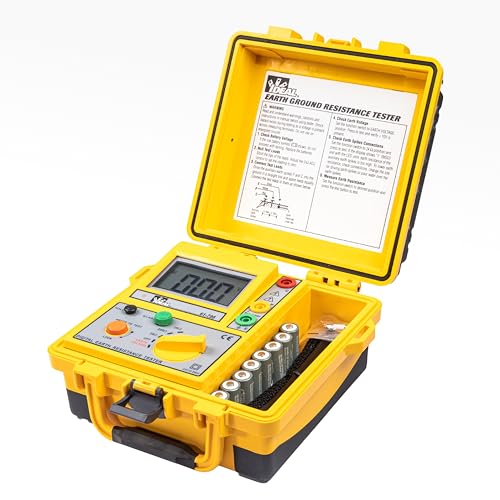
Ideal Industries 3-Pole Ground Resistance Tester: One Trade-Off Decides the Owner
A mechanism-first review of the Ideal Industries 3-pole ground resistance tester, covering the Fall of Potential trade-off, the unpublished specifications, and where the instrument stops being useful.
Read More→