As an Amazon Associate, Akermin earns from qualifying purchases. Product links on this page are affiliate links.

Fluke · Fluke 116 HVAC Multimeter
View on AmazonPrice and availability are shown on Amazon and can change at any time.
The Fluke 116 is a digital multimeter aimed at HVAC technicians. The listing states a built-in thermometer covering -40 degrees C to 400 degrees C, a microamp function for flame sensor testing, low input impedance to reduce ghost voltage readings, and a white LED backlight. Those four points are the whole of the published specification here. The listing does not publish DC or AC voltage ranges, resistance range, capacitance, continuity, diode test, safety category rating, or battery type. If you need those figures to compare against another meter, this page cannot supply them. The 116 is the right instrument only if the temperature and microamp functions are the reason you are buying, and you are willing to confirm the electrical specifications with the manufacturer or a full datasheet before committing.
The Four Specifications the Listing Actually States
The product data for the Fluke 116 contains four technical claims and one positioning statement. The positioning statement is that it is a digital multimeter designed specifically for HVAC professionals. The four technical claims are the thermometer range, the microamp function, the low input impedance, and the backlight.
The thermometer covers -40 degrees C to 400 degrees C, which the listing also gives as -40 degrees F to 752 degrees F. That range covers supply and return air temperature, flue gas measurement at the low end of the scale, and refrigerant line temperatures on most residential and light commercial systems. It does not reach the temperatures of a high-temperature probe application, and the listing does not say what sensor type is used, what its accuracy is, or whether the probe is supplied or sold separately.
The microamp function is the second claim. Flame sensors on gas-fired equipment work by passing a small current through the flame, and that current is measured in microamps. A meter without a microamp range cannot read it. The listing states the function exists, but does not publish the range or the resolution, so a technician cannot tell from this page whether it resolves the small differences that matter when a flame sensor is marginal.
Low input impedance is the third claim. Ordinary digital multimeters have very high input impedance, which makes them sensitive to ghost voltage, a voltage that appears on a conductor that is not actually connected to a source. A low impedance mode draws enough current to collapse that ghost voltage so the reading reflects the real circuit. The listing says the meter features this, but does not state the input impedance value or which functions it applies to.
The backlight is the fourth claim. It is a white LED backlight for poorly lit areas. That is a usability point rather than a measurement one, and the listing gives no brightness or runtime figure.
What the Silence on Voltage and Resistance Ranges Means
A multimeter is bought for its measurement ranges, and this listing does not publish them. There is no DC voltage range, no AC voltage range, no resistance range, no capacitance range, no continuity threshold, and no diode test specification in the supplied data. For a meter in this class that is a significant gap.
The practical consequence is that you cannot compare the Fluke 116 against another meter using this page alone. If you are choosing between this and a general purpose meter, you need the full datasheet to know whether the 116 covers the voltages and resistances you work with. The absence of a published range is not evidence that the range is narrow; it is evidence that the listing was written for a buyer who already knows the product line. Do not read a missing figure as a small figure.
The same applies to the safety rating. The listing does not state a CAT rating, a voltage rating, or an IP rating. For anyone working on live circuits those are the figures that decide whether a meter is appropriate for the panel you are opening. They are not here. If you are buying for electrical work rather than HVAC controls, a meter whose safety rating is published is the safer comparison, and the site covers those separately in how to choose a multimeter for home electrical work.
Microamps, Flame Sensors and the Ghost Voltage Mode
Two of the stated functions are the reason an HVAC technician would pick this meter over a general one. The microamp range lets you measure flame sensor current directly. The usual method is to connect the meter in series with the flame sensor lead and read the current while the burner is running. The listing confirms the function exists. It does not confirm the range, the resolution, or whether the meter has a dedicated flame sensor mode. Those details matter when a sensor is reading near the threshold and you need to see a small change.
Low input impedance is the other. Ghost voltage shows up most often on long control runs and on circuits where a conductor runs alongside a live one. A high impedance meter reads a voltage that disappears the moment a real load is applied. The low impedance mode loads the circuit enough to show whether the voltage is real. The listing states the feature but does not name the mode or give its impedance. On some meters this is a separate selection on the dial; on others it is a button. The listing does not say which, and that affects how quickly you can switch to it in the field.
The temperature function and the microamp function together are what separate this meter from a general purpose unit. If you do not test flame sensors and you do not measure air or pipe temperature with a meter, those features are dead weight and a simpler meter will do the same electrical work. The site’s Fluke 117 review covers a meter aimed at a different set of tasks, and the comparison is worth reading before you decide the 116’s specialisms are the ones you need.
The Maintenance and Accessory Questions the Listing Does Not Answer
Three practical questions come up with any handheld meter, and the listing is silent on all three. The first is the battery. The listing does not state the battery type, the number of cells, or whether the meter has an auto power off. A meter that stays on in a bag drains its cells, and a technician who does not know the battery type cannot carry a spare. The second is the fuse. A multimeter with a current range has a fuse, and the listing does not state the fuse rating or whether it is user replaceable. A blown fuse on a current range is a common field failure, and the cost of the fix depends on whether you can replace it yourself.
The third is the temperature probe. The listing states the thermometer range but does not say whether a probe is included, what type it is, or whether it is a wire probe or an infrared sensor. If the probe is not included, the stated range is a capability of the meter rather than something you can use on the day it arrives. Confirm the supplied accessories before you buy, because a temperature function without a probe is a specification you cannot exercise.
The backlight is the one usability feature that is stated, and it is worth noting that a backlight only helps if the display is readable in the dark. The listing does not state display size, digit count, or whether the backlight has a timeout. Those are small points, but they are the ones you notice on a rooftop at night.
Where the Fluke 116 Stops Being the Right Meter
The Fluke 116 is a specialist instrument. It is the right meter when your work is HVAC service and the temperature and microamp functions are central to what you do. It is the wrong meter when your work is general electrical testing, because the listing does not publish the voltage, resistance, or safety figures that general electrical work depends on, and you would be buying specialist functions you do not use.
It is also the wrong meter if you need a clamp for current measurement. A multimeter measures current in series, which means breaking the circuit. A clamp meter measures current around a conductor without breaking it. The site covers clamp meters separately, including the Fluke 323 review, and for load current on a running system a clamp is the instrument you want. The 116 does not replace a clamp, and the listing does not claim it does.
Finally, the 116 is not a substitute for a dedicated thermometer if temperature is your main measurement. The stated range is wide, but the listing does not publish the accuracy, and a meter’s temperature function is usually a convenience rather than a primary instrument. If temperature is the job, the site’s infrared thermometers for HVAC page covers instruments built for that measurement first.
The Verdict on the Fluke 116 Listing
The Fluke 116 is a credible specialist meter, and the listing states the two functions that make it one: a thermometer covering -40 degrees C to 400 degrees C and a microamp range for flame sensors, plus low input impedance for ghost voltage and a white LED backlight. What the listing does not state is nearly everything else a buyer compares on: voltage and resistance ranges, safety category, accuracy, battery type, fuse rating, and whether a temperature probe is included. That silence does not make the meter bad. It makes the listing incomplete for a purchase decision. Buy the 116 if the stated specialisms are exactly your work, and get the full datasheet before you commit. If you need published electrical specifications to compare, this page cannot give them to you, and that is the honest limit of what the supplied data supports.
Recommended Tools


Products shown because their documented specifications fit this guide. Price and availability are on Amazon and can change.
Frequently Asked Questions
Does the Fluke 116 measure AC and DC voltage?
The listing does not publish voltage ranges. It states that the meter is a digital multimeter for HVAC professionals and lists the thermometer, microamp, low input impedance, and backlight functions, but it does not state a DC or AC voltage range. Confirm the voltage specifications on the full datasheet before buying.
Is a temperature probe included with the Fluke 116?
The listing does not say. It states the thermometer range of -40 degrees C to 400 degrees C but does not state whether a probe is supplied, what type it is, or whether it is a wire or infrared sensor. Check the supplied accessories with the seller.
What safety category rating does the Fluke 116 have?
The listing does not publish a CAT rating, a voltage rating, or an IP rating. If you work on live circuits, that figure matters, and you should confirm it from the manufacturer's datasheet rather than assume it from the product class.
Can the Fluke 116 replace a clamp meter for current measurement?
No. A multimeter measures current in series, which requires breaking the circuit. A clamp meter measures around a conductor without breaking it. The listing does not claim clamp capability, and for load current on a running system a clamp is the correct instrument.
What is low input impedance for on a multimeter?
It is a mode that lowers the meter's input impedance so that ghost voltage, a voltage induced on a conductor that is not actually connected to a source, collapses under the load and the reading reflects the real circuit. The listing states the feature but does not give the impedance value or say how the mode is selected.
Does the Fluke 116 detect carbon monoxide or other gases?
No. The listing describes a multimeter with a thermometer and a microamp function. It does not state any gas detection capability. A multimeter is not a gas detector, and for combustion safety you need a separate instrument. The site covers those on its gas detector pages.
Affiliate disclosure: Akermin earns a commission from qualifying Amazon purchases made through links on this page. Our editorial picks are based on documented specifications and owner feedback, not commissions.
Related Guides

Ideal Industries 3-Phase Motor Rotation Tester: One Specification Decides If It Fits
A close read of the Ideal Industries 3-phase rotation tester, built around the one published specification that decides whether it belongs in your kit.
Read More→Meter With Data Logging vs One Without: Which Do You Actually Need?
A guide to what data logging adds to an electrical meter, what it does not, and when the plain meter is the smarter purchase.
Read More→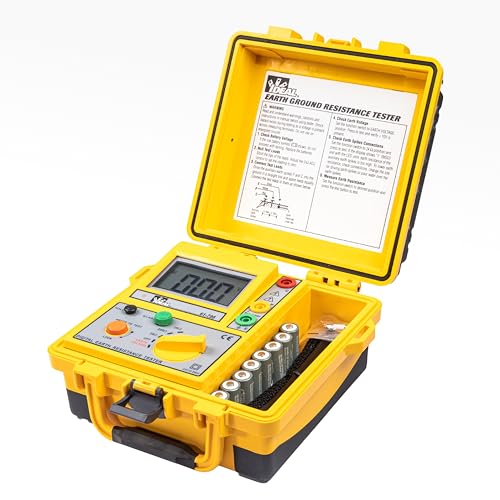
Ideal Industries 3-Pole Ground Resistance Tester: One Trade-Off Decides the Owner
A mechanism-first review of the Ideal Industries 3-pole ground resistance tester, covering the Fall of Potential trade-off, the unpublished specifications, and where the instrument stops being useful.
Read More→