As an Amazon Associate, Akermin earns from qualifying purchases. Product links on this page are affiliate links.

Fluke · Fluke 117 Digital Multimeter, Non-Contact AC Voltage Detection, Measures Resistance/Continuity/Frequency/Capacitance/Min Max Average, Automatic AC/DC Selection, Low Impedance Mode
View on AmazonPrice and availability are shown on Amazon and can change at any time.
Verdict
The Fluke 117 is a compact True RMS multimeter with three features that matter on electrical work: VoltAlert non-contact voltage detection built into the case, AutoVolt automatic AC or DC selection, and a low-impedance LoZ mode that rejects ghost voltages. It has a large white LED backlight, a 6000-count display, capacitance, frequency, resistance, continuity and min/max/average. The manufacturer quotes a battery life of 400 hours typical without backlight and an operating range of minus 10 to plus 50 degrees Celsius. What it lacks is a temperature input and the higher voltage category of the 170 series. For commercial and residential electrical work, the documentation supports it as a first-choice meter; for industrial troubleshooting, read the Fluke 179 review before deciding.
Who It Is For
- Electricians working in commercial buildings, hospitals and schools where ghost voltages are common.
- Residential electricians and serious home users who want a meter that stays out of the way.
- Facilities staff who need a compact, well-documented meter with a long battery life.
Our guide to choosing a digital multimeter explains the categories these features fall into.
Documented Specifications
| Item | Documentation |
|---|---|
| Measurement type | True RMS for non-linear loads |
| Non-contact voltage | VoltAlert integrated in the meter |
| Voltage selection | AutoVolt automatic AC/DC |
| Ghost voltage rejection | Low input impedance (LoZ) mode |
| DC millivolts | 600.0 mV range, 0.1 mV resolution |
| Other functions | Resistance, continuity, frequency, capacitance, min/max/average |
| Backlight | Large white LED |
| Battery life | 400 hours typical without backlight |
| Operating temperature | -10 °C to +50 °C |
The Three Defining Features
VoltAlert. Holding the meter near a conductor with the selector in the VoltAlert position lights an indicator and beeps when AC voltage is present. It is the same technology as Fluke’s pen testers, integrated so that there is one fewer thing to carry. It is a screening check only and must be followed by a contact measurement before treating a circuit as dead.
AutoVolt. The AutoV position measures voltage and decides for itself whether to show AC or DC. Owners consistently describe this as the feature that makes the 117 fast: one position covers most checks.
LoZ. A high-impedance meter reads capacitively coupled voltage on a de-energised conductor as if it were real, sometimes tens of volts. LoZ presents a low input impedance that collapses ghost voltage while an energised conductor still reads correctly. In buildings with long parallel runs this is the difference between a five-minute check and a half-hour of confusion. See measuring AC voltage with a multimeter.
Display, Build and Battery
The 6000-count display with a large white LED backlight is easy to read in a dim panel. The case is compact and fits the Fluke holster and magnetic hanger accessories. The 400-hour battery figure means a 9V battery lasts through months of daily use as long as the backlight is used sparingly. Continuity has an audible beeper and the meter recovers quickly between readings, which matters when checking many conductors. The DC millivolt range with 0.1 mV resolution is useful for thermocouple simulation, shunt readings and sensor troubleshooting where a coarser range would show nothing.
Practical Notes
Two things are worth knowing before the first use. The VoltAlert sensor is at the top of the case, so the top of the meter must be brought near the conductor for the detector to respond. And LoZ mode draws a small current from the circuit by design, so it should not be used on sensitive electronic circuits where that load matters; the standard voltage mode is the one for control boards. The included test leads are the standard Fluke set, and the meter accepts the same accessories as the rest of the range, including the i400 clamp and the magnetic hanger.
Strengths
- Ghost-voltage rejection and non-contact detection in one compact meter.
- AutoVolt reduces selector mistakes.
- Long battery life and a bright backlight.
- Fluke documentation and accessory ecosystem.
Limitations
- No temperature measurement.
- Lower voltage category than the 170 series, so less suited to industrial and service-entrance work.
- Current measurement is series-connected only; clamps are a separate purchase.
How It Compares
The Fluke 179 adds temperature, an analogue bar graph, manual ranging and a higher safety category, at a higher price and in a larger body. For someone who mostly measures current, the Fluke 323 clamp meter covers voltage and continuity as well. The Fluke i400 is the clamp accessory that extends the 117 to 400 A AC. For automotive or solar DC work see choosing a multimeter for automotive diagnostics.
How We Research
This review is based on the manufacturer’s published specifications and user manual, the Amazon product listing and owner reports. We did not run laboratory tests. Related: how to test continuity with a multimeter.
Recommended Tools


Products shown because their documented specifications fit this guide. Price and availability are on Amazon and can change.
Frequently Asked Questions
What does AutoVolt do?
In the AutoV position the meter detects whether the voltage is AC or DC and displays the correct one. It removes the most common wrong-setting mistake on a job site.
Does the Fluke 117 have a low-impedance mode?
Yes. The LoZ mode loads the circuit slightly so that ghost voltages from capacitive coupling collapse, which prevents a de-energised conductor from reading as live.
Can it measure current?
Yes, through the input jacks in series with the circuit, up to the fused limit stated on the meter. For higher currents or for measuring without breaking the circuit, pair it with a clamp accessory such as the Fluke i400 or use a clamp meter.
Does it measure temperature?
No. The Fluke 179 adds a thermocouple temperature input; the 117 does not have one.
Affiliate disclosure: Akermin earns a commission from qualifying Amazon purchases made through links on this page. Our editorial picks are based on documented specifications and owner feedback, not commissions.
Related Guides

Fluke 1AC II VoltAlert Review: Two Detection Thresholds in One Listing
A pocket sized non contact voltage tester whose tip glows red and beeper sounds when voltage is detected, with a continuous self test and a choice of audible or silent operation.
Read More→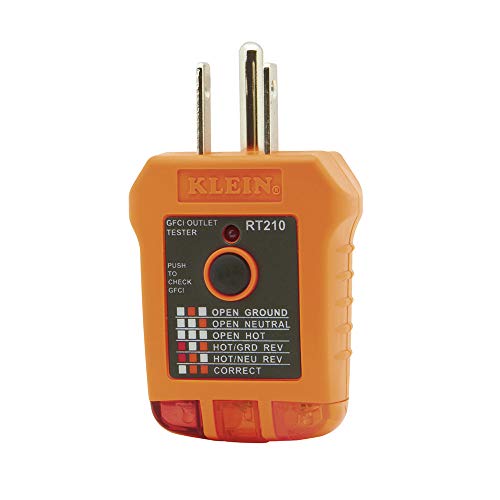
Klein Tools RT210 Review: A Fault Finder That Does Not List Its Faults
A three wire receptacle tester for standard and GFCI North American outlets, specified for 110 to 125 volts AC at 50 or 60 Hz, a 6.6 foot drop and an operating range of 32 to 140 degrees Fahrenheit.
Read More→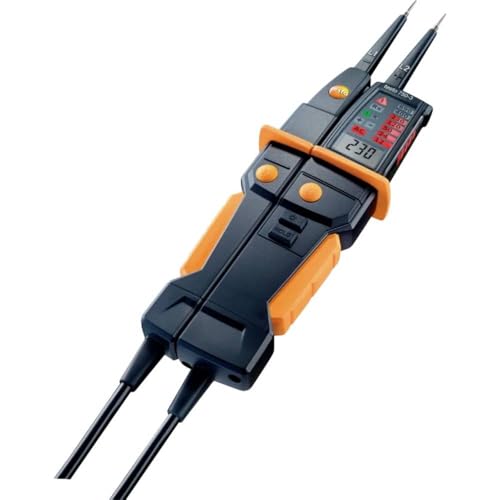
Testo 750-3 Review: Four Bullets, and No Published Category Rating
A two pole voltage tester with a three digit LCD showing measured voltage, a patented LED voltage bar viewable from any angle, polarity detection on DC and a GFCI test function for AC outlets.
Read More→