As an Amazon Associate, Akermin earns from qualifying purchases. Product links on this page are affiliate links.
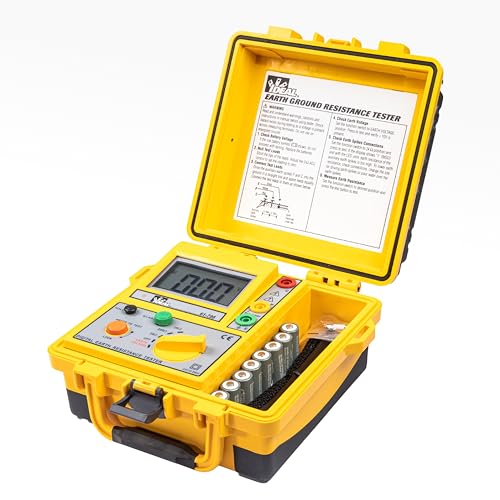
Ideal Industries · Ideal Electrical: 3-Pole Ground Resistance and Voltage Testers, Auto-Range | Non Contact Voltage Tester & Ground Rod Measurer, Non-GFCI Tripping Design, Zero-Ohm Adjust, Data Hold, Leads & Electrodes
View on AmazonPrice and availability are shown on Amazon and can change at any time.
The Ideal Industries 3-pole ground resistance and voltage tester is the instrument to choose when you need a defensible earth resistance reading on a single ground rod or electrode and you can drive auxiliary stakes. Its Fall of Potential method is the reference technique for that measurement, and the listing states it measures without tripping ground fault breakers and can operate on energized circuits. The trade-off is that a 3-pole test requires auxiliary electrodes and a disconnected or isolated rod, so it is slower than a clamp-on earth tester and less convenient for quick checks on bonded systems. If you need fast, live-system ground checks without stakes, this is not the right tool. If you need a documented Fall of Potential result, it is.
The Fall of Potential method is the product, and it costs you setup time
The listing describes a 3-pole Fall of Potential (FOP) tester. In practice that means the instrument injects a current through the earth between the rod under test and a remote current stake, then measures the voltage drop between the rod and a potential stake placed at intervals. The resistance is calculated from that ratio. It is the method most standards treat as the reference for a single ground electrode, which is why it is worth the effort when the reading has to stand up.
The cost is physical. A 3-pole test needs two auxiliary stakes driven into the ground, a known spacing, and a rod that is disconnected from the system so the measurement is not shorted by parallel paths. The listing does not publish the stake spacing, the test current, or the maximum auxiliary stake resistance, so you cannot plan a difficult site from the bullets alone. What the listing does state is that the tester measures without tripping ground fault breakers and operates on energized circuits. That is a real convenience, but it does not remove the need for stakes and a disconnected rod in a true 3-pole FOP test. Treat the energized-circuit capability as a safety and workflow feature, not as a substitute for isolation.
This is the single trade-off the design forces: you get the reference method and its credibility, and you pay for it in time per test and in site conditions. On a substation mat or a lightning protection rod where the number matters, that is the right trade. On a row of bonded equipment racks where you just want to know whether the bonding is intact, it is the wrong one.
What the listing publishes, and the three gaps that affect daily use
The published claims are narrow and specific. The tester uses the 3-pole FOP method, measures without tripping ground fault breakers, operates on energized circuits, auto-ranges across multiple resistance ranges, offers zero-ohm adjustment and data hold, and has auto power-off and a low battery indicator. Those are the facts you can rely on for planning.
Three things a buyer would want are not stated in the listing bullets. First, the resistance ranges and the resolution at each range are not published. Auto-ranging is stated, but the actual span and the smallest digit are not. Second, the accuracy specification is absent, so you cannot compare it against a stated tolerance for a commissioning document. Third, the safety rating and the maximum voltage it can tolerate on an energized circuit are not given. The listing says it operates on energized circuits, but without a published category or voltage limit that claim should be read as a workflow statement, not as a licence to connect it to any live conductor.
Also missing are the battery type and life, the case or lead set supplied, and the operating temperature range. None of these are reasons to reject the instrument, but they are reasons to check the full manual before you rely on it for a paid job. The zero-ohm adjustment is worth understanding: it lets you null out the resistance of the test leads so that the reading reflects the electrode and the soil, not your leads. That matters most at low resistance values, where lead resistance is a meaningful fraction of the total.
Where the 3-pole design stops being the right instrument
A 3-pole tester is the wrong choice when you cannot disconnect the rod, when you cannot drive stakes, or when you need to test many bonded electrodes quickly. In those cases a clamp-on earth tester, which measures the loop current through a bonded system without auxiliary stakes, is the practical alternative. The listing does not claim clamp-on capability, and the 3-pole method it describes is not a clamp measurement. If your work is mostly quick verification of bonding on live equipment, this instrument will slow you down.
It is also not a general multimeter. It does not replace a multimeter for home and DIY work, and it does not measure insulation resistance. For insulation testing on motors and cables, a dedicated insulation resistance tester is the correct instrument. For a broader view of earth testing instruments, including clamp types, the site’s earth and ground testers comparison sets the context. The Ideal unit sits at the reference-method end of that category, not the convenience end.
The voltage function is a secondary feature here. The listing calls it a ground resistance and voltage tester, but it does not publish the voltage range or accuracy. Do not buy it as a voltage tester; buy it for the earth resistance measurement and treat the voltage reading as a check.
The maintenance nobody mentions: stakes, leads and soil
The instrument itself is the easy part. The measurement depends on the stakes, the leads and the soil, and those are what degrade. Auxiliary stakes need clean contact with the earth; a loose stake or a dry surface adds resistance that shows up in the reading. Test leads need to be checked for continuity and for damaged insulation, because a lead fault at low resistance values is indistinguishable from a bad electrode. The zero-ohm adjustment is only as good as the leads at the moment you perform it, so re-zero when you change leads or after they have been coiled and uncoiled.
Soil conditions change the reading more than the instrument does. The listing does not publish a soil resistivity function or a measurement frequency, so you cannot use it to characterise soil directly. What you can do is take readings at consistent stake spacings and record them, which is where the data hold feature helps: it freezes a reading so you can write it down without the display drifting while you look away. Auto power-off saves the battery but can interrupt a slow survey if you pause too long between readings, so plan your sequence.
The low battery indicator is the other maintenance prompt. A weak battery can affect the test current, and the listing does not state how the instrument behaves as the battery falls. Replace batteries before a scheduled survey rather than trusting the indicator on the day.
How to decide whether this is your instrument
Choose the Ideal 3-pole tester if your work requires a Fall of Potential earth resistance measurement that you can document, you can disconnect the electrode under test, and you can drive two auxiliary stakes. The auto-ranging and zero-ohm adjustment make repeat tests faster, and the stated ability to measure without tripping ground fault breakers reduces the risk of nuisance tripping on energized systems during the test sequence.
Do not choose it if you need to test bonded electrodes without disconnection, if you cannot drive stakes, or if you need a published accuracy figure and safety category to satisfy a commissioning specification. The listing does not publish those, and no amount of general knowledge about similar instruments should be used to fill the gap. If those numbers are mandatory for your job, request the full datasheet from the supplier before buying, and compare against instruments that do publish them.
The voltage function and the data hold are useful secondary features, but they are not the reason to buy. The reason to buy is the method. If the method fits your work, the trade-off is worth it. If it does not, a clamp-on earth tester or a broader electrical tester will serve you better.
The verdict: a reference-method instrument with a published-data gap
The Ideal Industries 3-pole ground resistance and voltage tester is the right instrument when the job demands a Fall of Potential measurement and you can accept the setup time that comes with it. The listing states the method, the auto-ranging, the zero-ohm adjustment and the data hold, and those are the features that matter for repeatable earth testing. The gaps are equally clear: resistance ranges, accuracy, safety rating and battery details are not published in the listing bullets. Buy it for the method, not for the voltage function, and confirm the missing specifications against the full manual before you commit to a paid survey.
Recommended Tools


Products shown because their documented specifications fit this guide. Price and availability are on Amazon and can change.
Frequently Asked Questions
Does this tester measure earth resistance without disconnecting the ground rod?
The listing describes a 3-pole Fall of Potential method, which in normal use requires the rod under test to be disconnected from the system so that parallel earth paths do not affect the reading. The listing does not state that it can measure a connected rod without isolation. If you need to test bonded electrodes without disconnection, a clamp-on earth tester is the appropriate instrument.
What resistance ranges and accuracy does it have?
The listing states auto-ranging across multiple resistance ranges but does not publish the actual ranges, the resolution, or an accuracy specification. Those figures are not stated in the listing bullets. For a commissioning document that requires a stated tolerance, request the full datasheet from the supplier.
Can it be used on energized circuits safely?
The listing states that it measures without tripping ground fault breakers and operates on energized circuits. It does not publish a safety category rating or a maximum voltage limit. Treat the energized-circuit statement as a workflow feature and confirm the voltage limit in the manual before connecting to any live system.
Is this a replacement for a clamp-on earth tester?
No. A 3-pole Fall of Potential tester and a clamp-on earth tester use different methods and suit different jobs. The clamp-on type is faster for bonded systems without stakes; the 3-pole type is the reference method for a single electrode. The listing does not claim clamp-on capability.
What does the zero-ohm adjustment do?
It nulls out the resistance of the test leads so that the displayed reading reflects the electrode and soil rather than the leads. This matters most at low resistance values. Re-zero after changing leads or if the leads have been disturbed.
Does it come with stakes and leads?
The listing does not state what accessories are supplied. It mentions zero-ohm adjustment and data hold but does not list a case, stakes or leads. Check the box contents with the supplier before buying, because a 3-pole test needs auxiliary stakes to perform the Fall of Potential measurement.
Affiliate disclosure: Akermin earns a commission from qualifying Amazon purchases made through links on this page. Our editorial picks are based on documented specifications and owner feedback, not commissions.
Related Guides

Fluke 177 True-RMS Digital Multimeter: How It Measures, and What the Listing Leaves Out
A plain explanation of how the Fluke 177 turns a test signal into a reading, what its display and memory features are for, and which specifications buyers must confirm elsewhere.
Read More→
Hioki PD3129 Review: A Non-Contact Phase Rotation Meter and Its Ownership Costs
A single-product review of the Hioki PD3129, focused on its non-contact measurement method, published CAT III 600V rating, and the consumable and maintenance questions the listing does not answer.
Read More→
Klein Tools RT110 Outlet Tester Review: What the Listing Does Not Say
A close reading of the Klein Tools RT110 listing, covering the published specifications, the missing fault-code table, and where a three-light tester stops being the right tool.
Read More→