As an Amazon Associate, Akermin earns from qualifying purchases. Product links on this page are affiliate links.

Seek Thermal · Seek Thermal CompactXR – Outdoor Thermal Imaging Camera for iOS, Black (LT-AAA)
View on AmazonPrice and availability are shown on Amazon and can change at any time.
The Seek Thermal CompactXR is a phone-attached thermal camera aimed at outdoor users who need to spot people or animals at distance in low light. Its defining specification is the combination of a 206 x 156 sensor with a narrow 20 degree field of view. The narrow lens concentrates pixels on a smaller patch of scene, which is how the listing can claim extra range detection, but the same choice means less context in the frame and a coarse image when you move close. If your work is finding warm bodies across a field at dusk, that is the right bargain. If your work is reading temperature differences on a wall or a circuit board at arm’s length, it is the wrong one.
The 206 x 156 sensor and the 20 degree lens are one decision, not two
A thermal sensor is a grid of detector elements, and each element reports one temperature. The listing gives the grid as 206 by 156, which is 32,136 elements. That number matters because every element covers a fixed angle of the scene, and the angle is set by the lens. The CompactXR uses a 20 degree field of view. A narrow field of view means each element covers a smaller slice of the world, so the camera can put more elements on a distant target than a wide-angle camera with the same grid would.
This is the mechanism behind the listing’s claim of finding people and animals over long distances. It is not extra sensitivity or a larger sensor; it is geometry. The same geometry has a cost. A 20 degree lens sees a narrow cone, so at close range you are looking through a keyhole. For scanning a treeline at dusk that is an advantage. For inspecting a door frame, a socket or a manifold you will be moving the phone constantly to build a picture in your head.
Buyers often compare thermal cameras on sensor resolution alone. That is a mistake here. The CompactXR’s sensor is modest, and the lens is doing much of the work the listing advertises. Ask whether you need reach or context, because this camera has chosen reach.
What the 20 degree field of view does to your scanning technique
With a narrow lens, the camera becomes a pointing tool. You sweep it slowly across a scene and the image moves quickly, because a small rotation of the phone translates to a large change in what the lens sees. That makes the CompactXR feel more like a monocular than a snapshot camera. The listing includes a focusable lens, which helps: at different distances you can bring the scene into focus, and a focused thermal image shows edges and temperature boundaries more clearly than a blurred one.
The published frame rate is under 9 Hz. That is a slow refresh compared with video, and it means the image lags slightly as you pan. For spotting a stationary or slowly moving animal it is workable. For tracking something moving quickly across the frame, the delay is noticeable. The listing does not publish a latency figure, so the practical feel of that lag is something you learn in use rather than from the specification sheet.
Field of view also decides how much of a scene fits in one frame. Twenty degrees is roughly the angle of a moderately long camera lens. At 100 metres, the horizontal span is about 35 metres if you assume a simple tangent calculation (2 x 100 x tan 10 degrees). That is a narrow strip of a field, which is why the listing frames the product around finding people and animals rather than surveying terrain.
Thermal sensitivity below 70 mK, and what that figure can and cannot tell you
The listing states thermal sensitivity of less than 70 mK. A millikelvin is one thousandth of a kelvin, so 70 mK is 0.07 degrees Celsius. In plain terms, the camera can distinguish temperature differences of roughly that size under good conditions. That is a useful figure for finding a warm body against a cooler background, because the contrast between a person and a night-time field is usually far larger than 0.07 degrees.
It is a less useful figure for diagnostic work where you are looking for small temperature differences, such as a slight insulation gap or a warming electrical joint. The listing gives no accuracy figure in degrees, no repeatability figure and no calibration statement. Those are the numbers a thermographer would want before trusting a reading, and they are not published. The spot temperature and high-low temperature modes give you numbers on screen, but the listing does not say how those numbers are calibrated or what their tolerance is. Treat the temperature readout as a relative indicator, not a certified measurement.
This is the honesty point that matters most for this product. It is a detection tool with a temperature display, not a calibrated diagnostic instrument. The listing’s own language, finding people and animals, is consistent with that.
The phone does the display, the storage and the power, and that is the point
The listing says the camera does not require batteries or charging. It draws power from the phone through the Lightning connector implied by the iOS compatibility in the title. The phone also provides the screen, the storage for captured photos and videos, and the processing for the nine colour palettes and the spot, high-low and threshold modes. The free Seek mobile app is the interface.
This design has a clear practical consequence: the camera’s runtime is your phone’s runtime. The listing publishes no power draw figure, so how much battery the camera consumes is not stated. Owners report that thermal cameras of this type add noticeable drain, but the listing itself is silent. If you plan a long night scan, carry a way to recharge the phone.
The waterproof case included with the product is the other physical detail the listing gives. It does not state an IP rating, so the word waterproof should be read as the manufacturer’s description rather than a tested standard. The listing does not publish drop ratings, operating temperature for the camera body, or the connector type beyond the iOS reference in the title.
Where the CompactXR stops being the right instrument
The CompactXR is the wrong purchase if your work is close-range diagnosis. A 20 degree lens and a 206 by 156 grid give you a coarse image at arm’s length, and the listing publishes no macro mode or close-focus specification. Buyers who need to read small temperature differences on a PCB, a wall or a pipe joint should look at cameras built around that task, such as those covered in thermal cameras for PCB work or building envelope inspection. The CompactXR’s own listing points at the outdoorsman, the hunter and the searcher, and that is the honest scope.
It is also the wrong purchase if you need a calibrated temperature record. The listing gives a detection range of -40F to 626F, which is wide, but no accuracy statement. For electrical or HVAC work where the number on screen has to be defensible, a camera with a published accuracy figure is the safer choice; the site’s guide to choosing a thermal camera for electrical work explains why. The CompactXR can still show you a hot joint, but it cannot tell you how hot with any stated confidence.
Finally, it is not a general-purpose night vision substitute. It detects heat, not reflected light, so it will not show you terrain, foliage or obstacles in the way a visible-light device would. The listing’s claim about improving visual perception should be read as awareness of warm bodies, not as a full picture of the ground in front of you.
The CompactXR is a specialist’s tool with a narrow job
The Seek Thermal CompactXR makes one clear trade: a narrow 20 degree lens and a 206 x 156 sensor to give reach at the expense of context and close-range detail. For a hunter, a searcher or anyone scanning for warm bodies at dusk, that trade is well matched to the job. For diagnostic work where you need a calibrated number or a detailed close-up image, the listing does not publish the figures that would support that use. Buy it for detection at distance, not for measurement.
Recommended Tools


Products shown because their documented specifications fit this guide. Price and availability are on Amazon and can change.
Frequently Asked Questions
Can the CompactXR measure temperature accurately?
The listing gives a detection range of -40F to 626F and includes spot, high-low and threshold modes, but it publishes no accuracy figure, no calibration statement and no repeatability figure. The temperature display should be treated as a relative indicator. If you need a defensible measurement, a camera with a published accuracy specification is the correct tool.
Will it work with my Android phone?
The title specifies iOS and the listing refers to the free Seek mobile app without naming platforms. The listing does not state Android compatibility for this model. Check the connector and the app listing for your phone before buying; do not assume it will work on both.
How far can it really detect a person?
The listing does not publish a detection distance in metres. It claims extra range detection and long-distance use, but gives no figure. The 20 degree field of view and 206 x 156 sensor set the geometry, and you can estimate the span of the frame at a given distance, but the manufacturer's own detection range is not stated. Treat any specific distance claim you see elsewhere with caution.
Does it need batteries?
No. The listing states it does not require batteries or charging. It draws power from the phone. The listing does not publish the power draw, so how much phone battery it uses is not stated.
What is the frame rate and does it matter?
The listing gives a frame rate of under 9 Hz. That is a slow refresh, so the image lags slightly as you pan. For spotting stationary or slow-moving animals it is workable. For fast-moving targets the lag is noticeable. The listing does not publish a latency figure.
Is the waterproof case enough for wet weather?
The listing says a waterproof case is included but does not publish an IP rating. Without a stated standard, the word waterproof is the manufacturer's description rather than a tested claim. If you plan to use it in heavy rain or near water, treat the case as splash protection unless the manufacturer publishes a rating.
Affiliate disclosure: Akermin earns a commission from qualifying Amazon purchases made through links on this page. Our editorial picks are based on documented specifications and owner feedback, not commissions.
Related Guides

Fluke 62 Max Infrared Thermometer Review: What the Listing Does Not Say
A specification-by-specification reading of the Fluke 62 Max that separates what the listing publishes from what it leaves out.
Read More→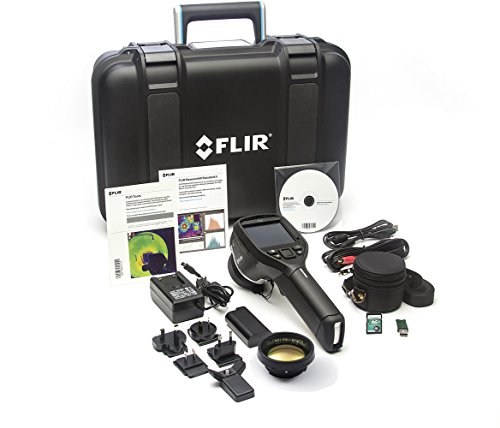
FLIR E50 Review: The 1.82 lb Thermal Camera and the Cost the Listing Hides in Plain Sight
A close read of the FLIR E50 listing, focused on the laser class and the consumable and maintenance implications it carries.
Read More→
FLIR MR160 Review: The Imaging Moisture Meter for Inspectors Who Need Proof
A focused review of the FLIR MR160 imaging moisture meter, covering its thermal guidance, dual moisture sensors and reporting workflow, with a clear statement of the buyer it does not suit.
Read More→