Skip to content
AkerminMeasure. Monitor. Improve. Compare Products

Best Ultrasonic Leak Detectors for HVAC Technicians: 7 Picks

Ultrasonic detectors listen for the hiss of gas escaping through a small orifice, so they work on any pressurised gas rather than one chemistry. That makes them the complement to a refrigerant sniffer, not a replacement. The seven picks below cover handheld probes, gooseneck models and one acoustic imaging camera.

  • Independent Research
  • Verified Specifications
  • Honest Recommendations

Measure It
Compare It
Buy Once

As an Amazon Associate, Akermin earns from qualifying purchases. Product links on this page are affiliate links.

Our Top Picks

This comparison was assembled from the manufacturer listings supplied for each product. Only products whose listings describe ultrasonic leak detection for HVAC, automotive or industrial pressurised systems were included. Products that did not belong to the topic were excluded rather than padded into the list.

Best overall
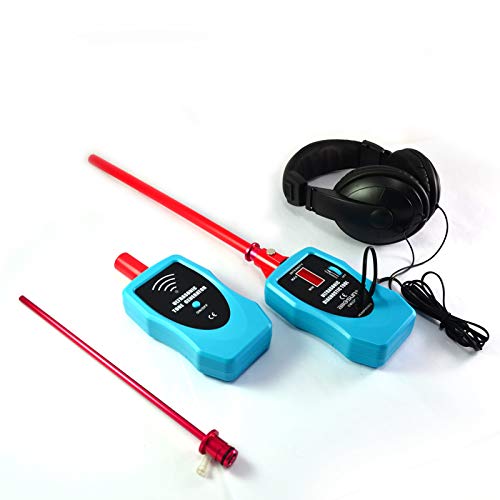
INFICON Whisper

INFICON Whisper

A no-frills ultrasonic receiver that works on any gas and in noisy plant rooms.

  • Detects pressure and vacuum leaks for all gases
  • Headphones included so you hear the leak rather than watch a needle
  • Listing states it works even in noisy environments
View on Amazon Read Full Review→
Best with visual output
AccuTrak VPE-GN PRO

AccuTrak VPE-GN PRO

Gooseneck probe and a ten element bar graph for joints you cannot see.

  • Detects any gas that generates ultrasonic sound during flow, including vacuum leaks
  • Listing states capability of detecting leaks equivalent to 1.5 oz/year of refrigerant
  • Ten element bar graph gives a visual strength indication
View on Amazon Read Full Review→
Best for large surveys
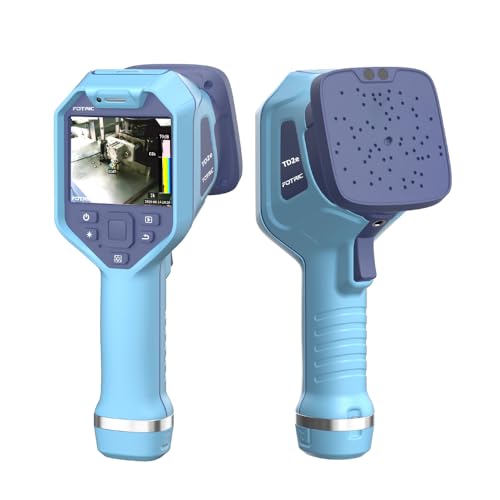
FOTRIC TD2e

FOTRIC TD2e

An acoustic camera that turns ultrasound into a picture on a touch screen.

  • 64 MEMS digital microphones with beamforming to isolate sound sources
  • Stated frequency range of 2 kHz to 100 kHz
  • 3.5 inch touch screen with a 5 MP visual camera overlay
View on Amazon Read Full Review→
Gooseneck value
AccuTrak VPE-GN Standard Kit

AccuTrak VPE-GN Standard Kit

The gooseneck body without the extra accessories of the PRO kit.

  • Gooseneck configuration reaches hard to reach places
  • 0 Hz to 4 kHz natural sound conversion lets you hear the leak
  • Ten element bar graph shows presence and relative strength of ultrasound
View on Amazon Read Full Review→
Widest stated range
Amprobe ULD-405

Amprobe ULD-405

A 20 kHz to 90 kHz receiver with an LCD bargraph and sensitivity control.

  • Stated 20 kHz to 90 kHz frequency range
  • 2.5 inch LCD display with bargraph
  • Sensitivity and volume controls
View on Amazon Read Full Review→
Budget entry
allsun 40 kHz Kit

allsun 40 kHz Kit

A single-frequency 40 kHz receiver with passive and active modes.

  • 40 kHz ultrasonic sensor for air and vacuum leaks
  • Passive mode for pressurised systems, active mode with a transmitter
  • Listing states it finds leaks in HVAC, compressed air lines and industrial equipment
View on Amazon Read Full Review→
Best for mechanical checks
allsun Diagnostic Stethoscope Kit

allsun Diagnostic Stethoscope Kit

Air and contact probes in one kit, for leaks and for bearing and valve noise.

  • Air probe for pressurised leaks and electrical discharges
  • Contact probe for ultrasound inside machinery casings
  • Rotary volume knob and LED bar graph for dual confirmation
View on Amazon Read Full Review→

Comparison Table

View Full Comparison→
PickTypeStated frequency rangeVisual outputStated sensitivityActive mode transmitter
Handheld receiverNot stated in the listing bulletsNone statedNot stated in the listing bulletsNot stated in the listing bulletsView
Gooseneck handheldNot stated in the listing bullets10 element bar graph1.5 oz/year refrigerant equivalentNot stated in the listing bulletsView
Acoustic imaging camera2 kHz to 100 kHz3.5 inch touch screen acoustic overlayNot stated in the listing bulletsNot stated in the listing bulletsView
Gooseneck handheldNot stated in the listing bullets10 element bar graphNot stated in the listing bulletsNot stated in the listing bulletsView
Handheld receiver20 kHz to 90 kHz2.5 inch LCD bargraphNot stated in the listing bulletsNot stated in the listing bulletsView
Handheld receiver40 kHz sensor centreNot stated in the listing bulletsNot stated in the listing bulletsYes, paired with an ultrasonic transmitterView
Handheld receiver with two probesNot stated in the listing bulletsLED bar graphNot stated in the listing bulletsNot stated in the listing bulletsView

Cells show only what the manufacturer listing publishes. A 40 kHz sensor centre is not the same as a 20 kHz to 90 kHz coverage range; the first describes the sensor, the second describes the band the receiver can be tuned across.

How to choose an ultrasonic leak detector

Six things to settle before you buy, in the order they change the decision.

Decide what you are hunting

If you chase refrigerant charge loss, an ultrasonic detector finds the flow and a chemical sniffer confirms the gas. If you survey compressed air, ultrasound alone is enough.

Check the probe reaches

A gooseneck or a waveguide lets you aim the sensor behind a fan guard or into a corner. A straight probe forces your head into the same space as the joint.

Look for separate sensitivity and volume

One knob that does both means you cannot quiet a noisy room without also going deaf to the leak. Separate controls are the difference between usable and frustrating.

Read the frequency range carefully

A stated band like 20 kHz to 90 kHz is coverage. A single figure like 40 kHz is a sensor centre frequency. They are not the same specification.

Remember what it is not

An ultrasonic detector is not a gas concentration meter and not an alarm. It will not tell you whether the space is safe to enter, and it will not wake you at night.

Plan for the consumables

Most of these run on standard cells. Check what the kit includes and what it does not, because a detector that dies mid-survey is worse than no detector.

Frequently Asked Questions

View All FAQs→
Does an ultrasonic leak detector find refrigerant leaks?

Yes, provided the system is under pressure or vacuum and the leak is large enough to generate turbulence. The listing for P3 states a capability equivalent to 1.5 oz/year of refrigerant. Ultrasound detects the sound of flow, so it works on any gas, including nitrogen during a pressure test. It does not tell you which gas is escaping.

Can an ultrasonic detector replace a refrigerant sniffer?

No. They answer different questions. Ultrasound tells you where gas is escaping; a chemical sniffer tells you whether the gas is the refrigerant you are looking for. In a plant room with several gases present, or when you need to confirm a specific refrigerant, you need both. See our guide to refrigerant leak detectors for the chemistry side.

Will it work on a system that is not pressurised?

Not in passive mode. Ultrasound needs flow through an orifice, and with no pressure difference there is no flow. Some kits, including P10, support an active mode where a transmitter is placed inside a sealed enclosure and you listen for the signal escaping. That is the only way ultrasound tests an unpressurised sealed container.

Why does my detector pick up noise everywhere?

Ultrasound is produced by many things besides leaks: fan blades, belt slip, contactors, air tools and even some electrical discharges. The fix is to use a directional probe or waveguide, keep the sensitivity as low as you can while still hearing the leak, and move the probe slowly. The listing for P12 makes the same point about setting volume just above the background hiss.

Reviews

INFICON Whisper

INFICON Whisper Best overall

The Whisper is a passive ultrasonic receiver. Gas forced through a small opening creates turbulence, and that turbulence radiates sound well above the audible band. The instrument shifts that ultrasound down into the audible range so you can hear it through the supplied headphones. Because the trigger is the sound of flow and not a chemical reaction, the same instrument finds a nitrogen pressure test leak, a vacuum leak on a pump-down, and a compressed air leak on a shop line. That is the whole argument for carrying one.

The listing is short and does not publish a frequency range, a sensitivity figure or a battery life. What it does state is that it detects pressure and vacuum leaks for all gases and that it works in noisy environments. The second claim matters more than it sounds. Ultrasonic work fails when background ultrasound from fans, belts and contactors drowns the leak signal, so a receiver that can be aimed and shielded is doing real work. There is no bar graph on this model, so you are judging by ear.

For a technician already carrying a refrigerant sniffer, the Whisper is the tool that finds the leak the sniffer cannot reach or cannot confirm. Use it to sweep a joint, then confirm the refrigerant charge loss with chemistry. It is not an alarm and it does not measure concentration.

Strengths

  • Works on any pressurised gas, so one tool covers refrigerant, nitrogen, air and vacuum
  • Headphone output suits noisy mechanical rooms
  • Simple enough to use without a manual

Limitations

  • No frequency range, sensitivity or battery life published in the listing
  • No visual bar graph, so leak strength is judged by ear alone
  • Not a gas concentration meter and not an alarm
View on Amazon
AccuTrak VPE-GN PRO

AccuTrak VPE-GN PRO Best with visual output

The VPE-GN PRO pairs an ultrasonic receiver with a gooseneck, which is the part that changes how you work. A straight probe forces you to put your head and hand into the same space as the joint, which on a rooftop unit or a wall-mounted evaporator is often impossible. The gooseneck lets the sensor reach behind a fan guard or into a corner while you stand where you can actually hear the headphones.

The listing states the instrument detects any gas that generates ultrasonic sound during flow, including vacuum leaks, and gives a leak detection capability equivalent to 1.5 oz/year of refrigerant. Treat that figure as a manufacturer claim about the smallest leak the instrument can register under good conditions, not a guarantee in a noisy plant room. The ten element bar graph is the more useful feature day to day, because it lets you compare signal strength as you move the probe and home in on the loudest point.

The kit includes a headset, battery, carry case, waveguide and noise blocking headphones. The waveguide is the accessory that lets you listen to ultrasound through a grille or around an obstruction. This is a professional kit, and it is priced and built like one.

Strengths

  • Gooseneck reaches joints a straight probe cannot
  • Bar graph gives a repeatable visual strength reading
  • Stated refrigerant sensitivity figure, which most listings omit

Limitations

  • No frequency range published in the listing
  • Gooseneck adds bulk in tight cabinets
  • Still not a concentration meter or an alarm
View on Amazon
FOTRIC TD2e

FOTRIC TD2e Best for large surveys

The TD2e is a different class of instrument. Instead of a single sensor you point and sweep, it uses an array of 64 MEMS microphones and a beamforming algorithm to work out where the sound is coming from, then overlays that acoustic image on a visual camera picture. The practical effect is that you can stand back, look at the screen, and see a hot spot on a compressed air manifold rather than hunting for it joint by joint.

The listing states a frequency range of 2 kHz to 100 kHz, which is far wider than the handhelds here and covers both audible and ultrasonic sources. It also states the camera detects compressed air, vacuum and pneumatic valve leaks, and abnormal vibration from loose joints, bearing wear or structural looseness. That last capability is a genuine bonus for a technician already doing vibration checks.

This is not the tool you buy to check one flare joint. It is the tool you buy when leak surveys are a regular part of the work, or when you need to document what you found. The listing also mentions automotive and appliance noise diagnosis, which is outside HVAC but shows the same array doing the same job.

Strengths

  • Widest stated frequency range here, 2 kHz to 100 kHz
  • Beamforming shows the leak location on screen rather than by ear
  • Also flags vibration problems on running equipment

Limitations

  • Far more expensive than a handheld ultrasonic receiver
  • Overkill for a single joint check
  • Requires practice to interpret the acoustic overlay
View on Amazon
AccuTrak VPE-GN Standard Kit

AccuTrak VPE-GN Standard Kit Gooseneck value

This is the standard kit version of the gooseneck AccuTrak. The detection engine is described the same way as the PRO: 0 Hz to 4 kHz natural sound conversion, and a ten element bar graph. The gooseneck is the same idea, letting the sensor reach where your hand and head cannot both fit.

The difference between this and the PRO kit is in the accessories and the case, not in the stated detection method. If you already own a headset you trust and a case you like, the standard kit is the cheaper way into the gooseneck body. If you want the full set of probes and the larger case, the PRO kit is the one to compare against.

The listing does not publish a frequency range or a sensitivity figure in ounces per year, so you cannot compare it numerically with the PRO on those terms. What it does publish is the audio conversion range and the bar graph, which are the two features that matter for finding a leak by ear and confirming it visually.

Strengths

  • Gooseneck reaches obstructed joints
  • Natural sound conversion makes leaks easy to identify by ear
  • Bar graph confirms signal strength visually

Limitations

  • No frequency range or refrigerant sensitivity figure published
  • Fewer accessories than the PRO kit
  • No digital display or data logging
View on Amazon
Amprobe ULD-405

Amprobe ULD-405 Widest stated range

The ULD-405 publishes the frequency range that most of the handhelds here leave out: 20 kHz to 90 kHz. That matters because leaks of different sizes and pressures radiate at different frequencies. A large, low-pressure leak tends toward the lower end of the ultrasonic band, while a tiny high-pressure leak tends toward the upper end. A receiver that covers a wide band can be tuned to the leak in front of you rather than only the one it was designed around.

The 2.5 inch LCD with bargraph gives a visual strength reading, and the separate sensitivity and volume controls let you turn down the gain in a noisy room without turning down what you hear. That separation is the feature that separates a usable ultrasonic detector from a frustrating one. If sensitivity and volume are the same knob, you cannot quiet a loud background without also deafening yourself to the leak.

The listing does not state a refrigerant sensitivity figure in ounces per year, so you cannot compare it directly with the AccuTrak claim. It also does not state whether a transmitter is included for active leak testing of sealed enclosures.

Strengths

  • Widest stated frequency range among the handhelds here
  • Separate sensitivity and volume controls
  • LCD bargraph for visual confirmation

Limitations

  • No refrigerant sensitivity figure published
  • No transmitter mentioned for active testing
  • LCD adds a battery drain the simple units avoid
View on Amazon
allsun 40 kHz Kit

allsun 40 kHz Kit Budget entry

This allsun kit is built around a 40 kHz sensor, which sits in the middle of the ultrasonic band where many small leaks radiate. It supports two modes. In passive mode it listens to a pressurised system directly. In active mode it works with an ultrasonic transmitter placed inside a sealed enclosure, and you listen for the signal escaping through the leak. Active mode is the only way ultrasound can test a sealed container that is not already under pressure, so its presence here is a real capability, not a marketing line.

The listing is written for a broad audience and mentions HVAC, compressed air lines and industrial equipment. It does not publish a sensitivity figure, a battery life or a frequency range beyond the 40 kHz centre. The 40 kHz figure is a sensor specification, not a coverage range, so do not read it as equivalent to the Amprobe's 20 kHz to 90 kHz span.

For a technician who wants to try ultrasonic detection before committing to a professional kit, this is the low-cost way in. Expect to work harder to separate a leak from background noise than you would with a receiver that has separate sensitivity and volume controls.

Strengths

  • Passive and active leak test modes
  • Low entry cost for trying the technique
  • Simple 40 kHz sensor with no tuning to learn

Limitations

  • Narrow 40 kHz centre frequency, not a wide coverage range
  • No sensitivity figure or battery life published
  • Fewer controls to manage background noise than the professional units
View on Amazon
allsun Diagnostic Stethoscope Kit

allsun Diagnostic Stethoscope Kit Best for mechanical checks

This kit includes two probes that do different jobs. The air probe is the one you use for leaks: point it at a joint and listen for the hiss. The listing describes a useful field check, rubbing your fingers together about 60 cm from the air probe and listening for a sandpaper-on-wood response, which confirms the instrument is working before you start chasing a leak that is not there.

The contact probe is the more interesting inclusion. Pressed against a bearing housing, a valve body or a steam trap, it picks up ultrasound travelling through the metal rather than through the air. That lets you hear a failing bearing or a passing valve before it becomes a breakdown. The listing states the kit finds air leaks, electrical coronas and internal mechanical issues including failing bearings, valve leaks and steam trap faults.

The listing also gives a piece of operating advice worth repeating: set the volume just above the background hiss for maximum sensitivity, because higher volume does not increase sensitivity and will fatigue you on a long inspection. That is correct for this class of instrument and it is the mistake most new users make.

Strengths

  • Two probes cover airborne leaks and structure-borne machinery noise
  • LED bar graph plus headphone audio for dual confirmation
  • Operating advice in the listing matches how the instrument should be used

Limitations

  • No frequency range or sensitivity figure published
  • Contact probe work requires practice to interpret
  • Not a substitute for a vibration analyser on critical machinery
View on Amazon

Buying Guide

Short answer: For most HVAC technicians the sensible starting point is P1, the INFICON Whisper, because it detects pressure and vacuum leaks for all gases and the listing states it works in noisy environments, which is the main failure mode of cheap ultrasonic units. If you want a visual bar graph as well as audio, P3, the AccuTrak VPE-GN PRO, adds a gooseneck and a stated 1.5 oz/year refrigerant sensitivity. If you need to survey a large plant room quickly, P5, the FOTRIC TD2e acoustic camera, turns the ultrasound into a picture on a 3.5 inch touch screen, though it costs far more than the handhelds. Buy a sniffer as well; ultrasound finds the leak, chemistry confirms the refrigerant.

What an ultrasonic leak detector actually listens to

When gas is forced through a small opening, the flow becomes turbulent and that turbulence radiates sound across a wide band, including frequencies well above what you can hear. An ultrasonic leak detector is a microphone tuned to that band, plus a circuit that shifts the signal down into the audible range so you can listen to it through headphones. Nothing in that chain depends on the chemical identity of the gas. Nitrogen, refrigerant, compressed air, argon and vacuum leaks all produce the same kind of signal if the pressure difference and orifice are similar.

That is the core advantage. A chemical sniffer is tuned to one family of molecules and needs the right sensor for the refrigerant in the system. An ultrasonic receiver is tuned to a physical event, so the same instrument covers a nitrogen pressure test in the morning and a compressed air survey in the afternoon. The trade-off is that it cannot tell you what is escaping, only that something is. For the chemistry side, see how gas leak detectors work.

Frequency range, sensor centre and what the numbers mean

Two specifications get confused constantly. A frequency range, such as the 20 kHz to 90 kHz stated for P11, describes the band the receiver can be tuned across. A single figure, such as the 40 kHz sensor in P10, describes the centre frequency the sensor is built around. They are not interchangeable. A wide range lets you tune to the leak in front of you, because a large low-pressure leak radiates differently from a tiny high-pressure one. A single-frequency sensor is optimised for the leaks it was designed around and less sensitive outside that.

The second specification to read carefully is sensitivity. Most listings here do not publish one at all. P3 states a capability equivalent to 1.5 oz/year of refrigerant, which is a manufacturer claim about the smallest leak the instrument can register under good conditions. Treat any sensitivity figure as a best-case number, because background ultrasound from fans, belts and contactors will raise the floor in a real plant room. If a listing quotes an implausibly tight figure for a consumer-grade instrument, it is more likely quoting display resolution than detection limit.

The mistake that makes ultrasonic detection look useless

The most common failure is turning the sensitivity up to maximum and sweeping quickly. That fills the headphones with background hiss and makes every surface sound like a leak. The correct method is the opposite: set the sensitivity as low as you can while still hearing the target, move the probe slowly, and use a waveguide or gooseneck to shield the sensor from everything except what you are pointing at. The listing for P12 gives the same advice, setting volume just above the background hiss for maximum sensitivity, and notes that higher volume does not increase sensitivity and will fatigue you on a long inspection.

The second mistake is expecting ultrasound to confirm a refrigerant charge loss on its own. It will find the flow, but it will not tell you the gas is R-410A rather than nitrogen left in the line. Use it to locate, then confirm with chemistry. Our guide to refrigerant leak detectors covers the confirmation step, and tracer gas leak detection explains when a tracer gas is the better approach entirely.

Maintenance and the accessories nobody mentions

An ultrasonic detector has few wearing parts, but the ones it has matter. The microphone aperture collects dust, oil mist and refrigerant oil over time, and a partially blocked aperture reduces sensitivity in a way that is easy to miss because the instrument still works. Wipe the aperture and any probe tips after use, and store the unit in its case rather than loose in a bag. Headphone cables are the other common failure point, because they get pulled and coiled around the instrument.

Accessories change what the instrument can do more than the instrument itself. A waveguide lets you listen through a grille or around an obstruction. A contact probe, as included with P12, lets you press the sensor against a bearing housing or valve body and hear structure-borne ultrasound instead of airborne sound. A gooseneck, as on P3 and P9, lets you aim the sensor into a space your head cannot reach. If you are buying a kit, the accessories are often the reason to choose one version over another rather than the detector body.

Where ultrasound stops being the right answer

Ultrasound needs flow, and flow needs a pressure difference. On a system that is flat, open to atmosphere, or already at equal pressure, there is nothing to hear. That is why active mode, where a transmitter is placed inside a sealed enclosure, exists on kits like P10; it creates the signal the receiver listens for. Without a transmitter, an unpressurised sealed container is invisible to this technique.

Ultrasound also cannot tell you concentration, and it is not an alarm. A combustible gas sniffer does not detect carbon monoxide, a single gas detector does not satisfy confined space entry, and an ultrasonic receiver does none of those jobs either. If you need to know whether an atmosphere is safe to enter, or whether a leak has reached a lower explosive limit, you need a calibrated gas detector. Our guides to gas detectors for HVAC technicians and confined space detectors cover that class of instrument. Ultrasound is a locating tool, and a very good one, but it is not a safety device.

How We Research

This comparison was assembled from the manufacturer listings supplied for each product. Only products whose listings describe ultrasonic leak detection for HVAC, automotive or industrial pressurised systems were included. Products that did not belong to the topic were excluded rather than padded into the list. Every specification quoted in the table and the reviews appears in the listing text; where a listing does not publish a figure, the table says Not stated rather than estimating. Where a listing makes a claim that is unusual for the technology, such as a stated refrigerant sensitivity in ounces per year, it is reported as stated and attributed to the manufacturer. No laboratory testing was performed and no measurements of our own are published.

Read our full review methodology→