As an Amazon Associate, Akermin earns from qualifying purchases. Product links on this page are affiliate links.
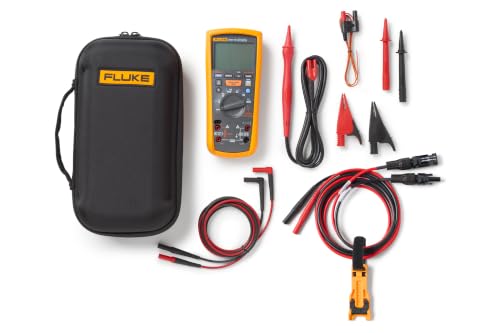
Fluke · Fluke Solar Tools Kit with 1587 FC Insulation Multimeter and TLPV1 Test Leads
View on AmazonPrice and availability are shown on Amazon and can change at any time.
Verdict
The Fluke solar tools kit pairs an insulation multimeter with the leads needed to use it on a PV array. The listing states the Fluke 1587 FC insulation multimeter with TLPV1 MC4 test leads, insulation resistance testing up to 1000 V, combined insulation and advanced multimeter functions in one rugged kit, and Fluke Connect wireless data logging. For commissioning an installation or investigating a fault that only appears in wet weather, insulation resistance is the measurement that finds the cause.
Documented Specifications
| Item | Manufacturer listing |
|---|---|
| Instrument | Fluke 1587 FC insulation multimeter |
| Insulation testing | Up to 1000 V |
| Leads | TLPV1 MC4 test leads for PV connections |
| Logging | Fluke Connect wireless data logging |
| Functions | Insulation resistance plus advanced multimeter functions |
The listing does not state the safety category rating in its bullets. Confirm it on the datasheet against the system voltage you are testing.
What Insulation Testing Finds That Nothing Else Does
A continuity test proves a conductor is connected. It says nothing about whether that conductor is also connected to something it should not be. Insulation resistance testing applies a high voltage between the conductor and earth and measures the leakage, which reveals paths that are invisible at low voltage.
On a PV array those paths are common and specific: water ingress into a connector or junction box, a cable chafed against a rail or a roof edge, a damaged backsheet, a rodent-bitten cable in a roof void, or degradation of module insulation over years. Every one of those is a genuine safety issue and none of them announce themselves. Many are intermittent, appearing only when wet, which is why they get missed and why a periodic test matters.
Test When It Is Wet
This is the practical tip that finds the most faults. Insulation defects frequently pass a test on a dry day and fail after rain, because water completes the leakage path. If a system trips its earth fault protection only in wet weather, testing on a sunny afternoon will tell you nothing.
Test after rain, or when the system has been misted, and compare with a dry day reading. A large difference is a finding in itself.
Testing Safely on an Array
- A PV array is energised whenever there is light. Follow the correct isolation procedure and the relevant standard for the installation.
- Use the specified test voltage for the system, not the highest available.
- Test between each conductor and earth, and follow your local standard for whether positive and negative are tested together or separately.
- Discharge the circuit after testing. Cable capacitance holds a charge at the test voltage.
- Record the results with the weather conditions and the date, since the trend across periodic tests is more informative than any single figure.
Logging Is Not a Luxury for Commissioning
Commissioning produces documents, and documents are where the time goes. Wireless logging means results are captured at the point of measurement rather than written on a pad and typed up later, which removes transcription errors and makes the record defensible. For a contractor doing this repeatedly, the saving is real.
Strengths
- Insulation resistance testing, which no ordinary multimeter provides.
- MC4 leads supplied, so the connection is not improvised.
- Combined insulation and multimeter functions in one instrument.
- Wireless logging for commissioning documentation.
Limitations
- No safety category rating stated in the bullets.
- 1000 V insulation testing may not suit every system voltage; check the applicable standard.
- No current clamp included, unlike the 283FC/PV kit.
- Expensive, and only justified by regular commissioning or maintenance work.
How It Compares
The Fluke 283FC/PV kit covers CAT III 1500 V measurement and string current with a wireless clamp, but no insulation testing. Many contractors carry both, since they cover different halves of commissioning. Our ranking is in the solar multimeter roundup.
How We Research
All figures come from the manufacturer listing and Fluke’s published documentation. We did not run laboratory tests and publish no measurements of our own.
Recommended Tools


Products shown because their documented specifications fit this guide. Price and availability are on Amazon and can change.
Frequently Asked Questions
What is insulation resistance testing?
A high voltage is applied between a conductor and earth, and the resulting leakage current is measured as a resistance. It reveals degraded insulation that a continuity test cannot see, which is how water ingress and damaged cable are found.
What test voltage does it offer?
The listing states insulation testing up to 1000 V. PV commissioning standards specify a test voltage related to the system voltage, so check which applies to the installation you are testing.
What does Fluke Connect add?
The listing states wireless data logging, so results can be recorded and transferred rather than written down. For commissioning documentation that saves time and removes transcription errors.
Why MC4 leads?
Because PV circuits terminate in MC4 connectors. The TLPV1 leads connect directly, which is safer and faster than improvising with probes on a live connector.
Affiliate disclosure: Akermin earns a commission from qualifying Amazon purchases made through links on this page. Our editorial picks are based on documented specifications and owner feedback, not commissions.