As an Amazon Associate, Akermin earns from qualifying purchases. Product links on this page are affiliate links.
Tracer gas leak detection means pressurizing an empty, recovered system with a blend of 5 percent hydrogen and 95 percent nitrogen and then sweeping every joint with a detector that responds to the hydrogen. It is growing in HVAC and automotive AC work for one practical reason: it finds the leak without putting refrigerant into a system you know is leaking. With A2L refrigerants arriving, charges getting smaller and venting rules getting stricter, a method that locates the leak before the first ounce of refrigerant goes in is worth the extra cylinder on the truck. The rest of this article covers what the blend is, why hydrogen, how the procedure runs and which detectors state tracer gas on their listings.
What Tracer Gas Is
The standard blend is 5 percent hydrogen by volume in nitrogen. Nitrogen is the carrier: inert, dry, inexpensive and already on most trucks for pressure testing. Hydrogen is the tracer: the smallest molecule there is, so it passes through a leak path faster than any refrigerant and reaches the detector tip in higher concentration relative to the leak size. Pure hydrogen is odorless, lighter than air and flammable at 4 percent by volume in air, which is why nobody uses it neat. The 5 percent blend contains no oxygen, and once it escapes into the room the hydrogen dilutes below its flammable limit almost immediately, so the industry treats the mixture as non-flammable in use. It is sold by welding and specialty gas suppliers and, for automotive work, in small kits such as the one Robinair bundles with its LD9-TGKIT.
Why the Method Is Spreading
- No refrigerant is vented. Charging a leaking system with refrigerant to find the leak wastes refrigerant and, under current rules, is not a legitimate practice. Tracer gas is not a refrigerant.
- It works on an empty system. After a compressor change or a new install, there is no refrigerant to sniff. Tracer gas gives the detector something to find before the evacuation and charge.
- Hydrogen finds small leaks. The molecule is small enough to escape through paths that hold nitrogen pressure for a long time, and it disperses quickly so it does not saturate the space and blind the detector.
- A2L changes the incentive. With mildly flammable refrigerants, finding and fixing leaks before charging is the safer order of operations. A2L refrigerant leak detectors explained covers that side.
How a Tracer Gas Test Runs
- Recover and isolate. Recover the refrigerant charge, or start from a new or repaired system that has never been charged. Confirm the system is at atmospheric pressure or under vacuum.
- Pressurize with the blend. Charge the 5/95 mixture through the service ports to the manufacturer’s test pressure for that equipment, never above it. A regulator rated for the cylinder is required.
- Let it settle. Give the tracer a few minutes to reach the far end of the circuit and the hydrogen time to migrate through any leak path.
- Zero the detector in clean air. Away from the system, following the model’s warm-up.
- Sweep high first. Hydrogen rises. Pass the probe slowly over the top of every braze joint, flare, Schrader core, valve stem and coil header, then along horizontal runs from above.
- Mark, repair, retest. Vent the blend outdoors, make the repair, then repeat the tracer test before evacuating and charging. A nitrogen decay hold afterward confirms the fix.
Which Detectors State Tracer Gas
| Detector | Tracer gas on the listing | Sensor and other coverage | Sensitivity stated | Warm-up and power stated |
|---|---|---|---|---|
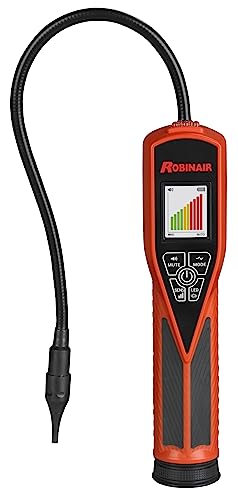
| Robinair LD9-TG | Yes: designed to detect a 5 percent hydrogen / 95 percent nitrogen mixture; compatible with most hydrogen-based tracer gases | Also quotes R-134a and R-1234yf; SAE J2970 compliant; 10-year sensor; three UV LEDs at 395 to 415 nm; 128 by 160 color LCD with sweep mode; 17-inch probe | 0.05 oz/yr R-134a, 0.015 oz/yr R-1234yf | Under 20 seconds; four AA cells, 4 hours continuous |
| Fieldpiece DR58 | Yes: H2N2 tracer gas listed with HFC, CFC, HCFC, HFO and blends | Heated diode; IP54; 300-hour sensor life; 17-inch probe; backlit LCD with LED tip | Under 0.03 oz/yr | Warm-up not stated; 18-hour USB rechargeable battery |
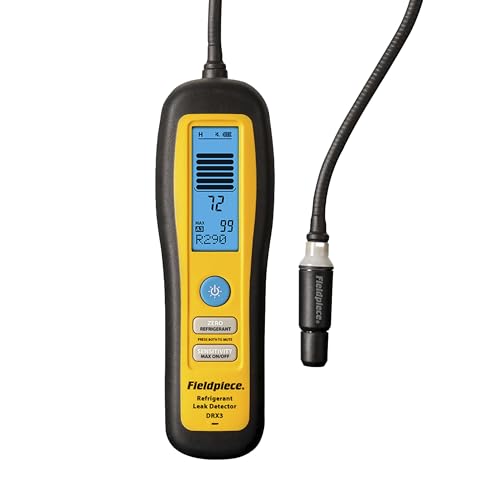
| Fieldpiece DRX3 | Yes: H2/N2 tracer gas listed with HC, HFC, HCFC, CFC, HFO, blends and heating gases | Heated diode, field-replaceable; A3, A2L and A1 refrigerants plus combustible gases; auto and manual zero; three sensitivity levels; app connection | Not stated | Warm-up not stated; field-replaceable batteries |
The LD9-TG is the purpose-built option: an automotive AC tool whose listing leads with tracer gas and adds refrigerant sensitivity figures for the two common car refrigerants. The two Fieldpiece detectors are refrigerant tools first, with tracer gas listed as one more thing the heated diode responds to, which suits a residential technician who wants one instrument for both jobs. The DR58 review and DRX3 review cover the two in depth.
Where Tracer Gas Is the Wrong Tool
It does not find a leak in a system that is still charged and running; for that, a refrigerant detector on the live system is the direct route, and what is a refrigerant leak detector explains that side. It is also not a substitute for a pressure hold: tracer gas locates, the nitrogen decay test proves. And it needs a detector that actually responds to hydrogen. A generic refrigerant detector with no tracer gas statement may give nothing at all, and a combustible gas sniffer built for methane responds to hydrogen but with a ppm scale that means little here. A dedicated hydrogen instrument works, but it is a separate purchase covered in the hydrogen gas detector roundup.
Choosing a Tracer-Capable Detector
Automotive shops usually want the LD9-TG or its kit version, since sensitivity figures for R-134a and R-1234yf and the UV inspection light suit the work; the automotive AC refrigerant leak detector roundup compares those. HVAC technicians who want one tool for refrigerant, tracer gas and, in the case of the DRX3, combustible gas will find the current picks in the tracer gas leak detector guide.
Recommended Tools

Products shown because their documented specifications fit this guide. Price and availability are on Amazon and can change.
Frequently Asked Questions
Can I use pure hydrogen instead of the 5 percent blend?
No. Pure hydrogen is odorless, lighter than air and flammable at 4 percent by volume in air. The 5 percent hydrogen in 95 percent nitrogen blend is the industry standard precisely because it is treated as non-flammable in use, and the Robinair LD9-TG listing specifies that mixture. Buy the blend from a gas supplier.
Does a tracer gas detector also work on refrigerant?
It depends on the model. The Robinair LD9-TG listing quotes sensitivity for R-134a and R-1234yf as well as tracer gas detection. The Fieldpiece DR58 and DRX3 listings state H2/N2 tracer gas alongside HFC, HFO and other refrigerant classes. A tool that responds only to hydrogen would be a hydrogen detector, not a refrigerant tool.
Where should the sweep start with hydrogen tracer?
High. Hydrogen is lighter than air and rises from the leak, the opposite of refrigerant vapor, so sweep the top of each joint and the upper side of horizontal runs first, then work down. Still air helps; a running fan disperses the tracer before the probe reaches it.
Is a nitrogen pressure test alone a leak test?
It tells you whether the system holds pressure over time, which confirms a leak exists but not where it is. Adding the hydrogen component lets the detector locate the joint. Many technicians do both: hold nitrogen to confirm, then charge tracer gas to find.
Affiliate disclosure: Akermin earns a commission from qualifying Amazon purchases made through links on this page. Our editorial picks are based on documented specifications and owner feedback, not commissions.
Related Guides

WiFi Natural Gas Alarm Review: One Unit Reveals the Whole Design
A WiFi natural gas alarm with an LCD showing gas concentration status and temperature, a stated response within 30 seconds, an alarm of at least 85 decibels and notifications to a phone app.
Read More→
Forensics Detectors Cl2 Review: 5 Percent of Full Scale Is 2.5 ppm
A rechargeable chlorine detector with an electrochemical sensor reading 0 to 50 ppm at 0.1 ppm resolution, a response time under 30 seconds, adjustable audible, visual and vibrating alarms and a supplied calibration certificate.
Read More→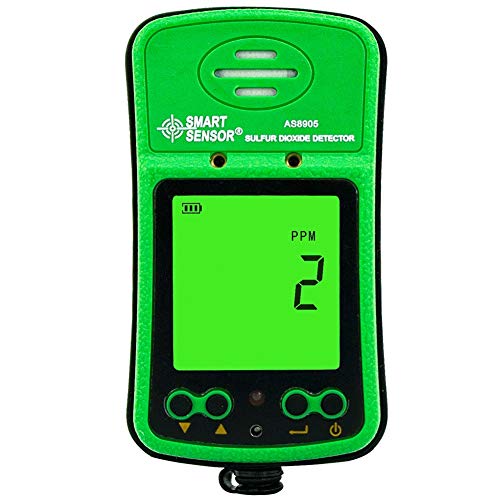
Smart Sensor SO2 Detector Review: 0.1 ppm Steps, No Accuracy Figure
A clip on sulfur dioxide monitor built on an electrochemical sensor, reading 0 to 20 ppm in 0.1 ppm steps, with adjustable high and low alarms signalled by sound, flash and vibration and a rechargeable cell quoted at 8 to 9 hours.
Read More→