As an Amazon Associate, Akermin earns from qualifying purchases. Product links on this page are affiliate links.

Fieldpiece · Fieldpiece - DR58 Heated Diode Refrigerant Leak Detector - Ultra-Sensitive Leak Sniffer with Large, Backlite LCD Screen - Lightweight HVAC Tool
View on AmazonPrice and availability are shown on Amazon and can change at any time.
Verdict
The Fieldpiece DR58 makes the case that a heated-diode detector still belongs in an HVAC bag. Its listing states sensitivity under 0.03 oz/yr, the same figure as Fieldpiece’s infrared DR82, described as 20 times more sensitive than bubbles. It covers HFC, CFC, HCFC and HFO refrigerants, blends, and H2N2 tracer gas, which the DR82 does not list. It carries an IP54 rating, a 17-inch flexible probe with replaceable filter tips, a backlit LCD for leak size and intensity, an LED tip with a beep, and an 18 hour USB battery, longer than the DR82’s 10-plus hours. The cost is the sensor: 300 hours of rated life, consumed by use. For a technician who leak-checks occasionally or needs tracer gas coverage, that is a fair trade. For someone sniffing every day, the sensor clock is the reason to look at infrared.
Who It Is For
- HVAC technicians who leak-check a few times a week rather than all day and want the same sensitivity figure as the infrared model.
- Shops that pressure-test with hydrogen-nitrogen tracer gas and want one sniffer for both jobs.
- Anyone who values an 18 hour battery over a 10 hour one.
R-290 and other A3 work is not on the listing, and daily users may prefer not to track sensor hours.
Documented Specifications
| Item | Manufacturer or listing statement |
|---|---|
| Sensor | Heated diode |
| Sensor life | 300 hours |
| Sensitivity | Under 0.03 oz/yr; 20 times more sensitive than bubbles |
| Refrigerants | HFC, CFC, HCFC, HFO, H2N2 tracer gas and blends |
| Ingress rating | IP54; resists moisture and oil |
| Display | Backlit LCD showing leak size and intensity |
| Pinpointing | LED tip and beep |
| Probe | 17-inch flexible; replaceable filter tips |
| Battery | 18 hour USB rechargeable |
| Sensitivity settings | Not stated |
| Zero modes | Not stated |
| Sensor replaceability | Not stated |
| Hydrocarbon (A3) refrigerants | Not listed |
The oz/yr figure is the manufacturer’s own measurement and is best used within a brand; gas detector sensitivity explains why it travels poorly between makers.
Why Heated Diode Still Has a Place
A heated-diode sensor breaks refrigerant molecules on a hot element and detects the ions produced. It is very sensitive to small halogenated leaks, which is why Fieldpiece can quote the same under 0.03 oz/yr for the DR58 as for its infrared flagship. And because the reaction is not specific to halogens, the sensor can respond to hydrogen, which is what makes H2N2 tracer gas coverage possible. Its vice follows from the same mechanism: the element is consumed, and 300 hours is the rated budget. Infrared versus heated-diode refrigerant leak detectors lays out the comparison, and tracer gas leak detection explained covers the test method the DR58 supports and infrared units typically do not.
Living With a 300 Hour Sensor
Three hundred hours sounds short until you count actual run time. A leak check on a residential split system might be ten minutes; three a day, five days a week, is roughly a dozen hours a month, and the sensor lasts years. A supermarket rack technician sweeping long piping runs every shift uses it up much faster, and large hits shorten it further. Owners report the end arriving as a slower response and a longer zero rather than a sudden failure, so a daily check against a known reference tells you where you stand; how to test a refrigerant leak detector before use describes one. The listing does not state that the DR58 sensor is field-replaceable; Fieldpiece makes that claim for the DRX3, so confirm the DR58 replacement path if it matters to you.
Probe, Display and Battery
The working end matches the DR82: a 17-inch flexible probe with an LED tip to light the fitting, replaceable filter tips to keep oil out of the sensor path, and a backlit LCD that shows leak size and intensity while the beep quickens toward the source. The IP54 rating and stated resistance to moisture and oil make a wet evaporator or an oily compressor fitting a normal day. The 18 hour battery is the DR58’s quiet advantage over the DR82: two long days on a charge over USB. Owners describe the tool as light and well balanced at arm’s length inside a cabinet.
Strengths
- Same under 0.03 oz/yr sensitivity figure as Fieldpiece’s infrared model.
- H2N2 tracer gas coverage stated on the listing.
- IP54 rating with stated resistance to moisture and oil.
- 18 hour USB rechargeable battery.
- 17-inch probe, LED tip and replaceable filter tips.
Limitations
- 300 hour consumable sensor; replacement path not stated on the listing.
- No hydrocarbon (A3) refrigerant or combustible gas coverage.
- Sensitivity settings and zero modes not stated.
- Does not use the A2L classification term, although HFC and HFO families are listed.
How It Compares
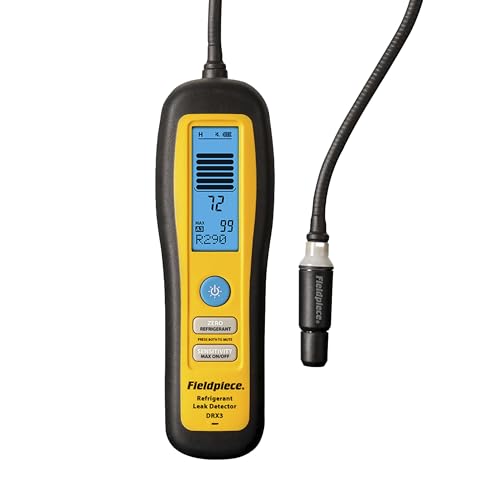
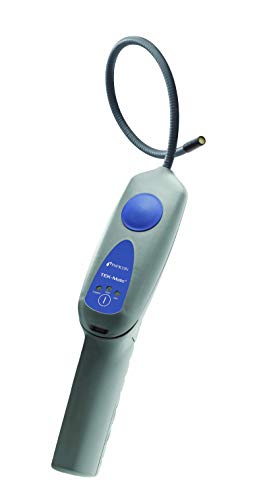
The Fieldpiece DR82 is the infrared version of the same tool: same sensitivity figure, IP54 and probe, a 10-year sensor instead of 300 hours, a shorter 10-plus hour battery and no tracer gas on the list. The Fieldpiece DRX3 is the newer heated-diode unit with A3, A2L and A1 refrigerants and combustible gases and a field-replaceable sensor, but no sensitivity or sensor-life figure. The Inficon TEK-Mate is the plain heated-diode alternative: a stated 0.25 oz/yr (7 g/yr) sensitivity, a 100 hour sensor, A2L certification, automatic zeroing and two D-cell batteries, so the DR58 claims better sensitivity and three times the sensor life. The head-to-head is in DRX3 versus DR58. The DR58 is the overall pick in the heated-diode refrigerant leak detector roundup, appears in the tracer gas leak detector roundup for its H2N2 coverage, and sits alongside the infrared units in the refrigerant leak detector guide.
One Reminder
A2L refrigerants such as R-32 and R-454B are mildly flammable, and tracer gas contains hydrogen, which is odorless, lighter than air and flammable at 4 percent by volume. Keep the space ventilated and ignition sources clear. The DR58 locates the leak; it is not a room monitor.
How We Research
This review is based on the Fieldpiece listing and published product information and on patterns in owner and technician reports. We did not run laboratory tests. All figures are the manufacturer’s; where the listing is silent, the table says so.
Recommended Tools

Products shown because their documented specifications fit this guide. Price and availability are on Amazon and can change.
Frequently Asked Questions
How is 300 hours of sensor life used up?
By exposure. A heated-diode element is consumed as it detects, and large hits consume it faster than background sniffing. The 300 hour figure is the manufacturer statement; how many months that represents depends entirely on how often the tool is on and how much refrigerant it sees.
What does the DR58 look for in tracer gas?
The listing includes H2N2, the 5 percent hydrogen and 95 percent nitrogen mix used to pressure-test an evacuated system. The sensor responds to the hydrogen component. That makes the DR58 usable for tracer gas checks that a halogen-only infrared unit is not documented for.
Can I run the DR58 on a cable while it charges?
The listing states an 18 hour USB rechargeable battery and says nothing about operation while charging, so do not assume it. Eighteen hours is long enough that most technicians charge overnight and never test the question.
Is the DR58 sensor replaceable?
The listing does not state that it is field-replaceable. Fieldpiece makes that claim for the DRX3 specifically. Treat the DR58 sensor as a 300 hour part whose replacement path you should confirm with Fieldpiece before buying, if it matters to you.
Affiliate disclosure: Akermin earns a commission from qualifying Amazon purchases made through links on this page. Our editorial picks are based on documented specifications and owner feedback, not commissions.
Related Guides

WiFi Natural Gas Alarm Review: One Unit Reveals the Whole Design
A WiFi natural gas alarm with an LCD showing gas concentration status and temperature, a stated response within 30 seconds, an alarm of at least 85 decibels and notifications to a phone app.
Read More→
Forensics Detectors Cl2 Review: 5 Percent of Full Scale Is 2.5 ppm
A rechargeable chlorine detector with an electrochemical sensor reading 0 to 50 ppm at 0.1 ppm resolution, a response time under 30 seconds, adjustable audible, visual and vibrating alarms and a supplied calibration certificate.
Read More→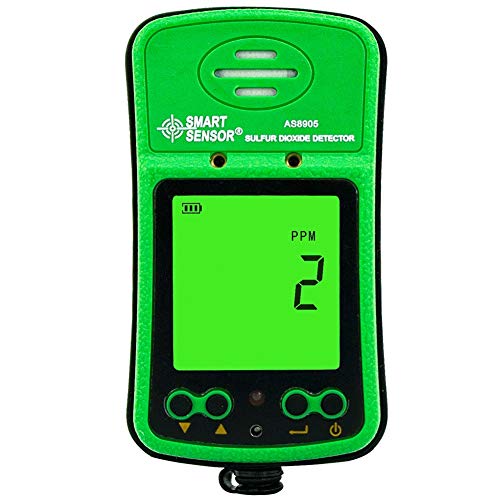
Smart Sensor SO2 Detector Review: 0.1 ppm Steps, No Accuracy Figure
A clip on sulfur dioxide monitor built on an electrochemical sensor, reading 0 to 20 ppm in 0.1 ppm steps, with adjustable high and low alarms signalled by sound, flash and vibration and a rechargeable cell quoted at 8 to 9 hours.
Read More→