As an Amazon Associate, Akermin earns from qualifying purchases. Product links on this page are affiliate links.

Fieldpiece · Fieldpiece - DR82 Infrared Refrigerant Leak Detector - Ultra-Sensitive Leak Sniffer with Large, Backlite LCD Screen - Lightweight HVAC Tool
View on AmazonPrice and availability are shown on Amazon and can change at any time.
Verdict
The Fieldpiece DR82 is worth the step up from a heated-diode detector for anyone who leak-checks halogenated refrigerant systems most working days. The reason is the sensor: the listing states a 10-year infrared sensor life, against 300 hours for Fieldpiece’s heated-diode DR58, with the same stated sensitivity of under 0.03 oz/yr, described as 20 times more sensitive than bubbles. Around it are an IP54 rating that resists moisture and oil, a 17-inch flexible probe with replaceable filter tips, a backlit LCD showing leak size and intensity, an LED tip with a beep, and 10 or more hours from a USB-C battery. Coverage is CFC, HCFC, HFC, HFO and blends; hydrocarbon refrigerants and combustible gases are not listed. For an occasional user a heated-diode unit is enough; for a daily user the DR82 removes the consumable.
Who It Is For
- Residential and light commercial HVAC technicians on R-410A, R-32, R-454B and R-134a systems every day.
- Service departments tired of replacing heated-diode sensors.
- Anyone working around wet coils and oily fittings who wants an ingress rating on the tool.
R-290 and other A3 systems, combustible gas and tracer gas are not on the listing; the DRX3 covers those.
Documented Specifications
| Item | Manufacturer or listing statement |
|---|---|
| Sensor | Infrared |
| Sensor life | 10 years |
| Sensitivity | Under 0.03 oz/yr; 20 times more sensitive than bubbles |
| Refrigerants | CFC, HCFC, HFC, HFO and blends |
| Ingress rating | IP54; resists moisture and oil |
| Display | Backlit LCD showing leak size and intensity |
| Pinpointing | LED tip and beep |
| Probe | 17-inch flexible; replaceable filter tips |
| Battery | USB-C rechargeable, 10 or more hours |
| Sensitivity settings | Not stated |
| Zero modes | Not stated |
| Hydrocarbon (A3) refrigerants | Not listed |
| Combustible gases | Not listed |
The oz/yr figure is Fieldpiece’s own measurement; oz/yr sensitivity is manufacturer-defined, not a cross-brand standard. Treat it as a comparison within the Fieldpiece range and an indication against other makers.
What Infrared Buys You
A heated-diode sensor detects refrigerant by breaking it apart on a hot element, and the element wears with every exposure. An infrared sensor measures how much light the refrigerant absorbs; nothing is consumed, which is why Fieldpiece can state a decade of life. Three things follow. There is no sensor to replace. Response does not drift as an element ages, so a check that passed last year behaves the same this year. And the sensor is less bothered by the background contamination that makes heated-diode units chatter in a room that already smells of refrigerant. The mechanism is explained in infrared gas detectors and the trade-off in infrared versus heated-diode refrigerant leak detectors.
Probe, Display and Runtime
The 17-inch flexible probe reaches a coil header behind a cabinet panel or a service valve under a condenser, and the LED at the tip lights the fitting. The backlit LCD shows leak size and intensity: as the tip nears a leak the bar climbs and the beep quickens, then both fall as you move past, and the fitting at the peak is the leak. Replaceable filter tips keep oil and debris off the sensor path; owners trace most sluggish responses to a clogged tip. Ten or more hours from the USB-C battery covers a full day on the same cable as a phone. The listing does not state sensitivity settings or zero modes, which the DRX3 and the Inficon D-TEK 3 both do, so confirm those from the manual if they matter to you.
So Is It Worth the Step Up?
For daily use, yes. A heated-diode unit that needs a new element after 300 hours, or 100 hours on the Inficon TEK-Mate, spends part of its life degraded and part waiting for a part. A 10-year infrared sensor with the same stated sensitivity, an ingress rating and a full-day battery is the lower-maintenance instrument over the years a technician carries it. For someone who leak-checks a few times a month, the DR58 offers the same sensitivity figure and its element will last. The infrared refrigerant leak detector roundup puts the DR82 alongside the Inficon and Elitech infrared options.
Strengths
- Stated 10-year infrared sensor life; no consumable element.
- Same under 0.03 oz/yr sensitivity as Fieldpiece’s heated-diode models.
- IP54 rating and resistance to moisture and oil.
- 17-inch probe with LED tip and replaceable filters.
- USB-C charging with 10 or more hours per charge.
Limitations
- No hydrocarbon (A3) refrigerant or combustible gas coverage on the listing.
- No tracer gas coverage stated.
- Sensitivity settings and zero modes not stated on the listing.
- Listing does not use the A2L classification term.
How It Compares
The Fieldpiece DR58 is the heated-diode twin: same under 0.03 oz/yr, IP54 and 17-inch probe, an 18 hour battery, a 300 hour sensor, and H2N2 tracer gas on its list. The Fieldpiece DRX3 trades the numbers for breadth: A3, A2L and A1 refrigerants, combustible gases and a field-replaceable heated-diode sensor. The Inficon D-TEK 3 lists Low, Medium, High and Super sensitivity, auto and manual zero, and CFCs, HCFCs, HFCs, HFOs and blends including A2Ls, so it is the alternative for anyone who wants adjustable sensitivity in writing. The Elitech ILD-200 is the value infrared unit: a stated 10-year sensor, 0.14 oz/yr maximum sensitivity, High/Medium/Low settings and a peak display. The head-to-head is in DRX3 versus DR82; the refrigerant leak detector roundup ranks infrared and heated-diode units together, and automotive technicians on R-134a and R-1234yf will find their picks in the automotive AC refrigerant leak detector guide.
Flammable Refrigerants and the DR82
If the system holds an A2L refrigerant such as R-32 or R-454B, the leak you are hunting is mildly flammable. Ventilate the space and keep ignition sources away from the work area. The DR82 is a leak locator, not a fixed flammable-gas alarm for the machinery room.
How We Research
This review draws on the Fieldpiece listing and published product information and on patterns in technician and owner reports. We did not run laboratory tests. Every figure quoted is the manufacturer’s, and where the listing is silent the specification table says so.
Recommended Tools


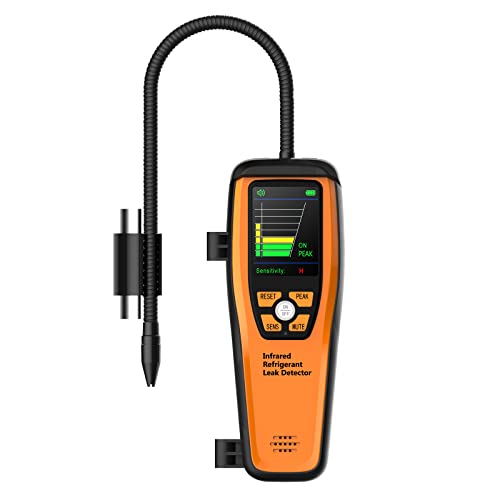
Products shown because their documented specifications fit this guide. Price and availability are on Amazon and can change.
Frequently Asked Questions
Why does the DR82 sensor last so much longer than a heated-diode sensor?
Infrared sensing measures how refrigerant absorbs light rather than breaking the molecule on a hot element, so nothing is consumed during detection. Fieldpiece states a 10-year sensor life for the DR82 against 300 hours for its heated-diode DR58.
Does the DR82 use replaceable filter tips?
Yes. The listing states replaceable filter tips on the 17-inch probe. Filters keep oil and debris off the sensor path, and a clogged tip is a common cause of a sluggish response on any refrigerant sniffer, so keep spares.
Is the DR82 rated for R-32 and R-454B?
The listing covers HFC, HFO and blends, which chemically include R-32 and R-454B, but it does not use the A2L term. If your work requires an instrument explicitly labeled for A2L, confirm with Fieldpiece; the DRX3 listing states A2L outright.
Affiliate disclosure: Akermin earns a commission from qualifying Amazon purchases made through links on this page. Our editorial picks are based on documented specifications and owner feedback, not commissions.
Related Guides

WiFi Natural Gas Alarm Review: One Unit Reveals the Whole Design
A WiFi natural gas alarm with an LCD showing gas concentration status and temperature, a stated response within 30 seconds, an alarm of at least 85 decibels and notifications to a phone app.
Read More→
Forensics Detectors Cl2 Review: 5 Percent of Full Scale Is 2.5 ppm
A rechargeable chlorine detector with an electrochemical sensor reading 0 to 50 ppm at 0.1 ppm resolution, a response time under 30 seconds, adjustable audible, visual and vibrating alarms and a supplied calibration certificate.
Read More→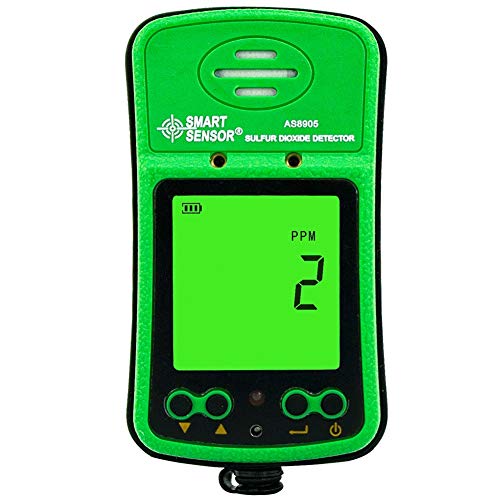
Smart Sensor SO2 Detector Review: 0.1 ppm Steps, No Accuracy Figure
A clip on sulfur dioxide monitor built on an electrochemical sensor, reading 0 to 20 ppm in 0.1 ppm steps, with adjustable high and low alarms signalled by sound, flash and vibration and a rechargeable cell quoted at 8 to 9 hours.
Read More→