Best Refrigerant Leak Detectors for Automotive AC: R-134a and R-1234yf Picks
Automotive air conditioning runs on R-134a or, on newer vehicles, R-1234yf, and the leaks hide in a hot engine bay behind belts and hoses. These detectors were compared from manufacturer specifications on sensitivity to both refrigerants, UV dye support, tracer-gas capability and probe reach.
As an Amazon Associate, Akermin earns from qualifying purchases. Product links on this page are affiliate links.
Our Top Picks
Car AC leak detection has its own requirements: two refrigerants, UV dye already in most systems, and a hot, oily engine bay. Picks were compared on manufacturer documentation for stated sensitivity to R-134a and R-1234yf, UV lighting, sweep mode, tracer-gas capability, probe length and sensor life, plus owner feedback; no laboratory tests were run.
Best Overall
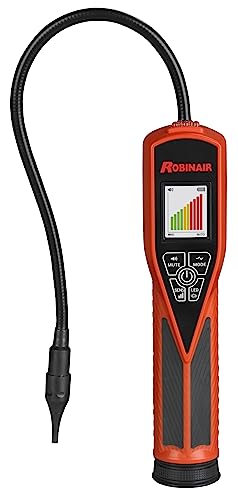
Robinair LD7 Premium Refrigerant Leak Detector
Sweep mode, three UV LEDs and a ten-year sensor rated for R-134a and R-1234yf.
Stated sensitivity 0.05 oz/yr on R-134a and 0.0123 oz/yr on R-1234yf
Color 128 x 160 display with bar graph and sweep modes to trace back and forth to the source
Three UV LEDs at 395 to 415 nm for dye, plus an inspection light and probe-tip LED
Sensor life up to 10 years; 4 AA batteries, 4 hours continuous; warm-up under 20 seconds; 17-inch probe
Sensitivity figures are the manufacturers' published claims under their own conditions. "Not stated" means the listing gives no number. Only the two Robinair tracer-gas models are designed to detect a hydrogen-nitrogen tracer mix.
How to Choose an Automotive AC Leak Detector
Four points decide the buy:
R-1234yf on the Listing
Vehicles built in the last decade mostly run R-1234yf. Robinair states a separate sensitivity for it; budget sniffers name it in a list. Either is better than silence.
UV Dye Support
Most car systems already carry dye. Built-in UV LEDs at 395 to 415 nm let one tool sniff and then confirm the glow without switching to a flashlight.
Sweep Mode and Probe
A sweep graph shows the peak as you move back and forth across a seam. A 17-inch probe reaches behind the condenser; 8 inches means moving shrouds.
Tracer Gas for Empty Systems
A system that has lost its charge has nothing to sniff. A hydrogen-nitrogen tracer detector and a charging kit are the shop answer.
Do I need a different detector for R-1234yf than for R-134a?
Not a different tool, but one that states R-1234yf. Both are halogenated and most sniffers respond to both; the difference is that a detector rated for R-1234yf, such as the Robinair LD7 with its separate 0.0123 oz/yr figure, has been specified for the newer gas rather than merely reacting to it.
Why use tracer gas on a car AC system?
Once the charge has leaked out, a sniffer has nothing to find. Pressurizing the empty system with a 5 percent hydrogen, 95 percent nitrogen mix is safe, dry and inexpensive, and the hydrogen escapes through the same hole the refrigerant did. A tracer-gas detector such as the LD9-TG then locates it; the tracer gas guide explains the method.
Where do automotive AC leaks usually occur?
The condenser at the front of the car, which takes stone damage; the compressor shaft seal; the Schrader valves at the service ports; O-rings at every line joint; and the evaporator inside the dash, which is the hardest to reach and often found by sniffing the drain tube or the center vent.
Can I use an HVAC refrigerant leak detector on a car?
Yes, if it lists the refrigerants and has a probe that reaches. The Elitech HLD-100+ in the table names R-1234yf. What a home-HVAC sniffer lacks is UV lighting, sweep mode and the tolerance for a hot, oily engine bay that the automotive Robinair units are built for.
Reviews
Robinair LD7 Premium Refrigerant Leak Detector Best Overall
The LD7 is the automotive detector because it is specified for the automotive refrigerants. Robinair states 0.05 oz/yr sensitivity on R-134a and 0.0123 oz/yr on R-1234yf, which is the figure that matters for a newer vehicle, and rates the sensor for up to ten years.
The display does two things. Bar graph mode shows how much refrigerant is in the air and changes color as the tip nears the leak; sweep mode draws a line graph as you move the probe back and forth so you can see the peak and return to it, which is how you separate a leaking condenser seam from a saturated engine bay. Three UV LEDs at 395 to 415 nm make the dye already in most systems glow, and an inspection light covers the dark corners.
The listing specifies a 17-inch probe, four AA batteries for four hours continuous, a warm-up under 20 seconds and a kit with a test vial, five spare filters and a case. Four hours is the figure to plan around on a long day.
Strengths
Sensitivity stated for both R-134a and R-1234yf
Sweep mode makes locating methodical
UV LEDs and inspection light built in
Ten-year sensor rating; test vial and filters included
Robinair LD9-TG Tracer Gas Leak Detector Best Tracer Gas
When a system is already empty, there is no refrigerant to sniff. The shop practice is to pressurize it with a tracer mix of 5 percent hydrogen in nitrogen and hunt for the hydrogen, and the LD9-TG is Robinair's detector built for that gas. The manufacturer states it is SAE J2970 compliant and compatible with most hydrogen-based tracer gases, sold separately.
Everything else mirrors the LD7: the 128 x 160 color LCD with sweep mode and prompts, three UV LEDs at 395 to 415 nm, a patented three-LED inspection light, a 17-inch probe, four AA cells for four hours continuous, a warm-up under 20 seconds and a sensor rated at ten years. Robinair quotes an equivalent sensitivity of 0.05 oz/yr for R-134a and 0.015 oz/yr for R-1234yf so the numbers can be compared with a refrigerant sniffer.
It is a tracer-gas tool, not a refrigerant sniffer, so a shop that does both jobs owns both. The LD9-TGKIT in the table adds the couplers, hose and regulator needed to charge the tracer gas.
Strengths
Built for hydrogen-nitrogen tracer gas
SAE J2970 compliance stated
Same sweep-mode display and UV LEDs as the LD7
Ten-year sensor rating
Limitations
Does not sniff refrigerant
Tracer gas, regulator and couplers cost extra unless you buy the kit
The WJL-6000S is the sniffer to keep in a home garage for the annual question of where the car's refrigerant went. Elitech states a 0.21 oz/yr maximum sensitivity, which is coarser than the Robinair figures but enough, in the manufacturer's words, to self-check an auto AC system, and it names R-134a and R-1234yf among the refrigerants it triggers on.
Operation is a knob: turn it on and choose one of seven sensitivity levels, wait through the stated 6-second warm-up and sweep. Response is quoted within 3 seconds, and audible and visual indicators plus a two-color battery indicator are the whole interface. The 7.9-inch flexible probe bends around a compressor or into a condenser fin.
There is no display, no UV light and no sensor-life figure, and the short probe means moving things aside in a crowded engine bay. For a technician it is a backup; for a home mechanic checking one car it is the sensible first sniffer, provided the reading is confirmed with dye or soap before parts are ordered.
Short answer: the Robinair LD7 is the refrigerant leak detector for automotive AC: sensitivity stated separately for R-134a and R-1234yf, sweep mode, three UV LEDs for the dye already in the system and a sensor rated up to ten years. A shop that services empty systems adds the Robinair LD9-TG for hydrogen-nitrogen tracer gas. For a home garage, the Elitech WJL-6000S finds the ordinary leak with seven sensitivity levels and a 6-second warm-up.
Why car AC is its own leak-detection problem
A vehicle system uses R-134a or, on most vehicles built in the last decade, R-1234yf, an HFO that manufacturers quote a separate sensitivity for. The lines run through a hot engine bay past belts, exhaust and oil mist, the condenser sits behind the grille where stones hit it, and the evaporator is buried in the dash. A sniffer built for a quiet residential coil works, but the automotive tools add UV lighting, a sweep display and a probe long enough to reach the condenser seam without pulling the shroud. What is a refrigerant leak detector covers the sensor basics.
Sniffer first, dye second
Most automotive systems already contain UV dye from the factory or a previous service, so the efficient routine is to sweep with the sniffer to find the region, then switch on the UV LEDs to confirm the glow at the joint. The LD7 and LD9-TG carry three UV LEDs at 395 to 415 nm and an inspection light for the dark side of the compressor; the Yellow Jacket AccuProbe UV carries UV lights as well. The Elitech units have no light, so a separate UV torch goes in the drawer beside them.
Sweep mode: how you separate the leak from the bay
Under a hood, refrigerant vapor pools and drifts, and a sniffer on high sensitivity sounds everywhere. Robinair’s sweep mode draws a line graph of the reading as you move the probe back and forth, so the peak shows where the source is and you return to it. The bar graph mode does the same with color. On a sniffer without a display, the technique is to lower the sensitivity until the tone follows the fitting; the WJL-6000S’s seven-level knob and the CLD-100’s six levels exist for that.
Tracer gas for the empty system
A system that has lost its charge has no refrigerant to sniff. Shops pressurize it with a tracer mix of 5 percent hydrogen in nitrogen and search for the hydrogen, which is safe at that concentration, dry and inexpensive to vent. The LD9-TG is built for that gas and states SAE J2970 compliance; the LD9-TGKIT adds R-134a and R-1234yf high-side couplers, a hose and a regulator, with the tracer gas sold separately. The tracer gas leak detector guide covers the practice in more depth, and it is worth knowing that a tracer detector does not sniff refrigerant, so a busy shop owns both.
Sensor life and warm-up
Robinair rates the LD7 and LD9-TG sensors at up to ten years and quotes a warm-up under 20 seconds. The Elitech WJL-6000S and CLD-100 state a 6-second warm-up and no sensor life, and the HLD-100+ is a heated-diode unit whose sensor is consumed by use. For an occasional home check that does not matter; for a shop it decides whether the tool is a purchase or a subscription. Whatever the sensor, power on in clean air away from the car, let it settle, and confirm the tool responds with the test vial Robinair supplies or a reference source before trusting a null result. How to test a refrigerant leak detector before use walks through it.
Where to sweep
Condenser face and side seams, both service-port Schrader cores, every O-ring joint along the lines, the compressor shaft seal and the body seams, the receiver-drier or accumulator fittings, and the evaporator via the condensate drain tube under the car and the center dash vent with the blower on low. Move the tip slowly and hold it below the joint; refrigerant is heavier than air. A hit on the drain tube with nothing under the hood points to the evaporator.
Home garage or shop
A home mechanic checking one car every year or two is well served by the WJL-6000S plus a UV torch, and should confirm any finding with dye before ordering a condenser. A mobile technician or shop wants the LD7 for the display, the UV LEDs and the ten-year sensor, and adds the LD9-TG when empty systems are a regular job. The main refrigerant leak detector guide covers the residential and commercial HVAC side of the same tools.
How We Research
Detectors were compared on manufacturer documentation: stated sensitivity to R-134a and R-1234yf, refrigerant lists, UV LED wavelength, display and sweep modes, tracer-gas capability and standards claims, probe length, warm-up, battery and sensor life. Owner feedback was reviewed for false alarms in engine bays and battery complaints. We did not run laboratory tests and publish no sensitivity results of our own. Amazon data supplies images, availability and links only.
A WiFi natural gas alarm with an LCD showing gas concentration status and temperature, a stated response within 30 seconds, an alarm of at least 85 decibels and notifications to a phone app.
A rechargeable chlorine detector with an electrochemical sensor reading 0 to 50 ppm at 0.1 ppm resolution, a response time under 30 seconds, adjustable audible, visual and vibrating alarms and a supplied calibration certificate.
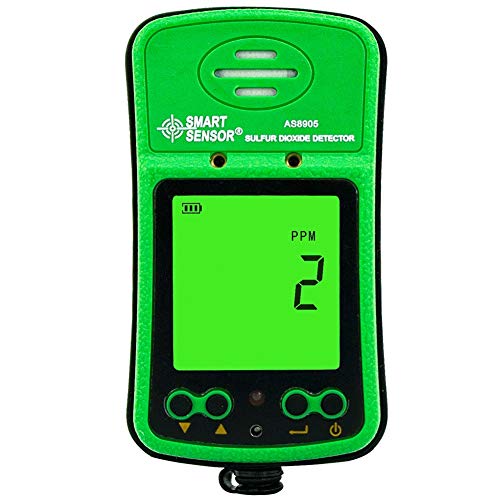
A clip on sulfur dioxide monitor built on an electrochemical sensor, reading 0 to 20 ppm in 0.1 ppm steps, with adjustable high and low alarms signalled by sound, flash and vibration and a rechargeable cell quoted at 8 to 9 hours.