Best Tracer Gas Leak Detectors: Precision Tools for Difficult HVAC Leaks
When a system is empty, or a leak is too small and too slow to find with refrigerant, technicians pressurize it with a 5% hydrogen / 95% nitrogen tracer mix and hunt the hydrogen. That needs a detector that reads hydrogen. This guide compares the listings that state tracer gas capability, from a dedicated automotive unit to all-in-one HVAC tools.
As an Amazon Associate, Akermin earns from qualifying purchases. Product links on this page are affiliate links.
Our Top Picks
Every pick here states hydrogen-nitrogen tracer gas detection on its listing. They were compared on that statement, stated sensitivity, sensor life, runtime and whether the tool also reads refrigerants and combustible gases. We did not run laboratory tests; all figures are the manufacturers' own.
Best Overall
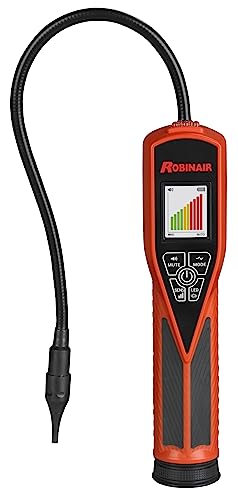
Robinair LD9-TG Tracer Gas Leak Detector
Dedicated 5% hydrogen / 95% nitrogen detector with sweep mode and a color display.
Designed for a 5% hydrogen / 95% nitrogen tracer gas mixture
Sensitivity stated as 0.05 oz/yr R-134a equivalent, 0.015 oz/yr R-1234yf
128 x 160 color LCD with sweep mode; 10-year sensor life stated
Figures are the manufacturers' listing statements at the time of research. Two detectors without tracer gas on their listings are included for comparison because buyers often shortlist them; they should not be assumed to read hydrogen.
How to Choose a Tracer Gas Leak Detector
Four points decide it:
Hydrogen Must Be Stated
A refrigerant sniffer does not read tracer gas unless the manufacturer says so. Look for H2/N2, hydrogen or tracer gas in the listing.
Dedicated or Combined
A dedicated unit like the LD9-TG adds sweep mode. A combined unit like the DRX3 or DR58 saves carrying two detectors.
Runtime for a Long Search
Slow leaks take time. Stated runtimes here range from 4 hours on AA cells to 18 hours on USB, which matters on a large system.
Sensor Life
Heated diodes are consumables; the listings state 300 hours or nothing at all. The LD9-TG states a 10-year sensor.
What is tracer gas and why use it instead of refrigerant?
Tracer gas is a mix of 5% hydrogen and 95% nitrogen used to pressure-test an empty system. Hydrogen molecules are small and escape through leaks that hold refrigerant for weeks, and using it avoids charging refrigerant into a system you may have to open again. The detector hunts the hydrogen at each joint.
Can a normal refrigerant leak detector find tracer gas?
Only if the manufacturer states hydrogen or H2/N2 detection. Some heated diode detectors, such as the Fieldpiece DR58 and DRX3, list it explicitly. The infrared Fieldpiece DR82 and the Inficon D-TEK 3 do not state it on their listings, so they should not be relied on for a tracer gas test.
Does the system have to be empty before a tracer gas test?
Yes. The method is for pressure-testing an empty system: recover any refrigerant, evacuate, then charge the tracer mix to the test pressure the manufacturer of the equipment specifies. Follow the regulator and cylinder instructions and recover the tracer gas afterwards.
What does sweep mode on the Robinair LD9-TG do?
Robinair states that sweep mode, together with the color display, gives the technician prompts and graphics to locate the source of a leak and confirm the detector is performing correctly. It is a guided search pattern rather than a different sensing mode.
Reviews
Robinair LD9-TG Tracer Gas Leak Detector Best Overall
The LD9-TG is built for one job: finding hydrogen in a system that has been evacuated and charged with the 5% hydrogen / 95% nitrogen tracer mix. Robinair states a sensitivity equivalent to 0.05 oz/yr of R-134a and 0.015 oz/yr of R-1234yf, SAE J2970 compliance and a 10-year sensor life, and the listing says the detector is compatible with most hydrogen-based tracer gases.
The color LCD and sweep mode are the reason to pick it over a plain LED wand. Sweep mode prompts the technician through the search pattern and the display carries messages and graphics rather than a single bar, which reduces the guesswork on a slow leak. Three UV LEDs at 395 to 415 nm double as an inspection light for dye.
The limits are runtime and scope. Four AA cells give a stated 4 hours of continuous use, warm-up is under 20 seconds, and the detector does not state any refrigerant or combustible gas coverage, so it is a second tool alongside a refrigerant sniffer rather than a replacement.
Strengths
Purpose-built for hydrogen-nitrogen tracer gas
Sweep mode and color display guide the search
SAE J2970 compliance and 10-year sensor life stated
UV inspection LEDs for dye work
Limitations
Refrigerant detection not stated; tracer gas only
4-hour stated runtime on AA cells
Sensitivity is quoted as refrigerant equivalents, not a hydrogen figure
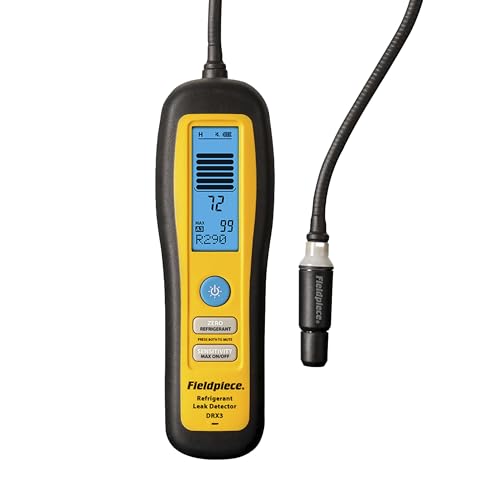
Fieldpiece DRX3 Refrigerant and Combustible Gas Leak Detector Best All-in-One
For an HVAC technician who does not want a separate tracer gas wand, the DRX3 is the listing that covers the most ground. Fieldpiece states detection of H2/N2 tracer gas, all the refrigerant chemical families including HC (hydrocarbon) and HFO, the A1, A2L and A3 safety classes, and combustible and heating gases. One detector goes from a pressure test on an empty system to a refrigerant search on a running one to a gas line check at the furnace.
The cost of that range is a heated diode sensor, which is consumed by use and affected by moisture and oil. Fieldpiece makes it field-replaceable and includes one, along with a blow-molded case. The listing publishes no sensitivity figure and no sensor life, so for a leak-rate number on a report you need the manufacturer specification sheet.
Auto and manual zero modes, three sensitivity levels and indicators that scale with leak intensity are standard on the Fieldpiece line. It connects to the Job Link app for documentation.
Strengths
Tracer gas, refrigerants and combustible gas in one instrument
Fieldpiece DR58 Heated Diode Refrigerant Leak Detector Best Value
The DR58 is the affordable route to a tracer-capable detector that also does everyday refrigerant work. Fieldpiece lists H2N2 tracer gas in the same breath as HFC, CFC, HCFC and HFO refrigerants and blends, states a sensitivity under 0.03 oz/yr, and gives the heated diode sensor a 300-hour life, three times the figure some competitors quote for the same technology.
The practical features match the DR82: a backlit LCD that shows leak size and intensity, an LED tip and audible alert, a 17-inch flexible probe for reaching condenser coil returns and replaceable filter tips. The USB rechargeable battery is stated at 18 hours, which is the longest runtime in this group and a real advantage over the 4 hours on AA cells that Robinair states for the LD9-TG.
What it lacks is the A2L and combustible gas language of the DRX3 and any sweep-mode guidance. The listing does not use the term A2L, and a heated diode sensor will eventually need replacement.
Short answer: the Robinair LD9-TG is the dedicated hydrogen-nitrogen detector, with sweep mode and a color display, for an automotive or HVAC shop that runs tracer gas tests regularly; the Fieldpiece DRX3 is the all-in-one for a technician who wants tracer gas, A1/A2L/A3 refrigerants and combustible gas in one tool; and the Fieldpiece DR58 is the value route to a tracer-capable sniffer with an 18-hour battery and a stated sensitivity under 0.03 oz/yr.
Why tracer gas finds leaks refrigerant cannot
A refrigerant sniffer needs refrigerant in the system and a leak large enough to put a detectable amount of it in the air at the joint. Two common situations break that. The system is empty, either new or recovered for repair, so there is nothing to sniff. Or the leak is so slow that the refrigerant disperses before the probe reaches it. The tracer gas method handles both: the empty system is pressurized with a 5% hydrogen / 95% nitrogen mix and the technician hunts hydrogen instead. Hydrogen is a very small molecule and escapes through pinholes that hold refrigerant, and because nitrogen carries no risk to the compressor oil the system can sit under test pressure for as long as needed. The catch is that the detector has to respond to hydrogen, which most refrigerant sniffers do not, and that is the whole reason this page exists separately from the refrigerant leak detector guide.
What to look for on the listing
The single most important line is a statement that the detector reads hydrogen, H2/N2 or tracer gas. Of the six units in the table, three state it: the Robinair LD9-TG and its LD9-TGKIT variant, which are designed around the 5/95 mix, and the Fieldpiece DRX3 and DR58, which list H2/N2 among the gases they detect. The Fieldpiece DR82 and the Inficon D-TEK 3 are included because buyers regularly shortlist them, and neither states tracer gas; they are refrigerant detectors. After that, the useful figures are stated sensitivity, sensor life and runtime. Robinair quotes sensitivity as a refrigerant equivalent, 0.05 oz/yr of R-134a and 0.015 oz/yr of R-1234yf, rather than a hydrogen figure, and states SAE J2970 compliance and a 10-year sensor life. Fieldpiece quotes under 0.03 oz/yr for the DR58 and nothing for the DRX3. As with all leak detectors, these numbers are manufacturer-defined and not comparable across brands.
Automotive versus HVAC use
Robinair built the LD9-TG for automotive air conditioning: the UV LEDs at 395 to 415 nm are tuned for dye fluorescence, the SAE J2970 reference is an automotive standard, and the LD9-TGKIT adds R-134a and R-1234yf high-side couplers, a hose and a regulator so the tracer mix can be introduced through the service port. Nothing stops a residential or commercial HVAC technician from using the bare LD9-TG, but the couplers in the kit are automotive fittings. The Fieldpiece units come from the HVACR side: 17-inch probes for coil returns, IP54 protection and, on the DRX3, coverage of the A2L and A3 refrigerants now shipping in stationary equipment. If the work is mostly building systems, a Fieldpiece unit that reads both tracer gas and refrigerant is the practical choice; if it is a vehicle bay, the Robinair kit is the complete package.
One tool or two
A dedicated tracer detector and a separate refrigerant sniffer give you the best of each: sweep mode and a purpose-built sensor for the pressure test, and an infrared detector like the DR82 for live systems. The all-in-one approach trades some of that for a lighter bag. The DRX3 covers tracer gas, refrigerants and combustible gas on one heated diode sensor, which Fieldpiece makes field-replaceable because heated diodes are consumed by use and degraded by moisture and oil. The DR58 covers tracer gas and refrigerants on a heated diode with a stated 300-hour life. Neither Fieldpiece unit states a sweep mode. If tracer testing is a weekly task, the LD9-TG earns its place; if it is occasional, the combined units are enough. The sensor comparison explains why none of the tracer-capable units here use infrared.
Safe practice and the limits of the tool
Tracer gas testing is done on an empty system, at a test pressure set by the equipment manufacturer, using the pre-mixed 5% hydrogen / 95% nitrogen blend from a cylinder with a proper regulator. Do not improvise the mixture and do not introduce tracer gas into a charged system. The detector locates the joint; it does not tell you the leak rate in a form you can compare with another brand, and it does not replace a pressure-decay reading over time. Once the leak is repaired, recover the tracer mix, evacuate and charge normally. If the system will be charged with an A2L refrigerant such as R-32 or R-454B, the A2L refrigerant leak detector guide covers the detector you need for the follow-up search on the live system.
Products were compared on manufacturer listing text: whether hydrogen-nitrogen tracer gas detection is stated, sensor technology and life, stated sensitivity, power and runtime, standards compliance and additional gases covered. Owner feedback was reviewed for recurring complaints about drift and false alarms. We did not run laboratory tests and publish no leak-rate figures of our own. Amazon data supplies images, availability and links only.
A WiFi natural gas alarm with an LCD showing gas concentration status and temperature, a stated response within 30 seconds, an alarm of at least 85 decibels and notifications to a phone app.
A rechargeable chlorine detector with an electrochemical sensor reading 0 to 50 ppm at 0.1 ppm resolution, a response time under 30 seconds, adjustable audible, visual and vibrating alarms and a supplied calibration certificate.
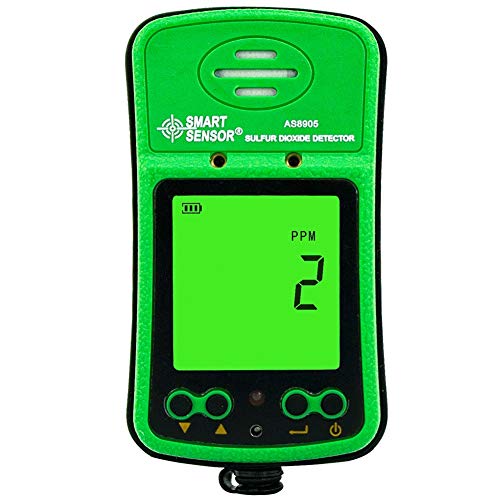
A clip on sulfur dioxide monitor built on an electrochemical sensor, reading 0 to 20 ppm in 0.1 ppm steps, with adjustable high and low alarms signalled by sound, flash and vibration and a rechargeable cell quoted at 8 to 9 hours.