Best A2L Refrigerant Leak Detectors: Future-Ready Tools for Modern HVAC Work
New US residential air conditioners and heat pumps ship on A2L refrigerants such as R-32 and R-454B, and a detector bought for R-410A may or may not respond to them. This guide sorts the current listings by what they state about A2L, by sensor type and by stated sensitivity, without inventing figures the manufacturers did not publish.
The picks below were chosen from manufacturer listings for the A2L transition: whether the listing states A2L coverage, the sensor technology, stated sensitivity and sensor life. We did not run laboratory tests; figures are the manufacturers' own and blanks are marked as not stated.
All figures are taken from the manufacturers' Amazon listings at the time of research. Sensitivity in oz/yr is defined by each manufacturer and is not comparable between brands. Where a listing gives no value the cell reads Not stated.
How to Choose an A2L Refrigerant Leak Detector
Four checks decide the purchase:
A2L on the Listing
Look for the words A2L, R-32 or R-454B in the manufacturer text. HFO coverage usually implies it, but only the manufacturer can confirm.
Sensor Technology
Infrared sensors last years and tolerate background refrigerant. Heated diodes cost less up front but are consumed by use and hurt by moisture and oil.
Stated Sensitivity
Under 0.03 oz/yr versus 0.25 oz/yr is a real difference on a micro leak, even though the test methods differ by brand.
What Else It Reads
If the fleet includes R-290 coolers or gas furnaces, a detector that also states A3 and combustible gas coverage saves carrying two tools.
Will my old R-410A leak detector work on R-32 or R-454B?
Possibly, but the listing or manual has to say so. Heated diode and infrared sensors respond to refrigerant families rather than to individual blends, and manufacturers publish compatibility statements per model. If the detector predates the A2L transition and the manufacturer has not confirmed A2L coverage, treat it as unverified.
What does A2L certified mean on a leak detector listing?
It means the manufacturer states the detector has been evaluated for use with A2L (mildly flammable) refrigerants. The listing rarely names the standard, so the certification is the manufacturer's claim; it is still more than a listing that only names chemical families.
Is an infrared detector better than a heated diode for A2L work?
Infrared sensors are not consumed by use, last years and tolerate background refrigerant, so they suit daily use. Heated diode detectors can be just as sensitive when the sensor is fresh but need regular sensor replacement. For A2L specifically the sensor type matters less than whether the manufacturer states coverage.
Do I need a combustible gas detector as well for A2L systems?
Not for leak location. A refrigerant detector rated for A2L finds the joint. A combustible gas detector or LEL monitor is a separate safety instrument for checking that a space has not accumulated a flammable concentration, which is a different job with a different threshold.
Why do the sensitivity numbers differ so much between brands?
Because each manufacturer defines its own test: refrigerant used, distance, probe speed and detection threshold all vary. A figure of 0.03 oz/yr from one brand and 0.15 oz/yr from another may be closer in practice than they look. Compare within a brand, and treat cross-brand figures as rough.
Reviews
Fieldpiece DR82 Infrared Refrigerant Leak Detector Best Overall
The DR82 is the pick for a technician who wants one detector to carry through the A2L transition without a consumable sensor. Fieldpiece states an infrared sensor with a 10-year life, IP54 protection against the moisture and oil that shorten heated diode sensors, and a sensitivity under 0.03 oz/yr. The listing names CFC, HCFC, HFC, HFO and blend compatibility, which is the chemical family list that the new A2L refrigerants belong to.
One caution: the listing does not use the letters A2L anywhere. That is a labeling gap rather than a stated exclusion, and Fieldpiece publishes refrigerant compatibility documents separately, but if a client or an employer needs the words A2L on the box, check the manufacturer documentation for the specific refrigerant before buying.
The hardware is convenient in the field: a backlit LCD that shows leak size, an LED at the probe tip, a 17-inch probe for coil returns and replaceable filter tips. Infrared sensors also tolerate background refrigerant, which matters in a machine room after a large leak.
Strengths
Infrared sensor with a stated 10-year life
Stated sensitivity under 0.03 oz/yr
IP54, USB-C charging, replaceable filter tips
Tolerates refrigerant-contaminated air better than a heated diode
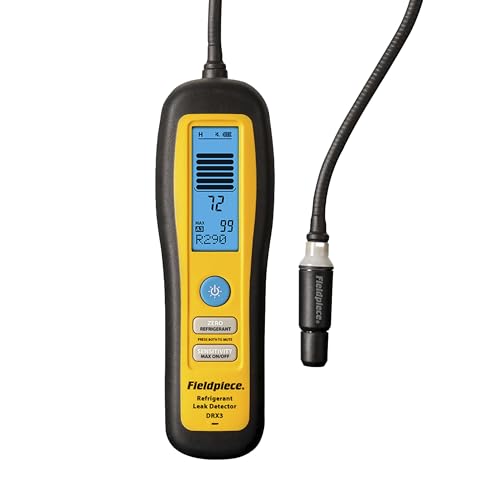
Fieldpiece DRX3 Refrigerant and Combustible Gas Leak Detector Best for A2L and A3
The DRX3 is the one listing in this group that states the safety classes outright: A3, A2L and A1 refrigerants, plus combustible gases and heating gases. For a contractor whose work now spans R-410A split systems, new R-454B heat pumps and R-290 reach-in coolers, that single sentence removes the compatibility question that every other detector leaves open.
The trade-off is the sensor. Fieldpiece uses a heated diode, which is consumed by use and affected by moisture and oil, so the sensor is field-replaceable and the listing includes one. There is no sensitivity figure and no sensor life figure on the listing, so a buyer who needs an oz/yr number for a report has to get it from Fieldpiece directly.
Batteries are also field-replaceable rather than sealed, sensitivity has high, medium and low settings, and the detector connects to the Job Link app. It also reads hydrogen-nitrogen tracer gas, which is why it appears again in our tracer gas guide.
Strengths
A1, A2L and A3 stated on the listing
Combustible gas and tracer gas in the same tool
Replaceable sensor and replaceable batteries
Job Link app connection
Limitations
Sensitivity not stated on the listing
Sensor life not stated; heated diode is a consumable
The 705-202-G1 is the simplest way to get a detector with A2L certification stated on the listing. Inficon lists CFC, HCFC, HFC and HFO coverage, a heated diode sensor, automatic background zeroing and a claim of no false alarms from soap solutions, which matters when bubbles have already been used on a joint.
The numbers are modest by current standards. Sensitivity is stated at 0.25 oz/yr, roughly ten times the figure Fieldpiece quotes for the DR82, and the sensor life is stated at 100 hours, so a busy technician will replace sensors regularly. Sensitivity in oz/yr is defined by each manufacturer and is not directly comparable across brands, but the gap here is wide enough to matter for micro leaks.
It runs on two D-cell alkaline batteries, ships with a rugged case and is made in the United States with US technician support. For a residential technician who needs an A2L-labeled tool at the lowest tier, it does the job; for micro leaks, step up.
Strengths
A2L certified is stated on the listing
Soap solution does not trigger it, per Inficon
Automatic zeroing
US-made with US technician support
Limitations
Stated sensitivity of 0.25 oz/yr is coarse for micro leaks
Short answer: the Fieldpiece DR82 is the detector to carry into A2L work if you want an infrared sensor that lasts years and reads under 0.03 oz/yr; the Fieldpiece DRX3 is the one whose listing spells out A1, A2L and A3 coverage plus combustible gas, for a fleet that includes propane coolers; and the Inficon 705-202-G1 is the lowest-tier detector that states A2L certification, for a residential technician who needs the label more than micro-leak sensitivity.
What the A2L transition changes for a leak detector
Since the 2025 transition, new US residential air conditioners and heat pumps ship on A2L refrigerants, mainly R-32 and R-454B, instead of R-410A. A2L means mildly flammable: not the A3 flammability of R-290 propane, but no longer the non-flammable A1 class of R-410A and R-134a. Two things follow for the detector in your bag. First, it has to respond to the new refrigerants, which is a compatibility question the manufacturer answers, not the sensor type. Second, the tool is now being used around a refrigerant that can burn, so the manufacturer’s statement that the detector is suitable for A2L environments carries weight. Our refrigerant leak detector explainer covers the basics; this page is about the transition specifically.
Infrared or heated diode for A2L work
The two sensor technologies in this list behave differently in daily use. A heated diode sensor is consumed by use and degraded by moisture and oil, so it is a replaceable part; the DRX3 ships with a spare and the Inficon 705-202-G1 states a 100-hour life. An infrared sensor lasts years, tolerates refrigerant already in the air and does not need a fresh sensor to hold its sensitivity; the DR82 and the Elitech ILD-200 max both state 10-year sensor lives. Neither technology is inherently better at A2L refrigerants. The infrared vs heated diode comparison goes through the mechanics; for the A2L decision the question is simply whether the manufacturer has stated coverage for the sensor you are buying.
What the listings actually say about A2L
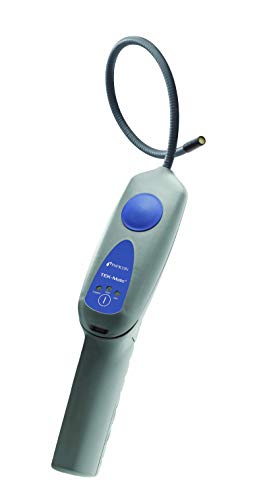
This is where the table earns its place. Three listings state A2L outright: the Fieldpiece DRX3 (A3, A2L and A1), the Inficon 705-202-G1 (A2L certified) and the testo 316-3 (A2L compliant). The Inficon D-TEK 3 lists blends including A2Ls in its refrigerant coverage. The Fieldpiece DR82 and DR58 and the Elitech ILD-200 max name the chemical families, CFC, HCFC, HFC, HFO and blends, without using the A2L label at all. The new refrigerants fall inside those families, so the omission is most likely marketing copy rather than an exclusion, but a listing is not a compatibility statement. If the words matter for a job spec, get the manufacturer document for the exact refrigerant, and note it in the purchase record.
Sensitivity numbers and why they do not line up
The stated figures range from under 0.03 oz/yr on the Fieldpiece units to 0.25 oz/yr on the Inficon 705-202-G1, with the testo at 0.15 oz/yr and the Elitech at 1 g/a on its Super setting. Every one of those numbers is defined by the manufacturer that publishes it, using its own refrigerant, distance and probe speed, so they are not comparable across brands. Within a brand they are useful: Fieldpiece quotes the same figure for the infrared DR82 and the heated diode DR58, which tells you the sensor choice there is about lifetime and contamination tolerance, not threshold. The DRX3 and the D-TEK 3 publish no figure at all. Before trusting any detector on a job, run it against a known reference; how to test a refrigerant leak detector before use explains the routine.
Working around a mildly flammable refrigerant
A2L flammability changes the working environment more than the tool. Ventilate the space before and during leak search, keep ignition sources away from the suspected leak point and do not use a heated-element detector in a space that a combustible gas monitor shows to be accumulating refrigerant. A refrigerant leak detector locates a joint; it is not an LEL alarm and does not tell you whether a room is safe. A separate combustible gas detector covers that, and our combustible gas detector guide lists suitable units. The DRX3 is the one detector here that states combustible gas coverage in the same instrument, which is convenient, but it still reads at the probe tip rather than monitoring the room.
Where the tracer gas and general guides fit
If a system has been evacuated and needs a pressure test before charging, a hydrogen-nitrogen tracer detector is the right tool rather than any refrigerant sniffer; the tracer gas leak detector guide compares them, and the DRX3 appears there too because it reads H2/N2 as well as refrigerants. For a broader look that is not restricted to the A2L transition, including the sensor-type discussion and budget heated diode units, see the main refrigerant leak detector guide and the step-by-step how to choose a refrigerant leak detector.
How We Research
Products were compared on manufacturer listing text: refrigerant classes and chemical families stated, sensor technology, stated sensitivity, sensor life, ingress rating, power and probe length. Owner feedback was reviewed for recurring reports of false alarms and sensor failure. We did not run laboratory tests and publish no leak-rate measurements of our own. Amazon data supplies images, availability and links only.
Plug-in combustible gas monitor with a color screen showing live ppm, temperature and humidity and an alarm of 85 dB or more. No UL listing or threshold stated.
Plug-in CO and explosive gas alarm with two AA backup cells, a display that shows CO ppm or GAS, low-level CO alerts at 30 to 70 ppm, 85 dB, 7-year warranty.
Compact flush-mount 12-volt RV alarm for propane and CO, 108 mA draw, mute with rapid recovery, UL 2034 RV and UL 1484 RV. Replaces Atwood 31013 and 31014.
Affiliate disclosure: Akermin earns a commission from qualifying Amazon purchases made through links on this page. This does not affect our picks, which are based on documented specifications and owner feedback. Learn more.