As an Amazon Associate, Akermin earns from qualifying purchases. Product links on this page are affiliate links.
An A2L refrigerant leak detector is one whose manufacturer states that it responds to the A2L class of refrigerants, which includes R-32 and R-454B, and that it is suitable for use where the leaking gas is mildly flammable. That second point is the change. The detectors that served the R-410A era were built for an A1 gas that cannot burn; A2L refrigerants can, and a technician now needs a tool that finds the new molecules and does not itself become an ignition source at the leak. For most shops the practical answer is one of the current-generation detectors whose listing carries the A2L wording, and the rest of this guide explains what to look for and what to change in the routine.
What A2L Means
Refrigerant safety classes combine a toxicity letter and a flammability number. A means lower toxicity. The number runs from 1 for no flame propagation to 3 for higher flammability, with 2L added as a sub-class for gases that burn slowly and need a strong ignition source. In practice:
- A1: non-flammable. R-410A, R-134a, R-22 and most of what the trade has serviced for decades.
- A2L: mildly flammable. R-32 and R-454B, the refrigerants replacing R-410A in new residential and light commercial equipment, and R-1234yf in automotive systems.
- A3: flammable. R-290 (propane) and other hydrocarbon refrigerants used in small self-contained equipment.
Mildly flammable is not harmless. A2L gas released into an enclosed mechanical room or an air handler cabinet can reach an ignitable concentration, and the burn velocity is low enough that the danger is a flash rather than an explosion, which is exactly why the class exists and why equipment standards now require leak mitigation on larger charges.
What Changes on the Detector
Three things separate an A2L-ready detector from an older one.
- Sensor response. The sensor has to respond to R-32 (a pure HFC) and to R-454B (a blend of R-32 and the HFO R-1234yf). Heated diode and infrared sensors both can; whether a specific model does is a matter of what the manufacturer states.
- Suitability around a flammable gas. A heated diode runs at temperature by design. Manufacturers who label a detector for A2L work are stating that the instrument is suitable for use where the sample can burn. An older tool with no such statement leaves you guessing.
- Sensitivity that matches smaller charges. A2L equipment tends to carry less refrigerant, and the leak you are asked to find is often smaller in absolute terms. Manufacturers quote sensitivity in ounces per year, and the figure is defined by the manufacturer’s own test method, so compare it with that caveat.
How the A2L Label Appears on Current Listings
| Detector | Sensor | A2L wording on listing | Refrigerant coverage stated | Sensitivity stated | Sensor life stated |
|---|---|---|---|---|---|
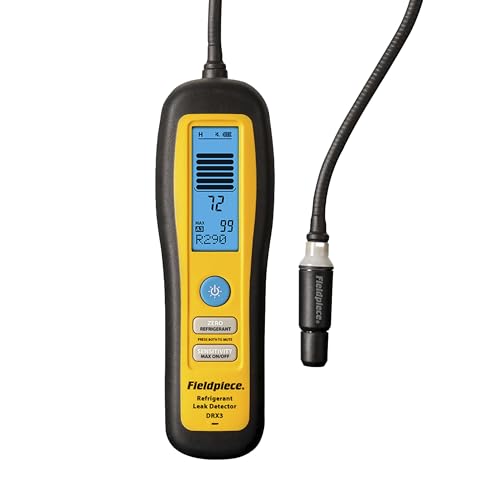
| Fieldpiece DRX3 | Heated diode, field-replaceable | Yes: detects A3, A2L and A1 refrigerants and combustible gases | HC, HFC, HCFC, CFC, HFO, H2/N2 tracer gas, blends, heating gases | Not stated | Not stated (sensor is replaceable) |
| Fieldpiece DR82 | Infrared | No A2L label on the listing | CFC, HCFC, HFC, HFO and blends | Under 0.03 oz/yr | 10 years |
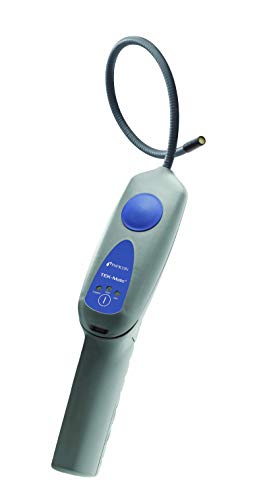
| Inficon TEK-Mate (705-202-G1) | Heated diode | Yes: “A2L Certified” | All CFCs, HCFCs, HFCs and HFOs | 0.25 oz/yr (7 g/yr) | 100 hours |
The DR82 row deserves a note. Its listing covers HFC and HFO refrigerants and blends, which chemically includes R-32 and R-454B, but it does not use the A2L label anywhere in the listing text. Before relying on it for A2L work, confirm the rating in Fieldpiece’s own documentation rather than inferring it. The DRX3 review and DRX3 versus DR82 comparison go deeper on the two Fieldpiece tools.
Heated Diode or Infrared for A2L Work
Both technologies appear in A2L-rated products. The trade-off has not changed: a heated diode sensor is consumed by use and the listing gives it a life in hours (100 hours on the TEK-Mate; the DRX3 makes its sensor field-replaceable rather than quoting hours), while an infrared sensor is quoted in years and is less affected by the refrigerant it samples. Heated diode tools tend to claim strong sensitivity on small leaks; infrared tools trade a little of that for a decade of service. Infrared versus heated diode refrigerant leak detectors lays out the comparison in full. For A2L the deciding question is simpler: does the manufacturer say the tool is suitable? If the answer is yes, either sensor type will do the job.
What Changes in the Field Routine
- No ignition sources at the leak. Treat an A2L leak like a small propane leak. Ventilate the space, keep the torch, the vacuum pump switch and anything that sparks away from the search, and do not rely on smell; refrigerants have little odor at leak concentrations.
- Sweep low as well as high. R-32 and R-454B vapors are heavier than air and settle, so the drain pan, the base of the air handler and the floor of a closet deserve the same slow pass as the braze joints.
- Verify the detector before each job. A quick check against a known reference confirms the sensor responds, which matters more with a consumable heated diode. How to test a refrigerant leak detector before use covers a safe method.
- Find and fix rather than top up. A2L equipment is designed around limited charges and, in larger systems, built-in leak detection. Recharging a leaking system is no longer a workable service call.
Which Detectors Fit
A technician whose work is turning to R-32 and R-454B wants a detector whose listing states A2L coverage and whose sensor plan suits the volume of work: replaceable heated diode for high sensitivity, or infrared for years of service. Current picks are ranked in the A2L refrigerant leak detector roundup, and the wider field including automotive and legacy A1 tools is in the refrigerant leak detector guide. The companion article on R-32 and R-454B leak detection looks at why a specific older detector may or may not respond to the two new gases.
Recommended Tools

Products shown because their documented specifications fit this guide. Price and availability are on Amazon and can change.
Frequently Asked Questions
Does an A2L-labeled detector also find R-410A and R-134a?
On the listings in this article, yes. The Fieldpiece DRX3 states A3, A2L and A1 refrigerants, and the Inficon TEK-Mate states all CFCs, HCFCs, HFCs and HFOs alongside its A2L certification. The A2L label adds to the legacy coverage rather than replacing it.
Is an A2L refrigerant detector the same thing as a combustible gas detector?
No. A combustible gas detector responds to methane, propane and similar fuels and typically ignores halogenated refrigerants. An A2L refrigerant detector responds to the refrigerant molecule. The Fieldpiece DRX3 is unusual in that its listing claims both, using a single heated diode sensor for refrigerants and heating gases.
Do A2L systems leak more than R-410A systems?
Nothing in the manufacturer material suggests the equipment leaks more. What changes is the consequence: a leak that would have been merely an efficiency problem with R-410A is a mildly flammable release with R-32 or R-454B, so codes push for detection, ventilation and smaller charges, and technicians are expected to find leaks rather than top up.
Affiliate disclosure: Akermin earns a commission from qualifying Amazon purchases made through links on this page. Our editorial picks are based on documented specifications and owner feedback, not commissions.
Related Guides

WiFi Natural Gas Alarm Review: One Unit Reveals the Whole Design
A WiFi natural gas alarm with an LCD showing gas concentration status and temperature, a stated response within 30 seconds, an alarm of at least 85 decibels and notifications to a phone app.
Read More→
Forensics Detectors Cl2 Review: 5 Percent of Full Scale Is 2.5 ppm
A rechargeable chlorine detector with an electrochemical sensor reading 0 to 50 ppm at 0.1 ppm resolution, a response time under 30 seconds, adjustable audible, visual and vibrating alarms and a supplied calibration certificate.
Read More→
Smart Sensor SO2 Detector Review: 0.1 ppm Steps, No Accuracy Figure
A clip on sulfur dioxide monitor built on an electrochemical sensor, reading 0 to 20 ppm in 0.1 ppm steps, with adjustable high and low alarms signalled by sound, flash and vibration and a rechargeable cell quoted at 8 to 9 hours.
Read More→