As an Amazon Associate, Akermin earns from qualifying purchases. Product links on this page are affiliate links.
An older refrigerant leak detector may not be enough for R-32 and R-454B for two separate reasons: its sensor may not have been characterized for the new molecules, and, more importantly, it was designed around R-410A, a refrigerant that cannot burn. R-32 and R-454B are A2L, mildly flammable, so the tool you point at the leak now needs a manufacturer statement that it is suitable for that use. Some heated diode detectors from the R-410A era carry that statement on their current listings; many do not. If yours is silent on A2L, treat it as unrated rather than assuming it is fine.
What R-32 and R-454B Are
R-32 is a single-component HFC, difluoromethane. R-454B is a blend of R-32 and the HFO R-1234yf, formulated to behave close to R-410A in the equipment while carrying a much lower global warming potential. Both are classified A2L: lower toxicity, mildly flammable with a low burning velocity. Their vapors are heavier than air and settle in low spots, the same way propane does. Neither has a strong odor at leak concentrations, so detection is an instrument job. The background on the class is in A2L refrigerant leak detectors explained.
Why an Older Detector May Fall Short
- Coverage was never stated. A detector sold for R-410A and R-134a work may list “all HFCs” and stop there. R-32 is an HFC, so the sensor almost certainly responds, but “responds” and “is rated for” are not the same claim.
- No flammability rating. Heated diode sensors run hot, and older instruments were not assessed for use where the sample can ignite. The manufacturers that have done that assessment say so with wording such as A2L certified or A2L compliant.
- Sensitivity may be marginal. A2L systems are designed with smaller charges, so the leak that empties a system can be small. A detector rated at 0.25 oz/yr is a coarser tool than one rated at 0.15 oz/yr or under 0.03 oz/yr, with the caveat that each manufacturer defines its own test.
- The sensor may be spent. A heated diode is consumed by use. An older tool that has been through years of R-410A work may have a tired sensor regardless of what refrigerant is in front of it.
What Three Current Listings State
| Detector | Sensor | A2L statement | Refrigerants named or classes covered | Sensitivity | Zeroing |
|---|---|---|---|---|---|
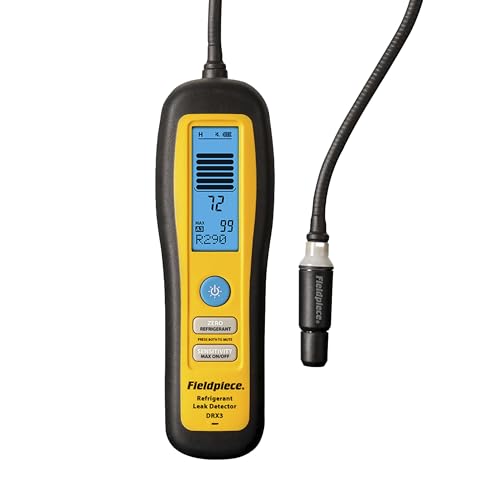
| Fieldpiece DRX3 | Heated diode, field-replaceable | Detects A3, A2L and A1 refrigerants and combustible gases | HC, HFC, HCFC, CFC, HFO, H2/N2 tracer, blends, heating gases | Not stated | Auto and manual zero; high, medium and low sensitivity |
| Fieldpiece DR82 | Infrared, 10-year sensor | None on the listing | CFC, HCFC, HFC, HFO and blends | Under 0.03 oz/yr | Not stated |
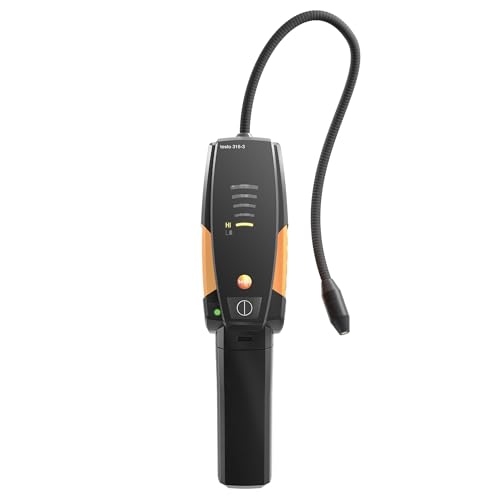
| testo 316-3 | Heated diode | A2L compliant | All CFCs, HFCs, HCFCs; R22, R134a, R404A, R410A, R507, R438A named | 0.15 oz/yr (4 g/a) | Automatic zeroing; usable in previously contaminated areas |
Read across the table and the pattern is clear. The DRX3 is the only one of the three whose listing names the A2L class and combustible gases in the same breath, which is the whole point of that product; the DRX3 review covers it in detail. The testo 316-3 carries an A2L statement but names none of the new refrigerants explicitly. The DR82 states the chemical classes that include R-32 and R-454B and is the most sensitive of the three by the manufacturer’s figure, yet its listing does not use the A2L label; the DR82 review discusses what that means in practice, and Fieldpiece documentation should settle it for anyone buying it for A2L work.
How to Check the Detector You Already Own
- Find the model on the manufacturer’s site, not a reseller, and search the specification page for “A2L”, “R-32” or “R-454B”.
- If the sensor is a heated diode, find the stated sensor life in hours and estimate how much of it is gone. A replacement sensor may be the right purchase rather than a new tool.
- Check the tool against a reference before the next A2L job, following how to test a refrigerant leak detector before use. A sensor that has stopped responding to R-410A will not respond to R-32 either.
- If the manufacturer is silent on A2L, keep the tool for A1 work and buy an A2L-rated detector for the new equipment.
What Changes at the Equipment
Ventilate before you search, because the vapor you are looking for can burn. Keep torches, pumps with brushed motors and anything that arcs away from the area until the leak is found and the space is cleared. Sweep the braze joints and Schrader cores as before, then go low: the drain pan, the bottom of the coil cabinet, the floor of the closet, because heavier-than-air vapor collects there. Sweep slowly; sensors need time to draw in and respond. If the detector lights up strongly in open air rather than at a joint, the concentration may already be high enough to matter; back out, ventilate and let the space clear before continuing. Larger A2L systems include their own leak detection and mitigation, and a tripped system sensor is a reason to treat the room as contaminated until proven otherwise.
Where to Go From Here
Technicians moving to the new refrigerants have two sensible paths. One is a heated diode tool with an explicit A2L statement and a replaceable sensor, which keeps sensitivity high at the cost of periodic sensor purchases; the heated diode refrigerant leak detector roundup compares those. The other is a long-life infrared tool from a manufacturer that confirms A2L suitability in its documentation. Both routes are covered, with current picks, in the A2L refrigerant leak detector guide.
Recommended Tools

Products shown because their documented specifications fit this guide. Price and availability are on Amazon and can change.
Frequently Asked Questions
Will a heated-diode detector respond to R-32?
R-32 is an HFC, and every heated diode listing in this article states HFC coverage, so the sensor chemistry responds. Whether the manufacturer rates the tool for use around a mildly flammable gas is a separate question, and only the DRX3 and testo 316-3 listings answer it with an A2L statement.
Does the testo 316-3 listing mention R-454B by name?
No. It names R22, R134a, R404A, R410A, R507 and R438A, states coverage of all CFCs, HFCs and HCFCs, and describes the tool as A2L compliant. R-454B is a blend of an HFC and an HFO; the A2L statement is the relevant one, and testo documentation should be checked for the specific blend.
Do I need separate detectors for R-32 and R-454B?
No. Both are A2L, both contain R-32, and a detector whose manufacturer states A2L coverage is intended for both. The difference between them matters for the equipment and the charge, not for the leak detector.
Can a combustible gas sniffer for natural gas find an R-32 leak?
Not reliably. Semiconductor sniffers for methane and propane respond weakly or not at all to halogenated refrigerants, and their ppm scales are based on methane. Use a refrigerant detector rated for A2L, or the Fieldpiece DRX3, whose listing covers both refrigerants and heating gases.
Affiliate disclosure: Akermin earns a commission from qualifying Amazon purchases made through links on this page. Our editorial picks are based on documented specifications and owner feedback, not commissions.
Related Guides

WiFi Natural Gas Alarm Review: One Unit Reveals the Whole Design
A WiFi natural gas alarm with an LCD showing gas concentration status and temperature, a stated response within 30 seconds, an alarm of at least 85 decibels and notifications to a phone app.
Read More→
Forensics Detectors Cl2 Review: 5 Percent of Full Scale Is 2.5 ppm
A rechargeable chlorine detector with an electrochemical sensor reading 0 to 50 ppm at 0.1 ppm resolution, a response time under 30 seconds, adjustable audible, visual and vibrating alarms and a supplied calibration certificate.
Read More→
Smart Sensor SO2 Detector Review: 0.1 ppm Steps, No Accuracy Figure
A clip on sulfur dioxide monitor built on an electrochemical sensor, reading 0 to 20 ppm in 0.1 ppm steps, with adjustable high and low alarms signalled by sound, flash and vibration and a rechargeable cell quoted at 8 to 9 hours.
Read More→