Best Multimeters for HVAC: 5 Picks With Microamps and Temperature
An HVAC multimeter is defined by two ranges a general electrical meter leaves out. Without microamps you cannot diagnose a flame sensor, and without temperature you are carrying a second instrument for the measurement you take most often.
As an Amazon Associate, Akermin earns from qualifying purchases. Product links on this page are affiliate links.
Our Top Picks
Meters were compared on whether a DC microamp range is provided for flame rod measurement, temperature measurement and its stated range, capacitance for motor capacitors, inrush capture, current measurement arrangement and display configuration. We did not run laboratory tests and publish no measurements of our own.
Best Overall
Fluke 116 HVAC Multimeter
The reference HVAC multimeter, with microamps for flame sensors and a thermometer to 400 C.
Digital multimeter designed specifically for HVAC professionals
Built-in thermometer measuring from -40 to 400 C, stated as -40 to 752 F
Every meter here provides a DC microamp range, which is the single specification that defines an HVAC meter. Only some also measure temperature, and only some measure current without breaking the circuit.
How to Choose an HVAC Multimeter
Two functions define the category and a third decides whether you carry one tool or two.
Microamps Are Non Negotiable
Flame rod current is measured in single figures of microamps. Without that range, a furnace lockout becomes a guessing game about sensors, grounds and boards.
Temperature Is the Measurement You Take Most
Supply against return, across a coil, at a flue. A meter with a thermocouple input removes a second instrument from the bag.
Capacitance Finds the Commonest Failure
Start and run capacitors fail constantly, and a failed capacitor looks exactly like a failed motor until you measure it.
Two Probes Beat One for Differentials
Reading a split with one probe means two measurements minutes apart on a cycling system. Two inputs give the difference at one instant.
Inrush Separates Start Faults
A compressor surge on starting tells you about the capacitor, the windings and the supply. Only a meter that captures it turns that into a number.
LoZ Stops Phantom Fault Chasing
Long cable runs beside live conductors induce voltage that a high impedance meter reports faithfully. A low impedance mode collapses it.
A DC microamp range, primarily. Gas heating equipment proves its flame by measuring the tiny current a flame rod conducts, in single figures of microamps, and a general purpose meter cannot resolve it. Temperature measurement is the usual second addition, because HVAC diagnostics revolve around differentials.
Why does flame rod current matter?
Because when it falls below the control board threshold the appliance shuts down and locks out, and the cause can be a dirty sensor, a poor ground, a cracked insulator or a failing board. Measuring the actual current separates those in a minute; without the measurement, parts get replaced in hope.
Do I need a clamp as well?
If you measure current regularly, yes. A lead based meter requires breaking the circuit to insert itself, which is impractical on a fixed installation. Several meters here are clamps with the HVAC functions built in, which is one way to carry a single tool.
What is inrush and why capture it?
The large current surge a motor or compressor draws when starting. Whether it is normal or excessive tells you about the start capacitor, the windings and the supply. A meter without inrush capture shows a figure that has already passed by the time the display updates.
Why do I need two temperature inputs?
Because almost every HVAC temperature question is a difference rather than a value. With one probe you measure, move it and measure again, minutes apart on a system that is cycling. With two you read the split at the same instant, which is the number the diagnosis actually depends on.
What is LoZ for?
Long cable runs alongside energised conductors pick up induced voltage, and a high impedance meter reports it faithfully as though it were real. A low impedance mode loads the circuit slightly, collapsing the phantom voltage while a genuine supply still reads.
Reviews
Fluke 116 HVAC Multimeter Best Overall
This is the meter the category is built around, and the reason is the combination in the second and third bullets. A DC microamp range measures flame rod current, which is what a furnace uses to prove its flame, and the reading is in single figures of microamps. A general purpose meter cannot resolve it at all, which is why technicians without one end up replacing boards and sensors on suspicion.
The built-in thermometer covers the measurement HVAC work takes most often. Supply and return air, the two sides of a coil, a flue component, a suction line: all of them are temperature, and having the function in the same meter removes an instrument from the bag and a swap from the workflow. A -40 to 400 C range covers everything from a chilled coil to flue gas. What this meter does not do is measure current without breaking the circuit, so most technicians carry a clamp alongside it.
The modular head system is what makes this different from every other meter here. Buy the stick, then add the capability you need as your work changes rather than buying a new meter. For a technician building a kit over a few seasons, that is a genuinely different ownership model, and it also means a 400 A clamp head turns the same instrument into a current meter without a second display to read.
The practical details are aimed squarely at service work. A magnetic hanger means the meter sticks to the unit rather than balancing on it. Detachable silicone leads stay flexible in the cold, which cheap PVC leads do not. One handed testing matters when the other hand is holding a panel or a torch. Add microamps for flame rods, capacitance for motor capacitors and temperature to 1000 F for flue work, and the core HVAC function set is complete in one stick.
Strengths
Modular heads extend the meter rather than replacing it
Microamps, capacitance and temperature all included
Magnetic hanger and silicone leads for real service work
Temperature to 1000 F covers flue components
Limitations
Manual ranging rather than auto
Accessory heads are additional purchases
Stick format is less familiar than a conventional meter
Klein Tools CL445 HVAC Clamp Meter Best All in One
Showing voltage and current at the same time is more useful in HVAC than in general electrical work, because so many diagnoses depend on the relationship between them. A compressor drawing high current at low voltage is a different fault from one drawing high current at normal voltage, and reading both on one screen without swapping functions makes that immediate.
Inrush capture is the other HVAC specific feature. A compressor or a fan motor draws a large surge on starting, and whether that surge is normal or excessive tells you a great deal about the start capacitor, the windings and the supply. A meter that captures it turns a suspicion into a number. With microamps, capacitance and thermocouple temperature also included, this covers gas heating and air conditioning in a single instrument.
Strengths
Voltage and current displayed simultaneously
Inrush capture for compressor and fan starting
Microamps, capacitance and temperature included
Non contact voltage built into the jaw
Limitations
AC current only through the clamp, no DC current stated
Two thermocouple inputs is the feature that changes how a service call runs. Almost every HVAC temperature question is a differential: supply against return, in against out across a coil, liquid line against suction line. With one input you measure, write it down, move the probe, measure again and subtract, and the two readings were taken minutes apart on a system that is cycling. With two you read the split directly, at the same instant.
Adding an infrared spot gives a fast non contact check of a compressor body, a duct or a breaker without fitting a probe at all, and LoZ addresses the ghost voltage problem that sends technicians chasing faults that do not exist. DC current through the jaw to 600 A also covers inverter driven equipment, which increasingly matters. The head to head with the Fluke alternative is set out in our comparison.
Strengths
Dual type K inputs for direct differential readings
The published ranges are what make this stand out at the price. A microamp range to 2000 covers flame rod work with margin, capacitance to 4000 microfarads covers any motor start or run capacitor you will meet, and 40 megohms of resistance reaches far enough to see a leakage path that a 4 kilohm meter reads as open circuit.
A dual display on a value meter is unusual and genuinely helpful, for the same reason it helps on the Klein: HVAC faults are usually about two quantities at once. Test lead holders on the body sound trivial until you have spent a service call untangling leads in a plant room. What is missing relative to the meters above is temperature measurement, so a separate thermometer or thermocouple meter is still needed.
Strengths
Published microamp, capacitance and resistance ranges
Short answer: the Fluke 116 is the reference HVAC multimeter, with microamps and a thermometer built in; the Fieldpiece HS33 is the one to buy if you want a kit that grows through accessory heads; and the Klein CL445 is the best single tool, because it adds a clamp with inrush to the same HVAC function set.
One range defines the whole category
Search for an HVAC multimeter and you will find meters that look like ordinary multimeters with a different sticker. The genuine ones share a specific capability: a DC microamp range. Gas heating equipment proves that a flame is present by measuring the tiny current the flame conducts through a flame rod, and that current is measured in single figures of microamps. An ordinary multimeter, whose lowest current range is milliamps, simply cannot see it.
The practical consequence appears on every furnace lockout call. The appliance lights, runs for a few seconds and shuts down. Without a microamp reading, the possible causes, a dirty sensor, a poor ground, a cracked ceramic, a failing control board, are indistinguishable, and the usual outcome is replacing the cheapest one and hoping. With a reading, the diagnosis takes a minute.
Temperature is the measurement you take most often
Almost everything in heating and cooling comes back to a temperature difference. Supply air against return air. The two sides of a coil. Liquid line against suction line. Flue gas against ambient. A meter with a thermocouple input removes a separate instrument from the bag, and a meter with two inputs removes the arithmetic as well by showing the split directly.
That second point matters more than it appears. Measuring a differential with one probe means taking two readings a few minutes apart, on equipment that is cycling between them, then subtracting. On a system whose behaviour is changing while you work, the two readings were not taken under the same conditions, and the difference you calculate is not quite the difference that exists.
Capacitance finds the commonest failure in cooling
Start and run capacitors fail constantly, and a failed capacitor presents exactly like a failed motor: the unit hums, draws current and does not start. Measuring the capacitance separates them immediately and turns an expensive diagnosis into a cheap part. Several meters here publish a capacitance range, and the UEi figure of 4000 microfarads comfortably covers anything you will meet in residential and light commercial equipment.
Ghost voltage and why LoZ exists
Modern buildings are full of long cable runs sitting alongside energised conductors, and those runs pick up induced voltage through capacitive coupling. A conventional high impedance multimeter draws almost no current, so it reports that induced voltage faithfully, and a technician sees a reading on a circuit that is genuinely dead. Hours disappear chasing a fault that does not exist.
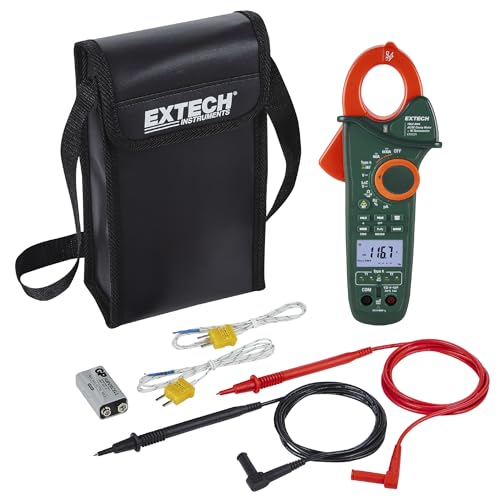
A low impedance mode loads the circuit slightly, which collapses a phantom voltage to nothing while a real supply is unaffected. The Extech listing states LoZ explicitly. If you have ever watched a reading vanish the moment you connected a load, this is the feature that explains it. For the clamp side of HVAC work, see how to choose a clamp meter for HVAC.
How We Research
Meters were compared on whether a DC microamp range is provided and over what span, temperature measurement and its stated range, capacitance range, inrush capture, how current is measured, display arrangement and any ghost voltage handling. Both handheld multimeters and HVAC clamp meters are included because both carry the defining microamp function and buyers choose between them. We did not run laboratory tests and publish no measurements of our own.
Seven three phase power analyzers compared on channels, harmonic order, transient capture and logging, with guidance on what a clamp meter cannot show you.