As an Amazon Associate, Akermin earns from qualifying purchases. Product links on this page are affiliate links.

TOPTES · TOPTES AT-505 Rechargeable Ammonia Gas Detector, 0–100 PPM NH3 Monitor with Triple Alarm (Sound, Light & Vibration), Alarm Record & Adjustable Thresholds for Farm, Poultry, Pig & Livestock Use
View on AmazonPrice and availability are shown on Amazon and can change at any time.
Verdict
The TOPTES AT-505 is a single gas ammonia monitor built for agricultural buildings. The listing states a 0.0 to 100.0 ppm range, a sensor described as high sensitivity and of UK origin, a 4000 mAh rechargeable battery supporting over 60 hours of continuous operation, a TFT colour screen with dual display modes, maximum value hold, an alarm record and adjustable thresholds, with triple alarms covering sound, light and vibration. For poultry, pig and other livestock housing, that specification matches the problem.
Documented Specifications
| Item | Manufacturer listing |
|---|---|
| Gas | Ammonia, NH3 |
| Range | 0.0 to 100.0 ppm |
| Battery | 4000 mAh, over 60 hours continuous |
| Display | TFT colour, dual display modes |
| Recording | Maximum value hold, alarm record |
| Thresholds | Adjustable |
| Alarms | Sound, light and vibration |
The listing does not publish accuracy, resolution, sensor life or a calibration method. For a monitor that informs ventilation decisions, those are worth confirming.
Why Ammonia Is Monitored in Livestock Housing
Ammonia comes from the breakdown of nitrogen in manure and bedding, and it accumulates in any building where animals are housed and ventilation is limited, which describes winter in most livestock buildings. It irritates the respiratory tract of animals and people, and elevated levels are associated with reduced performance in poultry and pigs as well as with worker discomfort.
The reason it needs measuring rather than smelling is that human noses adapt quickly. Walk into a building and the smell is obvious; ten minutes later it is not, and your judgement of whether it is worse than yesterday has become worthless. A number does not adapt.
Maximum Hold Is the Feature That Fits the Problem
Ammonia concentration follows a daily cycle. It builds overnight when ventilation is reduced to conserve heat and falls during the day as rates increase. A spot reading taken during a morning walk-through is taken at the point in the cycle when levels are already improving, which systematically understates the exposure the animals actually experience.
Maximum hold records the peak across a period, so leaving the instrument in the building overnight answers the question a spot check cannot. Combined with over 60 hours of battery, that is a practical way to characterise a building without buying a fixed monitoring system.
Adjustable Thresholds and Alarm Records
Different species, ages and welfare standards imply different target levels, and those vary by country and by assurance scheme. An instrument with adjustable thresholds can be set to whatever standard applies to your operation rather than forcing you to interpret a fixed alarm. The alarm record then gives you a history to review, which is exactly what an assurance inspection or a vet visit tends to ask for.
Where to Put It
- At animal height, not at human head height. Ammonia is generated at the litter surface and concentrations differ substantially with height.
- Away from direct airflow from an inlet, which reads the incoming air rather than the building.
- In more than one location over successive nights. A single point does not characterise a long shed.
- Well away from anything that generates ammonia directly, such as a fresh spill or a cleaning chemical.
Strengths
- Range matched to agricultural monitoring.
- Over 60 hours of battery, enough for a multi-night characterisation.
- Maximum hold and alarm records for reviewing peaks.
- Adjustable thresholds and a vibration alarm.
Limitations
- No accuracy, resolution or sensor life published.
- No calibration method stated, and electrochemical ammonia sensors drift.
- Single gas, so it says nothing about carbon dioxide or oxygen in the same building.
- Not a substitute for a fixed monitoring system in a large operation.
How It Compares
Single gas monitors for other hazards work the same way, such as the TEKCOPLUS hydrogen sulfide monitor for slurry work. For confined space entry involving manure pits, a four gas monitor including oxygen is the correct instrument, not a single gas one. See single gas versus multi gas detector.
How We Research
All figures come from the manufacturer listing. We did not run laboratory tests and publish no measurements of our own.
Recommended Tools

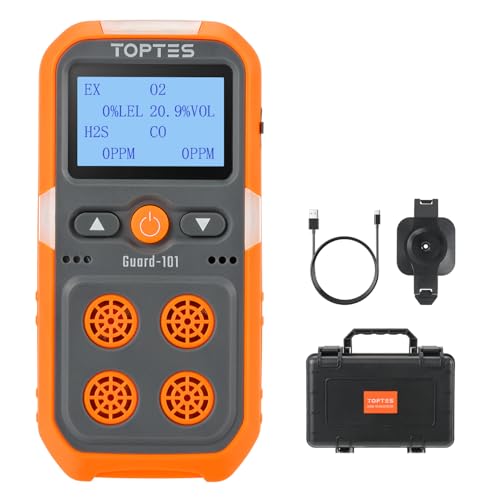
Products shown because their documented specifications fit this guide. Price and availability are on Amazon and can change.
Frequently Asked Questions
What range does it cover?
The listing states 0.0 to 100.0 ppm of ammonia, using a sensor it describes as high quality and of UK origin, with consistent repeatability.
How long does the battery last?
The listing states a 4000 mAh rechargeable battery supporting over 60 hours of continuous operation, which is designed for extended field use without frequent recharging.
What is MAX hold for?
It records and displays the peak concentration seen during a period. In a livestock building the peak often occurs overnight or before ventilation increases, and a spot reading taken at midday will miss it entirely.
Are alarm levels adjustable?
Yes. The listing states adjustable thresholds along with an alarm record, and triple alarms covering sound, light and vibration.
Affiliate disclosure: Akermin earns a commission from qualifying Amazon purchases made through links on this page. Our editorial picks are based on documented specifications and owner feedback, not commissions.