As an Amazon Associate, Akermin earns from qualifying purchases. Product links on this page are affiliate links.

TEKCOPLUS · H2S Gas Detector, Portable Hydrogen Sulfide Detector Gas Leak Detectors & Alarms Electrochemical H2S Monitor Meter Single Gas H₂S Sensor Poisoning Alarm with Clip and LCD Screen Backlight
View on AmazonPrice and availability are shown on Amazon and can change at any time.
Verdict
The TEKCOPLUS hydrogen sulfide monitor is a single gas personal instrument. The listing states an electrochemical H2S sensor, buzzer on and off selection with adjustable high and low alarms, a high definition backlit LCD displaying measured values, a data hold function and a clip for wearing, with applications named in petroleum, chemical, environmental, metallurgical, refining, gas distribution and agricultural work. For anyone working around sewers, slurry, digesters or sour gas, it covers the specific hazard that removes your ability to detect it yourself.
Documented Specifications
| Item | Manufacturer listing |
|---|---|
| Gas | Hydrogen sulfide |
| Sensor | Electrochemical |
| Alarms | Adjustable high and low, buzzer selectable on or off |
| Display | Backlit LCD with data hold |
| Wearing | Clip |
| Range and accuracy | Not stated in the listing bullets |
The Reason This Instrument Exists
Hydrogen sulfide is unusual among common industrial hazards because its warning property fails exactly when the danger increases. At low concentrations the rotten egg smell is unmistakable. As concentration rises, the gas paralyses the olfactory nerve, and the smell disappears.
The consequence is a specific and well documented pattern of incidents: somebody notices the smell, continues working, notices the smell has gone, concludes the problem has cleared, and is overcome. Nothing about human perception protects against this. A monitor that reads a number and alarms at a threshold is the only defence, and that is why single gas H2S monitors exist as a category.
Adjustable Alarms and the Buzzer Switch
Adjustable high and low thresholds let the instrument match a site’s action levels, which vary by jurisdiction and by operation. Two levels is the right structure: a lower one that means take action, and a higher one that means leave.
The selectable buzzer needs a word of caution. Being able to silence an audible alarm is useful in some settings and dangerous in others, and a safety instrument with its alarm switched off is not a safety instrument. If the buzzer is disabled, something else has to be reaching the wearer, and the listing does not state a vibration alarm. Consider that before relying on this unit in a noisy environment.
Single Gas Is a Supplement, Not a Substitute
A single gas monitor watches one hazard. Confined space entry involves at least three: oxygen deficiency or enrichment, combustible gas, and toxic gas. A sewer, a slurry store or a tank can present all of them simultaneously, and hydrogen sulfide is frequently accompanied by methane and by oxygen depletion from the same biological process.
So the correct use of an instrument like this is as a personal monitor for a specific known hazard, alongside the four gas instrument that entry procedures require. Our page on single gas versus multi gas detectors covers the decision properly.
Keeping It Trustworthy
- Bump test with known gas before use. An electrochemical cell can fail with no outward sign.
- Zero in clean air away from the hazard, never at the entry point.
- Note the sensor’s expected life. Electrochemical cells age whether used or not.
- Do not store it in the environment it monitors. Continuous exposure shortens sensor life.
- Record and review alarms rather than silencing and forgetting them.
Strengths
- Covers a hazard that defeats human senses.
- Adjustable high and low thresholds.
- Backlit display with data hold.
- Clip for wearing rather than carrying.
Limitations
- No range, resolution, accuracy or sensor life published.
- No vibration alarm stated, and the buzzer can be switched off.
- No calibration method described.
- Single gas only, so it does not cover confined space entry requirements.
How It Compares
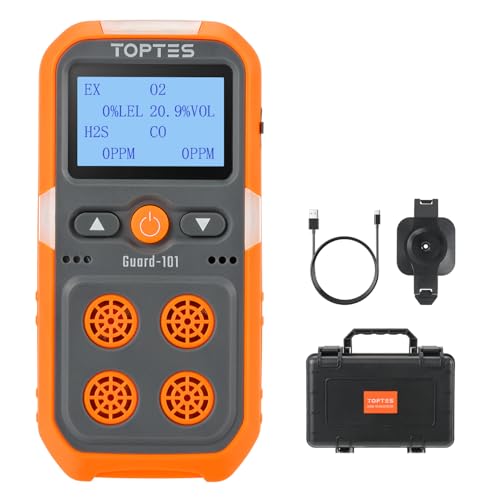
The TopTes Guard-101 and the Forensics Detectors four gas meter cover hydrogen sulfide alongside oxygen, carbon monoxide and combustibles, which is what entry procedures require. Our ranking is in the four gas detector roundup.
How We Research
All figures come from the manufacturer listing. We did not run laboratory tests and publish no measurements of our own. Nothing on this page replaces your employer’s confined space procedures or a formal risk assessment.
Recommended Tools

Products shown because their documented specifications fit this guide. Price and availability are on Amazon and can change.
Frequently Asked Questions
Why is hydrogen sulfide so dangerous?
It smells strongly of rotten eggs at low concentrations and then paralyses the sense of smell at higher ones. People believe the gas has cleared when in fact it has become more concentrated, which is why an instrument is essential.
Where is it encountered?
The listing names petroleum, chemical, environmental protection, metallurgy, refining, gas transmission and distribution, and agriculture. Sewers, slurry stores, digesters, tanks and wells are the common cases.
Are the alarm levels adjustable?
Yes. The listing states buzzer on and off selection and adjustable high and low alarms, which lets the instrument be set to the action levels your site uses.
Is a single gas monitor enough for confined space entry?
No. Confined space entry requires oxygen and combustible monitoring as well, which means a four gas instrument. A single gas monitor supplements that, it does not replace it.
Affiliate disclosure: Akermin earns a commission from qualifying Amazon purchases made through links on this page. Our editorial picks are based on documented specifications and owner feedback, not commissions.