Best Clamp Meters: 11 Powerful Picks for Fast, Safe Current Testing
A clamp meter reads current without breaking the circuit, which is why it has become the first instrument out of the bag on a service call. This hub compares eleven of them on the specification that actually divides the category: whether the jaw reads DC as well as AC, and how small a current it can resolve.
Independent Research
Verified Specifications
Honest Recommendations
One Conductor Only
DC Needs A Hall Jaw
Zero Before Reading
As an Amazon Associate, Akermin earns from qualifying purchases. Product links on this page are affiliate links.
Our Top Picks
Eleven clamp meters sorted by what their jaws can actually do. The dividing lines are AC only versus AC and DC, and general current versus leakage and milliamp resolution. Stated maximum current, True RMS and counts come from the manufacturer listings. Near-duplicate listings of the same instrument were collapsed. We ran no tests.
Best Overall
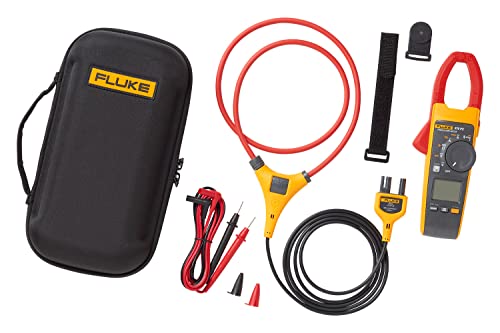
Fluke 376FC 1000A True RMS Clamp Meter with iFlex
AC and DC to a stated 1000 A, with a 36 inch flexible current probe.
A jaw that reads AC only uses a current transformer and is blind to DC. A jaw that reads both uses a Hall effect sensor and must be zeroed before a DC reading. Figures come from the manufacturer listings.
How to Choose a Clamp Meter
The jaw decides almost everything:
AC Only or AC and DC
A current transformer jaw reads AC only and is cheaper. A Hall effect jaw reads both and needs zeroing before a DC measurement. Battery, solar, vehicle and control work all need DC.
Resolution at the Bottom
Load clamps read in amps. Finding a parasitic drain needs 1 mA resolution and chasing a nuisance trip needs a leakage clamp reading from single milliamps.
Jaw Size and Shape
A jaw that cannot close around one conductor is useless, because two conductors carrying the same current in opposite directions cancel. Small jaws win in panels; a flexible probe wins around large cable.
True RMS
Drive outputs, dimmers and switched-mode loads distort the waveform and an average-responding clamp reads low. Six listings here state True RMS.
Inrush and Extras
Motor starting current is many times the running current and lasts a fraction of a second. Inrush capture, an infrared thermometer or non-contact voltage detection all save carrying a second tool.
Because the jaw measures the magnetic field produced by the net current passing through it. Clamp around a two-core flex and the line and neutral currents are equal and opposite, the fields cancel, and the meter reads close to zero. Separate one conductor, or use a line splitter.
Can any clamp meter read DC current?
No. A jaw built around a current transformer physically cannot, because a transformer only responds to a changing field. Reading DC requires a Hall effect sensor in the jaw, which is why AC and DC clamps cost more and why they need zeroing before a DC measurement.
What is an earth leakage clamp for?
Finding why a residual current device trips. Clamping around line and neutral together gives the imbalance between them, which is the current leaking to earth. A general purpose clamp reading in whole amps cannot resolve the few milliamps involved; a leakage clamp reads from single milliamps.
What is inrush current and do I need to measure it?
It is the surge a motor or transformer draws at switch-on, often several times the running current and lasting well under a second. It matters when a breaker trips only on starting. Capturing it requires a meter with an inrush function, since a normal reading averages it away.
Is a clamp meter a replacement for a multimeter?
Not quite, though many clamp meters include voltage, resistance and continuity. The clamp is unbeatable for current because it needs no circuit break, and a multimeter is better for precise voltage and resistance work. Most tradespeople carry both.
Reviews
Fluke 376FC 1000A True RMS Clamp Meter with iFlex Best Overall
The iFlex probe is the reason this leads rather than the brand. A rigid jaw has to physically surround the conductor, and in a real panel that often means it will not close around a large cable, or the cable cannot be separated from its neighbours, or there is simply no room. A flexible current probe wraps a 36 inch coil around the conductor in a space a jaw could never enter, and it measures large currents without the jaw size penalty.
The instrument behind it covers both AC and DC to a stated 1000 A, with voltage measurement stated to 1000 V AC and DC, and True RMS. That combination handles the awkward measurements: a busbar in a crowded enclosure, a large feeder, a DC circuit on a battery system or a drive input.
It is the premium tier here and the listing does not state counts, resolution or a CAT rating in the text we compared, so check the rating on the manufacturer datasheet for your working voltage. For an electrician whose panels are full and whose cables are large, the flexible probe alone justifies the step up.
Strengths
Stated 1000 A on both AC and DC
Flexible 36 in probe reaches crowded conductors
Stated 1000 V AC and DC measurement
True RMS stated
Limitations
Highest tier on this page
Counts and resolution not stated in the listing text
Megger DCM305E Earth Leakage Clamp Meter Best for Earth Leakage
Chasing a residual current device that trips for no obvious reason is one of the least pleasant jobs in the trade, and a general purpose clamp is useless at it. A 600 A jaw reading in whole amps cannot see the 12 mA of accumulated leakage that is sitting just under the trip threshold, so you end up disconnecting circuits one at a time and guessing.
A leakage clamp solves it directly. The Megger DCM305E states 6 mA to 100 A, which means it resolves the leakage band while still reading real load current, and it is True RMS. Clamping around line and neutral together gives the imbalance, which is exactly what the protective device is responding to, so you can measure each circuit in turn and find the one contributing most.
The jaw geometry and shielding that make this possible are why leakage clamps are a separate product rather than a mode on a general meter. It will not be your everyday load clamp, and that is the point: this is the second clamp you buy when a nuisance trip becomes a recurring call.
Strengths
Stated 6 mA to 100 A range
True RMS on a leakage measurement
Purpose-designed jaw and shielding
Reads real load current as well
Limitations
AC only, no DC current measurement stated
Counts and resolution not stated
Specialist second clamp rather than an everyday one
The UT210E has been the default recommendation for a small AC and DC clamp for years, and the reason is the combination: a compact jaw, auto-ranging and DC capability at a tier where most clamps read AC only. DC current is the specification people discover they need after buying, whether that is a vehicle circuit, a battery system, a solar string or a control supply.
The mini jaw is what makes it usable in the places these measurements happen. A large jaw is often physically incapable of getting around one conductor in a tight terminal box or a crowded contactor panel, and a clamp that cannot close on a single conductor reads nothing useful, since two conductors carrying the same current in opposite directions cancel out.
The listing publishes no counts, no True RMS statement, no stated maximum current and no CAT rating. It is the value pick precisely because of what it does rather than what it specifies, and for anything that has to be documented, one of the instruments above is a better fit.
Short answer: the Fluke 376FC is the clamp meter to buy for serious panel work, reading a stated 1000 A on both AC and DC with a 36 inch flexible probe that reaches conductors a rigid jaw cannot. The Megger DCM305E is the specialist to add when nuisance tripping becomes a recurring call, resolving from a stated 6 mA, and the UNI-T UT210E gives you a small AC and DC jaw at the lowest tier here.
The jaw is the instrument
Everything else on a clamp meter is a multimeter bolted onto a jaw, and the jaw is what you are actually buying. Two technologies exist and they divide the category completely. A current transformer jaw responds to a changing magnetic field, which makes it simple, cheap and accurate on AC, and totally blind to DC. A Hall effect jaw senses the field itself, so it reads DC as well as AC, costs more and has to be zeroed before a DC measurement because the sensor drifts with temperature and with the earth’s own magnetic field. In the table, the Jaw measures column is the first thing to read. If your work includes vehicles, battery systems, solar strings or control supplies, an AC only clamp will fail you on the first job that matters.
Resolution at the bottom of the range is a different product
A clamp rated at 600 or 1000 A is designed to read load current, and it resolves in amps or tenths of an amp. That is the right design for checking a motor draw or balancing phases on a feeder, and it is completely unable to see the small currents that cause the most frustrating faults. Two of those faults recur constantly. A residual current device tripping intermittently is caused by accumulated leakage of a few milliamps, which requires a leakage clamp such as the Megger DCM305E reading from a stated 6 mA, or the SNAKOL unit with a stated 0.01 mA resolution. A vehicle battery going flat overnight is a parasitic drain of tens of milliamps, which is what the JASLEEN clamp addresses with a stated 1 mA resolution. Neither measurement is possible on a general purpose 600 A clamp.
Jaw size, flexible probes and the crowded panel problem
The most common practical failure with a clamp meter is geometrical. The measurement requires the jaw to enclose exactly one conductor, because the meter reads the net current passing through the opening. Put a two-core flex through the jaw and the line and neutral currents cancel, and the display reads near zero regardless of the load. In a tidy panel with room to move one conductor aside this is easy. In a crowded enclosure with a large feeder cable strapped to its neighbours it can be impossible, and this is exactly where a flexible current probe earns its cost: the 36 inch iFlex coil on the Fluke 376FC wraps around a conductor in a space no rigid jaw could enter, and handles large cable diameters without a large jaw. At the other extreme, the mini jaw on the UNI-T UT210E gets into terminal boxes where a full sized clamp simply will not fit.
True RMS matters more on a clamp than on a meter
The loads most worth measuring with a clamp are precisely the ones that distort the waveform: variable speed drives, LED lighting circuits, electronic ballasts and switched-mode supplies. An average-responding clamp assumes a sine wave and reads low on all of them, without any indication that it is doing so, which can lead to undersized protection or a false conclusion that a circuit is lightly loaded. Six of the eleven listings here state True RMS, including the Fluke 376FC, the Megger, the Extech EX820A, the Kethvoz 580P, the FNIRSI DMC-100 and the JASLEEN clamp. On a clean resistive load the distinction disappears, which is why the error goes unnoticed until it matters. Our guide to measuring current with a clamp meter covers the technique alongside this.
The extras that replace a second tool
Several clamps here fold in a function that would otherwise mean another instrument in the bag. The Extech EX820A states an infrared thermometer, so a hot connection found by touch or by eye can be read at the same visit, and a LoZ function that loads the circuit to collapse ghost voltages. The Greenlee CM-660 and the Fafeicy unit both state non-contact voltage detection, which is the quick presence check before anything else happens. The Fluke 117 and 323 kit is a different approach again, pairing a clamp with a full multimeter so one purchase covers current and precise voltage work. If you are choosing between two clamps that are otherwise close, the extras are usually what decides it. For the wider comparison of the two instrument types, see multimeter vs clamp meter.
Clamp meters were compared on manufacturer listing text: what the jaw measures, stated maximum current, True RMS, stated counts and resolution, and additional functions. Where two listings described the same instrument in near-identical terms, one was kept. Where a listing states no maximum current or no CAT rating, the table says so. We ran no tests and publish no measurements. Amazon data supplies images, availability and links only.
A pocket sized non contact voltage tester whose tip glows red and beeper sounds when voltage is detected, with a continuous self test and a choice of audible or silent operation.
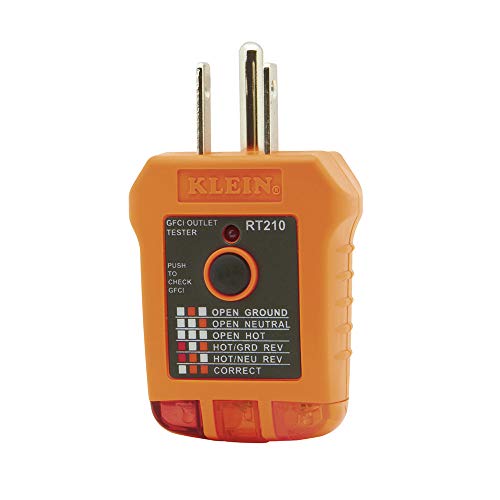
A three wire receptacle tester for standard and GFCI North American outlets, specified for 110 to 125 volts AC at 50 or 60 Hz, a 6.6 foot drop and an operating range of 32 to 140 degrees Fahrenheit.
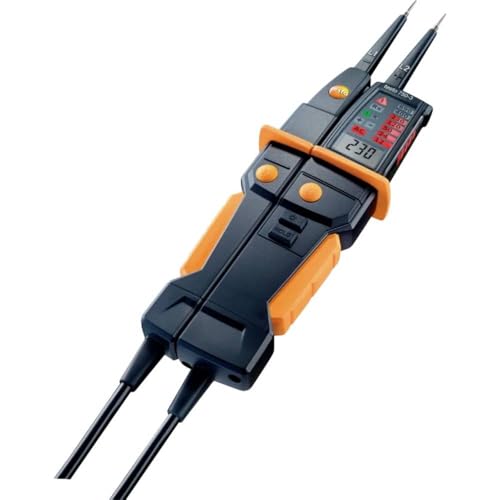
A two pole voltage tester with a three digit LCD showing measured voltage, a patented LED voltage bar viewable from any angle, polarity detection on DC and a GFCI test function for AC outlets.