As an Amazon Associate, Akermin earns from qualifying purchases. Product links on this page are affiliate links.
Choose pinless when the question is where moisture is and whether one area is wetter than another, especially on finished surfaces where holes are unacceptable and speed matters. Choose pins when the question is how much moisture, as a percentage in wood, at a known depth, for flooring acclimatization, timber grading or firewood. Choose a combination meter, or carry both, when the work is inspection or drying, where you find with the pad and prove with the pins.
The questions each answers
| Question | Pinless | Pin |
|---|---|---|
| Is there hidden moisture in this wall or ceiling? | Best | Slow; leaves marks |
| How far does the wet area extend? | Best; scan and map | Impractical |
| Is this timber dry enough to install or burn? | Approximate | Best, with species correction |
| How deep is the moisture? | Fixed depth only | Best, with insulated pins or a hammer probe |
| Is drying complete after a flood? | Track relative readings over days | Confirm absolute values in structural timber |
| Is this subfloor ready for flooring? | Scan for wet spots | Measure percentage; compare with flooring stock |
Scenarios
- Homeowner with a stain on the ceiling: pinless. Scan around the stain, compare with a dry area, follow the wet edge toward the source.
- Buying firewood: pin. Split a log and read the fresh face; under 20 percent is ready to burn.
- Installing hardwood flooring: pin for the subfloor and the flooring stock (they should be within a few percent of each other) and pinless to scan the subfloor for wet spots. Concrete slabs need a different test.
- Home inspector: combination. Pinless for every wall and ceiling; pins to confirm and quantify at findings.
- Restoration contractor drying a flooded room: pinless for daily mapping; pins in framing to prove dryness for the record.
- Woodworker: pin with species settings, for stock acclimatization.
Practical factors
| Factor | Pinless | Pin |
|---|---|---|
| Surface damage | None | Two small holes |
| Speed | Seconds per square meter | Seconds per point |
| Interference | Metal, wiring, pipes, foil, density changes, tile | Salts, preservatives, surface wetness |
| Consumables | None | Pins wear and bend |
| Curved or rough surfaces | Pad needs flat contact | Works on anything the pins enter |
| Cost | Similar | Similar; combination units cost more |
Working with both
The professional pattern is find, then prove. Scan with the pad, note the highest reading and the edges, then push pins into the worst spot and a reference spot for an absolute comparison. Report both readings and the scales used. See pin vs pinless moisture meters for how each works and how to choose a moisture meter for features. Material-specific procedures are in using a moisture meter on drywall and using a moisture meter on wood.
Recommended Tools
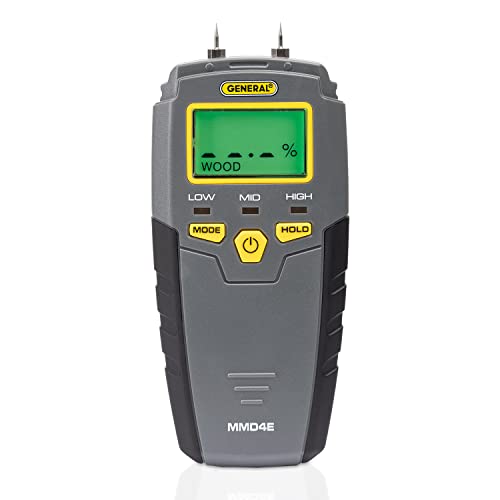


Products shown because their documented specifications fit this guide. Price and availability are on Amazon and can change.
Frequently Asked Questions
Is pinless less accurate than pin?
For an absolute wood percentage, usually yes; pinless meters average over an area and depth and respond to density. For finding and comparing moisture, pinless is as reliable and much faster.
Can I use a pin meter on finished walls?
It leaves two small holes. Acceptable in inconspicuous places, behind skirtings or where redecoration is planned; otherwise use pinless and confirm with pins only at the worst point.
Do I need both?
Inspectors and restoration contractors do. Homeowners checking for damp are well served by pinless alone; woodworkers by pin alone.
Affiliate disclosure: Akermin earns a commission from qualifying Amazon purchases made through links on this page. Our editorial picks are based on documented specifications and owner feedback, not commissions.
Related Guides

Thermal Master P1 Review: 17 Grams, 0.32 Watts, and a 160 by 120 Detector Underneath
A 17 gram USB-C thermal attachment stating 320 by 240 after X3 processing from a 160 by 120 detector, with 0.04 C sensitivity, isotherm mode and adjustable emissivity.
Read More→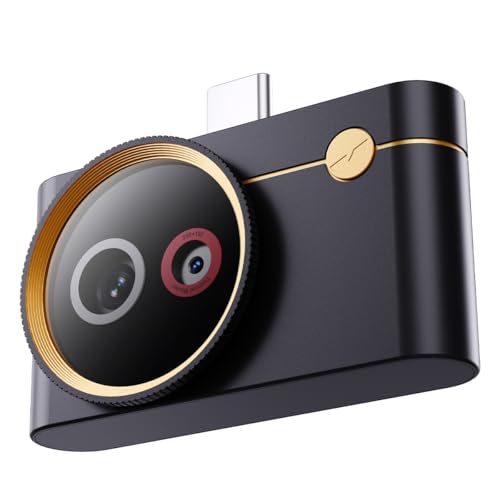
Thermal Master P4 Review: A 256 by 192 Detector Behind a 512 by 384 Headline
An Android phone attachment with a 256 by 192 detector upscaled to 512 by 384, NETD below 35 mK, a 56 by 42 degree field of view and no battery of its own.
Read More→
Soliluxelink Borescope Review: The Title Says Articulating, the Bullets Describe Something Else
A 1080P borescope with a 4.3 inch screen, a 16.4 foot semi rigid IP67 probe, eight LEDs and an accessory kit. Reviewed from a listing whose own bullets contradict its title.
Read More→